Advertisements
Advertisements
प्रश्न
The following figures have more than one line of symmetry. Such figures are said to have multiple lines of symmetry.
 |
 |
 |
| (a) | (b) | (c) |
Identify multiple lines of symmetry, if any, in the following figure.

Advertisements
उत्तर
The given figure has 2 lines of symmetry.

Hence, it has multiple lines of symmetry.
संबंधित प्रश्न
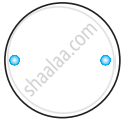
Copy the figure with punched holes and find the axes of symmetry for the following:
In the given figure, the mirror line (i.e., the line of symmetry) is given as a dotted line. Complete given figure performing reflection in the dotted (mirror) line. (You might perhaps place a mirror along the dotted line and look into the mirror for the image). Are you able to recall the name of the figure you complete?

In the given figure, the mirror line (i.e., the line of symmetry) is given as a dotted line. Complete given figure performing reflection in the dotted (mirror) line. (You might perhaps place a mirror along the dotted line and look into the mirror for the image). Are you able to recall the name of the figure you complete?

The following figures have more than one line of symmetry. Such figures are said to have multiple lines of symmetry.
|
|
|
| (a) | (b) | (c) |
Identify multiple lines of symmetry, if any, in the following figure.
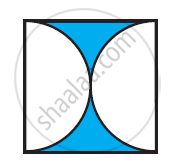
Complete the other half of the following figure such that the dotted line is the line of symmetry.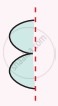
Draw what the following shapes would look like on a `1/4` turn and half a turn.
| On `1/4` turn | On half turn | |
a)  |
||
b)  |
||
c)  |
||
d)  |
- Which of the above shapes do not look the same on the `1/4` turn?
- Which shapes do not look the same on `1/2` a turn?
Which of the following letters of English alphabets have more than 2 lines of symmetry?
In an isosceles right triangle, the number of lines of symmetry is ______.
______ is a figure that has neither a line of symmetry nor a rotational symmetry.
By what minimum angle does a regular hexagon rotate so as to coincide with its original position for the first time?
