Advertisements
Advertisements
प्रश्न
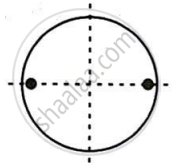
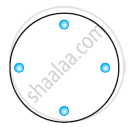
Copy the figure with punched holes and find the axes of symmetry for the following:

Advertisements
उत्तर
The axes of symmetry in the given figure are as follows:
संबंधित प्रश्न
Copy the figure with punched holes and find the axes of symmetry for the following:
The following figures have more than one line of symmetry. Such figures are said to have multiple lines of symmetry.
 |
 |
 |
| (a) | (b) | (c) |
Identify multiple lines of symmetry, if any, in the following figure.

State the number of lines of symmetry for an equilateral triangle figure.
State the number of lines of symmetry for an isosceles triangle figure.
State the number of lines of symmetry for a scalene triangle figure.
State the number of lines of symmetry for a circle figure.
What letters of the English alphabet have reflectional symmetry (i.e., symmetry related to mirror reflection) about a horizontal mirror.
Find the line of symmetry and the order of rotational symmetry of the given regular polygons and complete the following table and answer the questions given below.
| Shape | Equilateral Triangle  |
Square |
Regular pentagon 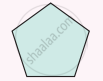 |
Regular hexagon  |
Regular octagon  |
| Number of lines of symmetry | |||||
| Order of rotational symmetry |
i) A regular polygon of 10 sides will have _________ lines of symmetry
ii) If a regular polygon has 10 lines of symmetry, then its order of rotational symmetry is ___________
iii) A regular polygon of 'n' sides has _________ lines of symmetry and the order of rotational symmetry is _________
How many lines of symmetry for the following figure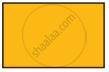
Look at the following shapes:
a) Find out which of these figures look the same in a `1/3` turn. Mark them with (✓).
