Advertisements
Advertisements
प्रश्न
Read the following passage and do the activities.
The Delhi Metro is a metro system serving Delhi and its satellite cities of Bahadurgarh, Ballabhgarh, Faridabad, Ghaziabad, Gurgaon and Noida in the National Capital Region of India. Delhi Metro Rail Corporation Limited
(DMRC), a State-owned company with equal equity participation from the Government of India and the Government of Delhi, built and operates the Delhi
Metro. It is the second oldest metro in India after the Kolkata Metro.
The Delhi Metro is the largest and busiest metro in India, and the world’s 9th longest metro system in length and 16th largest in ridership. A member of CoMET, the network consists of eight colour-coded regular lines, with a total
length of 317 kilometres, serving 231 stations including 6 on Airport Express line and interchange stations. The system has a mix of underground, at-grade, and elevated stations using both broad-gauge and standard-gauge. DMRC operates over 2,700 trips daily. In the financial year 2016–17, the Delhi Metro had an average daily ridership of 2.76 million passengers and served 100 crore (1.0 billion) riders.
The Delhi Metro Rail Corporation was certified by the United Nations in 2011 as the first metro rail and rail-based system in the world to get “carbon credits for reducing greenhouse gas emissions” and helping in reducing pollution levels in the city by 630,000 tonnes every year. Planning for the metro started in 1984 when the Delhi Development Authority and the Urban Arts Commission came up with a proposal for developing a multi-modal transport system for the city. Delhi Metro Rail Corporation (DMRC) was incorporated in May 1995, construction started in 1998, and the first section, on the Red Line, opened in 2002. The development of the network was divided into phases, Phase I containing 3 lines was completed by 2006, and Phase II in 2011. Phase III is scheduled to be mostly complete by 2018.
(A1) Name the following.
(a) The Government authority which built and operates the Delhi Metro -
(b) The first and the oldest Metro in India -
(c) The satellite cities nearby Delhi -
(d) The largest and busiest metro in India -
(A2) The salient features of Delhi Metro are -
(A3) Find out antonyms from the passage for the following.
(i) shortest ´ (ii) increasing ´
(iii) irregular ´ (iv) ended ´
(A4) The Delhi Metro is the largest and busiest metro in India.
(Complete the following sentences with the help of the given sentence.)
(i) No other metro................................
(ii) The Delhi Metro is larger.......................
(A5) “Transportation is the backbone of Indian economy’’ - Elaborate
(B) Read the passage given in Q. 4 (A) and write the summary of it. Suggest a suitable title to your summary.
Advertisements
उत्तर
(A1) 02
(a) Delhi Metro Rail Corporation Limited (DMRC)
(b) The Kolkata Metro
(c) Bahadurgarh, Ballabhgarh, Faridabad, Gaziabad, Gurgaon and Noida.
(d) The Delhi Metro
(A2) The salient features of Delhi Metro are………. 02
(i) It is the largest and busiest metro in India.
(ii) Its total length is 317 kilometers, serving 231 stations.
(iii) The system has a mix of underground, at grade, and elevated stations using both broad-gauge and standard-gauge.
(iv) It operates 2,700 trips daily and carries 2.76 million passengers.
(A3) Find out antonyms from the passage for the following. 02
(i) shortest x longest (ii) increasing x reducing
(iii) irregular x regular (iv) ended x started
(A4)
(i) No other metro in India is as large and busy as the Delhi Metro. 01
(ii) The Delhi Metro is larger than any other metro in India. 01
(A5)
Transportation is the backbone of Indian economy because it facilitates movements of goods or product from one place to another. It removes the hindrance of place. It helps the country for its development by carrying people, goods and services from one place to another. It develops tourism and increases the per capita income of the people. It also helps to get the values to the perishable goods and products. 02
(B) Life-line of Delhi 05
Delhi Metro is considered as the life-line of Delhi – the capital of India which serves cities around like Bahadurgarh, Ballabhgarh, Faridabad, Ghaziabad, Gurgaon and Noida. It is constructed by Delhi Metro Rail Corporation, the Government of India and the Government of Delhi with equal equity participation. Being the largest and busiest metro in India after Kolkata Metro, it operates 2,700 trips
everyday and carries 2.76 million passengers everyday. It is certified by the United Nations in 2011 as the first metro rail and rail-based system in the world to get “carbon credits for reducing greenhouse gas emissions’’ which helps to reduce pollution levels in the city by 630,000 tones every year. Planning of Delhi Metro started in 1984 but Delhi Metro Corporation was incorporated in May 1995 and the actual work started in 1998. Its total length is 317 kilometers serving 231 stations with underground, at grade and elevated stations using both broad-gauge and standard-gauge. It has three phases. The first phase was completed in 2006, second phase in 2011 and the third phase is scheduled to be completed by 2018.
APPEARS IN
संबंधित प्रश्न
Read the passage given below:
Keeping cities clean is essential for keeping their residents healthy. Our health depends not just on personal hygiene and nutrition, but critically also on how clean we keep our cities and their surroundings. The spread of dengue and chikungunya are intimately linked to the deteriorating state of public health conditions in our cities.
The good news is that waste management to keep cities clean is now getting attention through the Swachh Bharat Mission. However, much of the attention begins and stops with the brooms and the dustbins, extending at most to the collection and transportation of the mixed waste to some distant or not so distant place, preferably out of sight.
The challenge of processing and treating the different streams of solid waste, and safe disposal of the residuals in scientific landfills, has received much less attention in municipal solid waste management than is expected from a health point of view.
One of the problems is that instead of focusing on waste management for health, we have got sidetracked into "waste for energy". If only we were to begin by not mixing the biodegradable component of solid waste (close to 60 percent of the total) in our cities with the dry waste, and instead use this stream of waste for compositing and producing a gas called methane.
City compost from biodegradable waste provides an alternative to farmyard manure (like cow-dung). It provides an opportunity to simultaneously clean up our cities and help improve agricultural productivity and quality of the soil. Organic manure or compost plays a very important role as a supplement to chemical fertilisers in enriching the nutrient-deficient soils. City compost can be the new player in the field.
Benefits of compost on the farm are well-known. The water holding capacity of the soil which uses compost helps with drought-proofing, and the requirement of less water per crop is a welcome feature for a water-stressed future. By making the soil porous, use of compost also makes roots stronger and resistant to pests and decay. Farmers using compost, therefore, need less quantity of pesticides. There is also evidence to suggest that horticulture corps grown with compost have better flavour, size, colour and shelf-life.
City compost has the additional advantage of being weed-free unlike farmyard manure which brings with it the seeds of undigested grasses and requires a substantial additional labour cost for weeding as the crops grow. City compost is also rich in organic carbon, and our soils are short in this.
Farmers clearly recognize the value of city compost. If city waste was composted before making it available to the farmers for applying to the soil, cities would be cleaned up and the fields around them would be much more productive.
Quite apart from cleaning up the cities of biodegradable waste, this would be a major and sustainable contribution to improving the health of our soil without further damage by excessive chemical inputs. What a marvellous change from waste to health!
The good news is that some states are regularly laying plastic roads. Plastic roads will not only withstand future monsoon damage but will also solve a city's problem of disposing of non-recyclable plastic. It is clear that if the mountains of waste from our cities were to be recycled into road construction material, it would tackle the problem of managing waste while freeing up scarce land.
(a) On the basis of your understanding of the above passage, make notes on it using headings and sub-headings. Use recognisable abbreviations wherever necessary (minimum four) and a format you consider suitable. Also supply an appropriate title to it.
(b) Write a summary of the passage in about 80 words.
Read the following extract and answer the questions given below:
Now, as I stood on the shore of that desolate Highland loch
I raised my voice in a surge of self-justification : ''By Heavens!
This is my opportunity. Gastric ulcer or no gastric ulcer, I will
write a novel.'' Before I could change 1ny mind I walked straight to the village and bot1ght myself two dozen penny exercise books.
Upstairs in my cold, clean bedroom was a scrubbed deal table and a very hard chair. Next morning, I found myself in this chair, facing a new exercise book open upon the table, slowly' becoming aware that, short of dog-Lati11 prescriptions, I had never composed a significant phrase in all my life. It was a discot1raging thought as I picked 11p my pen and gazed out of the window. Never mind, I would begin. Three hours later Mrs. Angus, the farmer's wife, called me to dinner. The page was still blank.
As I went dow-n to m:y milk and junket-they call this "curds'' in Tarbert - I felt a dreadful fool. I felt like the wretched poet in Daudet's Jack whose im1nortal masterpiece never progressed beyond its stillborn opening phrase : ''In a remote valley of Pyrenees ..... ". I recollected, rather gri111ly, the sharp advice with which my old schoolmaster had goaded me to action. ''Get it down!'' he had said. ''If it ~tops in your head it will always be nothing.
Get it down.'' And so, after lunch, I went upstairs and began to get it down.
(1) What is the main idea of the extract? (1)
(2) Why did the narrator buy two dozen penny exercise books? (2)
(3) How was the narrator unprepared for writing his novel? (2)
(4) Write in brief about what you will do in your forthcoming vacation. (2)
(5) Rewrite the following sentences in the ways instructed:
(i) I stood on the shore of that desolate Highland loch.
(Rewrite it using 'used to'.) (1)
(ii) I went down to my milk and junket.
(Rewrite it in the Past Perfect Tense.) (1)
(iii) I walked straight to the village and bought myself
two dozen penny exercise books. (Make it simple). (1)
(6) Find out the words from the extract which mean:
(i) chance (1/2)
(ii) lake (1/2)
Read the following extract and answer the questions given below:
We commemorate so many special days such as Republic Day, Independence Day, Mother's Day and so on. Well, here is one day that deserves not only a commemoration but our total dedication - Earth Day, 22 April. At Sanctuary, we live our lives like every day is Earth Day, but we all believe that it would be, fantastic to remind our relatives, friends, neighbours, teachers, and elders on this day that protecting Mother Earth can end up making us both happy and safe.
Will you do something this Earth Day? Here's a handy list of things you can do-
(1) Cut Consumption: Consume as little as possible on Earth Day. This 'is a day·when you ca!l Refuse (to buy new things), Repair and Reuse (old stuff), Recycle (what you cannot reuse), Reject (stuff that is toxic or dangerous to the environment) and Renew (your purpose and resolve to protect the planet).
(2) Cut Energy: (a) Ditch the old incandescent bulbs and shift to CFLs or LEDs (Google both to find out more). (b) Walk or use public transport, try not to use private cars to save fuel. Carpool. Cut down on trips. Use Skype· instead of traveling for meetings. (c) Switch off unnecessary gadgets. (don't just use the remote .... walk to the mains!).
(3) Cut Waste: Start a waste segregation system in your building, school or neighbourhood. Compost organic waste, sell what you can to the raddi-wallah and give him a small token of.. appreciation also for he is protecting your world. Collect unused papers from old notebooks and make new ones from them.
(4) Cut out plastic: Speak to at least five shopkeepers in your area and tell them you and your friends will only use their shops if they move away from wasteful plastic packaging, particularly thin plastic bags.
(1) What do you understand from this extract?
(2) What steps can we take to keep our environment clean?
(3) Why should we commemorate Earth Day?
(4) What is your opinion regarding shifting to CFLs or LEDs?
(5) Rewrite the following sentences in the ways instructed :
(i) Earth Day deserves a commemoration and our total dedication.
(Use 'not only - but also'.)
(ii) Start a Waste Segregation System in your building.
(Rewrite it beginning with 'Let'.)
(iii) You can sell waste to the raddi-wallah and give him a
small token of appreciation.
(Replace the modal auxiliary by another showing 'obligation'.)
(6) What do the following words in the extract mean?
(i) resolve
(ii) toxic
Read the following extract and answer the question given below: (11)
Researchers· recently announced the earth could actually
withstand up to 200,000 times the current population. They arrived at this figure by calculating the amount of heat a human body emits. and only at l ·3 million billion would the earth be too hot to be habitable. And though it would feel like being in a can of sardines if that figure were ever reached, the earth is capable of comfortably sustaining a population several times the current 6·5 billion.
In fact, fertility is actually on the decline worldwideThough
population has grown, the rate of growth has fallen sharply. Twenty years ago, the UN projected that population would reach l l · 16 billion in 2050, today they say it will reach only 9·37 billion. Moreover, human population will stabilize at about 11 ·5 billion.While this figure is almost twice the current one, it is hardly claustrophobic.
True, the demands on resources are heavy even now, but this is more due to the manner in which these resources are being used. In fact, figures show that a bigger population does not amount to greater consumption. Over 20% of the world 's people in the highest income countries account for 86% of total private consumption expenditure - the poorest 20% a tiny 1 ·3%. With just 5% of the world's population, the US consumes about 40% of the world's resources. Would you say the US is overpopulated?
Concerns on scarcity of food are equally baseless. In fact, global food production has actually kept up with population growth . If people starve in many countries it is not because food is becoming scarce; it is because those people cannot afford it.
Questions:
(1) What conclusions did the researchers arrive at? (1)
( 2) How does the writer explain that the fertility is on the
decline? (2)
(3) What does the extract predict about the fear-, of scarcity of food? (2)
( 4) How will population become a gift in the global market
scene? (2)
(5) Rewrite the following sentences in the ways instructed:
(i) The earth could withstand upto 200,000 times the
current population.
(Rewrite the sentence using the modal auxiliary showing 'certainty'.) (I)
(ii) The earth would be too hot to be habitable.
(Remove ' too' and rewrite the sentence.) (1)
(iii) These resources are being used.
(Rewrite the sentence beginning with, 'We ............ ') (I)
( 6) Write the antonyms of:
(i) habitable (1/2)
.
(ii) stabilize ( 1/2 )
Read the following extract and answer the questions given below.
|
I grew up in India in which telephones were both rare and virtually useless. When I left India in 1975 to go to the US for graduate studies, we had perhaps, 600 million residents in the country and just two million landline telephones. Having a telephone was a rare privilege: if you weren’t an important government official, or a doctor, or a journalist, you might languish in a long waiting list and never receive a phone.
Telephone were such a rarity (after all, 90% of population had access to a telephone line) that elected members of Parliament had amongst their privileges the right to allocate 15 telephone connections to whomever they deemed worthy.
And if you did have a phone, it wasn’t necessarily a blessing. I spent my high school years in Calcutta, and I remember that if you picked up your phone, you had no guarantee you would reach the number you had dialled. Sometimes you were connected to someone else’s ongoing conversation, and they had no idea you were able to hear them; there was even a technical term for it, the ‘cross - connection’ (appropriately, since these were connections that made us very cross). If you wanted to call another city, say Delhi, you had to book a ‘trunk call’ in the morning and then sit by the telephone all day waiting for it to come through; or you could pay eight times the going rate for a ‘lightning call’ = but even lightning struck slowly in India those days, so it only took half an hour instead of the usual three or four or more to be connected.
|
Questions:
(1). Why were telephones a rarity before 1975? (1)
(2) What special rights did elected members of Parliament use to have? (2)
(3) How did the author differentiate between a ‘trunk call’ and a ‘lightning call’? (2)
(4) Do you think the cellphone has made us global? (2)
(5) Rewrite the following sentences in the ways instructed. . (3)
(i) You could pay eight times the going rate for a ‘lighting call’. (Rewrite it using modal auxiliary showing compulsion)
(ii) I spent my high school years in Calcutta. [Rewrite it using past perfect tense]
(iii) Telephones were a rarity. [Make it a rhetorical question]
(6) Match the words in column ‘A’ with their meanings in column ‘B’. (1)
| Column A | Column B | ||
| (i) | Privilege |
(i)
|
means to reach or get |
| (ii) | Access |
(ii)
|
remedy |
| (iii) | special right |
Read the extract and do the activities that follow :
‘Your father was my enemy,’ said Frederick. ‘I would have been better pleased by your brave deed if you had told me of another father?’
‘I am proud to be Sir Rowland's son,’ answered Orlando angrily,’ and I would not change my place to be the heir of this dukedom.’
The Duke and his lords went away, leaving Orlando alone with Rosalind and Celia. Celia was angry with her father for speaking so unkindly to Orlando. ‘Would I have done this in my father’s place?’ she said to Rosalind.
‘My father loved Sir Rowland as much as his own soul,’ Rosalind said to Celia, ‘and all the world agreed with him. If I had known that his young man was Sir Rowland’s son I should have begged him with tears not to take so great a risk.’
‘Let us go and speak to Orlando,’ said gentle Celia. ‘I am ashamed of my father’s rude and angry words.’
The two girls went up to Orilando and praised him for his bravery. Rosalind took a gold chain from her neck and gave it to him. ‘I would like to give you more’, she said, ‘but I am not rich.’ Then she and Celia went away.
Orlando, however, could not forget them. He had already fallen in love with the fair Rosalind, but he could not stay at the Duke’s palace. His friends warned him that Frederick was angry and jealous of him. They told Orlando to leave the dukedom, because the Duke meant to do him harm.
A1. Match -
Match the characters and their attributes:
| A | B | ||
| i. | Celia | a. | fair |
| ii. | Orlando | b. | rude and unkind |
| iii. | Frederick | c. | gentle |
| iv. | Rosalind | d. | brave |
A2. Write an imaginary paragraph:
Write an imaginary paragraph in about 50 words in continuation with the given extract.
Read the passage and write a summary of it in a paragraph. Suggest a suitable title.
|
Vegetarianism promotes a natural way of life. But despite its implicit message of universal love and nonviolence, it has not spread as it should have. This may be because it usually is an inward looking habit and is best cultivated in the mind. Leading a vegetarian way of life helps the animal kingdom to coexist with man. The animals supply milk, manure and energy. This has been central to Indian culture for thousands of years. A vegetarian lifestyle is natural, multifaceted and helps preservation in a healthy way. Food and health are closely related. Vegetarians are of various types. There are lacto-vegetarians who consume dairy products; Lacto-ovo-vegetarians include eggs in addition to dairy products. Vegans are pure vegetarians who do not consume any food derived from animals. The Western science of food considers food as something to sustain only the human body, whereas Indian science considers food as something which sustains not only the body but also maintains the purity of heart, mind and the soul. Thus, an item of food that is injurious to the mind is not considered to be fit for consumption, even if it is otherwise beneficial to the body or satisfies the taste. Indian food science does not give so much importance to protein or even to a balanced diet but it gives importance to food that increases the strength of the body and its vitality. Vegetarian foods provide an infinite variety of flavours whereas non-vegetarian foods have hardly any taste of their own. In fact, non-vegetarian foods have to be seasoned with ingredients from the vegetable kingdom to make them palatable. |
Read the following passage and do the activities.
A1. Choose the correct option. (2)
- Thousands of birds were killed due to oil spills because ______.
- It suffocated them
- It was poisonous
- Birds couldn't enter the sea
- There was no fish to feed on
- The primary components of crude oil are ______.
- Methane and ethane
- Carbon and hydrogen
- Sulphur compounds
- Naphthalene
| During the Gulf War, a few years back, tens of thousands of sea birds were killed due to oil spills. Do you know what makes crude oil on ocean water so deadly? Crude oil is not used in the state it is produced at the off-shore wells. It is converted in refineries into a wide range of products such as gasoline, kerosene, diesel, fuel oils, and petrochemical feed-stocks. Before it is refined, the oil also contains potentially fatal components. Crude oil is made up of compounds of carbon and hydrogen called hydrocarbons. These hydrocarbons may be paraffin, the oil that is used as fuel in heaters and lamps or cycloparaffins (naphthenes) or aromatic compounds in varying proportions. While crudes found in the US are mostly paraffinic, these found along the Gulf Coast are naphthenic which contain sulphur compounds in varying amounts, a small amount of nitrogen and very little oxygen. Every variety of crude oil has nickel and vanadium in high concentration. Iron may be found in organic form due to the corrosion of pipes. Paraffins like methane and ethane are asphyxiants, substances that cause suffocation. The effects of cycloparaffins are more or less similar to those of paraffins but unsaturated paraffins are more noxious, than saturated ones. The sulphur present in crude oil may be toxic. The mechanism of toxic action seems to involve its breakdown to hydrogen sulphide. They will act principally on the .nervous system with death resulting mainly from respiratory paralysis. Sulphur in the form of aromatic thiophenes, benzothiophenes can damage the livers and kidneys of sea animals. Sulphur compounds like mercaptens can be very dangerous too. |
A2. Crude oil may be toxic and fatal. Justify. (2)
A3. Rewrite the sentences using one word from the passage for the underlined phrase/word. (2)
- Over consumption of alcohol may lead to death.
- The flowers displayed at the exhibition differ in properties.
A4. Identify and change the voice of the following sentence. (1)
Tens of thousands of sea birds were killed due to oil spills.
A5. With reference from the passage what can you do to control air pollution? (3)
Read the passage given below.
|
Most cities, may not be prohibit hawking as a profession, but do place restrictions on the use of urban space. Therefore, a comprehensive study was conducted in 1998-99 on street vending, to provide concrete data for furthering the cause of the hawkers. Eight cities were selected - Mumbai, Ahmedabad, Kolkata, Imphal, Patna, Bhubaneswar and Bangalore. Three points were important while selecting respondents –hawkers were from different parts of a city; sold a variety of goods and adequate numbers of women were covered. The questionnaire was included questions on personal details, details regarding the work and the hazards faced. Table: Results of the survey
It is fair to say that hawkers cannot be removed, because apart from their own livelihood, their services benefit the common urban dweller. |

Based on your understanding of the passage, answer the given questions.
- Fill in the blank by selecting the appropriate option. 1
The study aims to ______ the practice of street vending in urban spaces.
- support
- discourage
- understand
- prove
- Jagan goes door to door with his basket of goods to sell bananas in the city. What action from his end would lead to a prohibition on hawking? 1
- State TRUE or FALSE. 1
The following question could have been a part of the study survey.
What are the challenges presented by the security guards? - Complete the sentence appropriately. 1
The most preferred form of source of capital, according to the survey table, exposes the hawkers to exploitation because ______. - State a point in support for the given opinion: 1
Street vending must be legalised as a profession.
Read the passage given below:
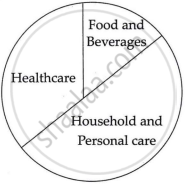
| (1) | Fast-Moving Consumer Goods (FMCG) are products that sell quickly at relatively low cost. FMCG is the fourth-largest sector in the Indian economy. There are three main segments in the sector – food and beverages, which accounts for 19% of the sector; healthcare, which accounts for 31% of the share; and household and personal care, which accounts for the remaining 50% share. The urban segment contributes to about 55% of the revenue share, while the rural segment accounts for 45%. Rise in rural consumption will drive the FMCG market. The Indian processed food market is projected to expand to US\[\$\] 470 billion by 2025, up from US\[\$\] 263 billion in 2019-20. |
| (2) | The Indian FMCG industry grew by 16% in 2021, a 9-year high, despite nationwide lockdowns, supported by consumption-led growth and value expansion from higher product prices, particularly for staples. Real household spending is projected to increase 9.1% after 2021, after a decrease of 9.3% in 2020 due to the economic impact of the pandemic. Price increases across product categories will offset the impact of rising raw material prices, along with volume growth and a resurgence of demand for discretionary items. |
| (3) | The FMCG sector has received good investments and support from the Government in the recent past. The sector witnessed healthy FDI inflows from April 2000-March 2022. Furthermore, as per the Union Budget 2022-23, a substantial amount has been allocated to the Department of Consumer Affairs, and an increased amount has been allocated to the Department of Food and Public Distribution. In 2021-22, the Government approved the Production-Linked Incentive Scheme for the Food Processing Industry (PLISFPI) with an outlay of a larger amount to help Indian brands of food products in the international markets. |
| (4) | The Government's Production-Linked Incentive (PLI) Scheme gives companies a major opportunity to boost exports. The future outlook of the FMCG rural sector looks on track now. Rural consumption has increased, led by a combination of increasing income and higher aspiration levels. There is an increased demand for branded products in rural India. The growth of the organised sector in FMCG is expected to rise with an increased level of brand consciousness, augmented by the growth in modem retail. |
 |
|
| Table. FMCG Products | |
| 1. Processed foods: | Cheese products, cereals |
| 2. Prepared meals: | Ready-to-eat meals |
| 3. Beverages: | Bottled water, aerated drinks, and juices |
| 4. Baked goods: | Biscuits, bread |
| 5. Fresh foods, frozen foods, and dry goods: | Fruits, vegetables, milk, butter, frozen food, and nuts |
| 6. Medicines: | Aspirin, pain relievers, and over-the-counter medication that can be purchased without a prescription |
| 7. Cleaning products: | Baking soda, washing powder |
| 8. Cosmetics and toiletries: | Beauty products, soaps, toothpaste |
| 9. Office supplies: | Pens, pencils |
Based on your understanding of the passage, answer the questions given below:
- Does the following statement agree with the information given in para 1? (1)
Food and beverages segment dominates the Global FMCG market and is expected to retain its dominance.
Select from the following:- True - If the statement agrees with the information.
- False - If the statement contradicts the information.
- Not Given - If there is no information on this.
- What do you think gives opportunities to boost exports? (1)
- Select the option that displays the most likely reason for FMCG rural sector being on track. (1)
- FMCG sector has been unable to get investments from the government.
- PLI schemes don't reach the rural sector.
- Gross Merchandise Value (GMV) of the online grocery segment in India is expected to double in the next five years.
- There is a desire to buy branded products in the villages too.
- Complete the sentence based on the following statement: (1)
The Indian FMCG industry grew by 16% in 2021, a 9-year high, despite nationwide lockdowns because ______. - From the given pie chart, which segment of FMCG accounts for the maximum percentage of the sector? (1)
- Complete the given sentence by selecting the most appropriate option: (1)
The combination of increasing income and higher aspiration levels in the rural areas has led to ______.- the Government taking a direct interest
- the demand for branded products
- price increases across product categories
- the fall of supply in urban areas
- How is the Government trying to help Indian brands of food products in the international markets? (1)
- Complete the given sentence by selecting the most appropriate option: (1)
The concluding paragraph of the passage makes a clear case ______.- that the rural people also want branded products
- that the FMCG industry will not focus on brand consciousness
- for the role of data analytics in the FMCG industry
- for the Government's role by providing incentives
- What will be the impact of the increased level of brand consciousness? (1)
- Based on the reading of the passage, correct the following statement: (1)
The urban segment contributes to about 45% of the revenue share, while the rural segment accounts for 55%.
