Advertisements
Advertisements
प्रश्न
People protested against the ______ because it had seven British members and no Indian representation.
पर्याय
Simon Commission
Lucknow Pact
Ilbert Bill
Cabinet Mission
Advertisements
उत्तर
People protested against the Simon Commission because it had seven British members and no Indian representation.
Explanation:
In November 1927, the British Government appointed the Indian Statutory Commission, popularly known as the Simon Commission, (after the name of its Chairman Sir John Simon) to investigate the need for further constitutional reforms. The Commission was composed of seven British members of Parliament. It had no Indian member. This was seen as a violation of the principle of self-determination and a deliberate insult to the self-respect of the Indians.
APPEARS IN
संबंधित प्रश्न
______ organised the Round Table Conference in London.
In the Second Round Table Conference, ______ participated as a representative of Indian National Congress.
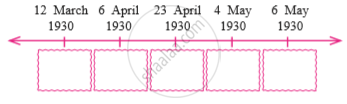
Complete the following timeline of Civil Disobedience Movement.
Why was the Dandi March undertaken by Mahatma Gandhi?
Mention any two events which led to the Civil Disobedience Movement of 1930.
Briefly state the outcome of the Civil Disobedience Movement.
State any three recommendations of the Simon Commission.
Or
Mention any two recommendations of the Simon Commission.
The British Government announced the formation of the Simon Commission in 1927. In this context briefly explain the purpose of its formation and its main recommendations.
Gather additional information along with photographs about the work of the following personality in the Civil Disobedience Movement and exhibit it in the class.
Khan Abdul Gafar Khan:
Gather additional information along with photographs about the work of the following personality in the Civil Disobedience Movement and exhibit it in the class.
Babu Genu:
