Advertisements
Advertisements
प्रश्न
Name the type of fabric closely associated with Mahatma Gandhi, the Father of the Nation. Why did Gandhiji want all of us to use this fabric?
Advertisements
उत्तर
The type of fabric closely associated with Mahatma Gandhi is khadi. Before Independence, the British would buy cotton from India at cheap prices and export 1t to Britain, where 1t was woven into cloth. This cloth was then brought back to India and sold to Indians at a high price. Gandhiji wanted to stop this and make Indians self-reliant. The khadi movement aimed at boycotting foreign-made cloth and promoting Indian made goods. Therefore he wanted all Indians to spin and use khadi. Another reason was to provide employment to poor farmers. Farmers may not have enough work to earn their living throughout the year. About four months during the dry season they may be idle. Spinning and. then making khadi cloth would provide them enough clothes for their own use. It would also teach Indians the dignity of labour.
संबंधित प्रश्न
Pick out words from the poem to fill in the web diagram. They should be related to the theme in the web.
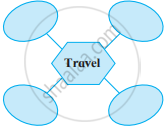
Pick out words from the poem to fill in the web diagram. They should be related to the theme in the web.
Write a conversation between a donkey and a dog.
Complete the following sentence with reference to the passage.
Nobody knows for certain who ___________________.
‘And calls our Best away’ is a gentle way of expressing the unpleasant idea of a loved one dying. It is an example of euphemism. Think and write down 3 or 4 ways in which we can express the idea of ‘death’ in a tactful and gentle manner.
- _________________
- _________________
- _________________
- _________________
Read the following incident carefully to answer the question that follow.
The tie that does not bind
“Oh, so you’re going abroad? Can you bring me back…..?” I’ve been asked to bring back a vaccine for a course. Once I searched the suburbs of Paris for two days for a special brand of ceramic paint. Having spent a lot of money for Cartier lighter refills, I had them confiscated at the airport just before boarding because the gas might be dangerous in the air.
Now, two months before a trip, I stop talking to people so they won’t suspect I’m about to travel. But someone always catches me.” I’ve heard you’re going to New York, and I want you to get something for me. It’s just a little thing you can find anywhere. I don’t know exactly how much it costs, but it shouldn’t be much. We’ll settle up when you get back”.
What Gilson asked me to buy was, in fact, a little thing: a tie. But not just any tie. He wanted a tie with a small embroidered G. Any colour would do, as long as it had his initials. Look, this is a special flight, I explained. We are only staying Saturday through Tuesday. On the day we arrived I didn’t have time to think about the tie, but strolling around on Sunday I did see ties bearing various letters in more than one shop window. They were cheap, just a dollar, but all the shops were closed.
On Monday, lunch lasted the whole afternoon. Then it was Tuesday morning, time to leave. It was only when I saw our airport bus waiting outside the hotel that I remembered the tie.
I told the group to go on. I would get a taxi to the airport. And so I went in search of a nearby shop where I had seen ties.
But I couldn’t find it. I walked further down the street-one, two, three blocks - all in vain. Back at the hotel, a bit anxious now, I took my suitcase, got a taxi and asked the driver to rush to the street where I had seen them.
The driver stopped at each shop we passed so I could look from the window. The stores had all sorts of ties, but not the kind I was looking for.
When I finally thought I had located the right shop, I decided to go in and check. The driver refused to wait. Parking was prohibited, he said. I promised to double the fare, jumped out and ran into the shop. Was I going to miss the plane just for a damned tie?
The salesman was unbearably slow. When I realized that the smallest change I had was a ten dollar note , I grabbed ten ties of different colours so I wouldn’t have to wait for change. I rushed out with the ties in a paper bag.
On the street I looked around. The taxi had vanished, taking my suitcase. What is more, I was going to miss the plane.
I ran to the corner, and hope flared up again: the taxi was waiting in the next street. Quick to the airport! As I settled down inside the taxi. I sighed with relief. Gilson was going to have enough initialized ties to last him a lifetime.
When I reached the airport, I paid the taxi driver the double fare and grabbed my suitcase. Panting, I boarded the plane under the reproachful gaze of the other passengers, all primly seated with their seat belts fastened. Ready to take off. Departure had been delayed because of me.
“At least I hope you found your tie”, said one who knew the story.
“I did”, I answered triumphantly.
After making myself comfortable, I reached for the paper bag to show the ties.
I had left it behind; in the taxi.
Fernando Sabino.
Read the incident again and answer the following question.
What was the writer always asked to do whenever he planned to go abroad?
Write about Hamid in one or two sentences.
Write the story in your own words
Is TV and video game the only way to pass time? Can we do something else?
What did the boy make with the trunk of the tree?
