Advertisements
Advertisements
प्रश्न
Name or state the following:
Elements having same mass number but different atomic number
Advertisements
उत्तर
4018Ar and 4020Ca
APPEARS IN
संबंधित प्रश्न
Fill in the Blank of the Following Statement :
An atom has atomic mass number 23 and atomic number 11. The atom has .................... electrons.
Fill in the following blanks in respect of an atom of an element
| No. of protons | No. of neutron | Mass number | Atomic number | No. of electrons | Symbol |
| 11 | 12 | ___________ | ___________ | ___________ | ________ |
From the symbol `""_15^31"P"`, state : atomic number of phosphorus
Give reason
Actual atomic mass is greater than mass number.
The diagram represents an isotope of hydrogen [H]. Answer the following:
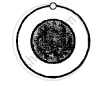
Atomic no. = 1
Mass no. = 1
If an isotope of ‘H’ has mass no. = 3, how many neutrons does it have.
Elements A, B and C have atomic numbers 9, 20 and 10 respectively.
- State which one is
(1) a non-metal,
(2) a metal,
(3) chemically inert.[A,B,C] - Write down the formula of the compound formed by two of the above elements.[BA2]
Differentiate between the following term:
Atomic number and mass number
What are nucleons? How many nucleons are present in Phosphorous? Draw its structure.
Name the 3 sub-atomic particles of an atom.
K and L shells can accommodate a maximum of 2 and 8 electrons respectively.
