Advertisements
Advertisements
प्रश्न
Match the microorganisms given in the Column A to the group to which they belong in Column B.
| Column A | Column B |
| (a) Lactobacillus | (i) Algae |
| (b) Aspergillus | (ii) Protozoa |
| (c) Spirogyra | (iii) Fungi |
| (d) Paramecium | (iv) Bacteria |
जोड्या लावा/जोड्या जुळवा
Advertisements
उत्तर
| Column A | Column B |
| (a) Lactobacillus | (iv) Bacteria |
| (b) Aspergillus | (iii) Fungi |
| (c) Spirogyra | (i) Algae |
| (d) Paramecium | (ii) Protozoa |
shaalaa.com
या प्रश्नात किंवा उत्तरात काही त्रुटी आहे का?
APPEARS IN
संबंधित प्रश्न
Yeast is used in the production of ______.
The following is an antibiotic.
Match the following.
| Column A | Column B |
| 1) Baker’s yeast | a) Probiotics |
| 2) Sauerkraut | b) Bread |
| 3) Ligases | c) Antibiotics |
| 4) Penicillin | d) Microbial enzyme |
Give scientific reason.
A biofuel is an important tool in renewable energy sources.
Write a short note.
Bioinsecticides
How is soil pollution controlled by microbes?
Explain – Importance of microbes in sewage (water) treatment in cities.
Diptheria affects the ______.
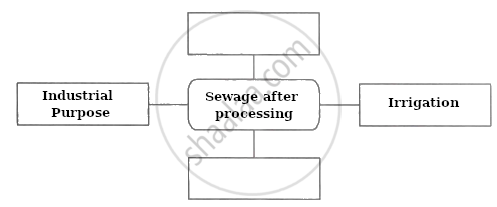
Complete the following chart:
_______ is used as artificial sweetener.
