Advertisements
Advertisements
प्रश्न
Match the following:
| Column I | Column II | ||
| (a) | Operculum | (i) | Ctenophora |
| (b) | Parapodia | (ii) | Mollusca |
| (c) | Scales | (iii) | Porifera |
| (d) | Comb plates | (iv) | Reptilia |
| (e) | Radula | (v) | Annelida |
| (f) | Hairs | (vi) | Cyclostomata and Chondrichthyes |
| (g) | Choanocytes | (vii) | Mammalia |
| (h) | Gill slits | (viii) | Osteichthyes |
Advertisements
उत्तर
| Column I | Column II | ||
| (a) | Operculum | (viii) | Osteichthyes |
| (b) | Parapodia | (v) | Annelida |
| (c) | Scales | (iv) | Reptilia |
| (d) | Comb plates | (i) | Ctenophora |
| (e) | Radula | (ii) | Mollusca |
| (f) | Hairs | (vii) | Mammalia |
| (g) | Choanocytes | (iii) | Porifera |
| (h) | Gill slits | (vi) | Cyclostomata and Chondrichthyes |
APPEARS IN
संबंधित प्रश्न
How do annelid animals differ from arthropods?
How are the criteria for deciding divisions in plants different from the criteria for deciding the subgroups among animals?
Write one difference between the following pair:
Invertebrates and Vertebrates
Match the animals given under column A with their respective classification group given under column B
| Column A | Column B | ||
| 1 | Sponge | a | Amphibia |
| 2 | Snail | b | Reptilia |
| 3 | Butterfly | c | Echinodermata |
| 4 | Toad | d | Mollusca |
| 5 | Lizard | e | Arthropoda |
| 6 | Starfish | f | Porifera |
Write down four characteristics of Ctenophora.
Main characteristics of Nematoda:
Write down four characters of mammals.
Describe some flight adaptations of the birds.
Distinguish between Nonchordata and Chordata.
Write down four general characters of Porifera.
Write down four general characters of cnidarians (coelenterates).
Explain the general charaters of phylum Mollusca.
Describe the important characters of mammals.
The animals (Kingdom Animalia) are mainly grouped under two categories
Why are scientific names of living beings considered better than their common names?
What are the group names of the following categories of animals?
Animals with feathers _________
Give any one difference between the following :
Insecta and Arachnida
Given below is an animal followed by three terms or features. Underline the term which does not match with the animal.
Grasshopper-Wings, trachea, proboscis
Given below is an animal followed by three terms or features. Underline the term which does not match with the animal.
Butterfly- Insecta, Invertebrata, Mollusca
TYRANNOSAURUS
(One of the extinct animals which lived on the Earth about 100,000,000 years ago) Tyrannosaurus was about six meters long and it preyed upon other animals.
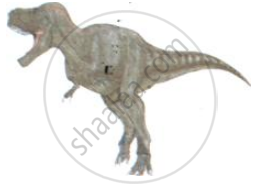
What do you think about its classification-was it an amphibian, a reptile or a mammal?
Can you call it a relative of Kangaroo? Yes/No. Give reason
Name any two animals which possess compound eyes.
Write name of any poikilothermic animal.
Give two examples of each of the following: Echinodermata
Give two examples of each of the following: Annelida
Fill in the blanks:
Dog fish belongs to phylum ______.
Choose the correct answer: Mosquito is included in insects because
Choose the correct answer: Jelly-fish is classified in the phylum
Choose the correct answer: The animal of phylum mollusca is
Choose the correct answer: The animal of phylum protozoa is
Choose the correct answer: The animal of class pisces is
Carolus Linnaeus is known as the Father of ______.
Bilaterally symmetrical and acoelomate animal are exemplified by:
Kingdom Animalia is characterized by
Assertion (A): All vertebrates are chordates but all chordates are not vertebrate.
Reason (R): The members of subphylum vertebrata possess notochord, during the embryonic period, the notochord is replaced by a cartilaginous or bony vertebral column in adults.
In the light of the above statements, choose the correct answer from the options given below:
Consider the following statements:
- Annelids are true coelomates
- Poriferans are pseudocoelomates
- Aschelminthes are acoelomates
- Platyhelminthes are pseudocoelomates
Choose the correct answer from the options given below:
