Advertisements
Advertisements
प्रश्न
If `x^3y^5 = (x + y)^8` , then show that `(dy)/(dx) = y/x`
Advertisements
उत्तर
Given `x^3y^5 = (x + y)^8`
Taking log on both sides
3 logx + 5 logy = 8 log(x + y)
Differentiate w.r.t. x
`3/x + 5/y (dy)/(dx) = 8(1/(x + y))[1 + (dy)/(dx)]`
`5/y (dy)/(dx) - 8/(x + y) dy/dx = 8/(x + y) - 3/x`
`(dy)/(dx)[5/y - 8/(x + y)] = (8x - 3x - 3y)/(x(x + y))`
`(dy)/(dx)[[5x + 5y - 8y]/(y(x + y))] = (5x - 3y)/(x(x + y))`
`(dy)/(dx) = [(5x - 3y)/(x(x + y)]] xx [(y(x + y))/(5x - 3y)]`
`(dy)/(dx) = y/x`
APPEARS IN
संबंधित प्रश्न
Find the second order derivative of the function.
x2 + 3x + 2
Find the second order derivative of the function.
x . cos x
Find the second order derivative of the function.
x3 log x
Find the second order derivative of the function.
tan–1 x
If y = 5 cos x – 3 sin x, prove that `(d^2y)/(dx^2) + y = 0`.
If y = 3 cos (log x) + 4 sin (log x), show that x2y2 + xy1 + y = 0.
If y = Aemx + Benx, show that `(d^2y)/dx^2 - (m+ n) (dy)/dx + mny = 0`.
Find `("d"^2"y")/"dx"^2`, if y = `"e"^"log x"`
Find `("d"^2"y")/"dx"^2`, if y = log (x).
Find `("d"^2"y")/"dx"^2`, if y = `"x"^2 * "e"^"x"`
If x2 + 6xy + y2 = 10, then show that `("d"^2y)/("d"x^2) = 80/(3x + y)^3`
`sin xy + x/y` = x2 – y
If x sin (a + y) + sin a cos (a + y) = 0, prove that `"dy"/"dx" = (sin^2("a" + y))/sin"a"`
If x = A cos 4t + B sin 4t, then `(d^2x)/(dt^2)` is equal to ______.
Read the following passage and answer the questions given below:
|
The relation between the height of the plant ('y' in cm) with respect to its exposure to the sunlight is governed by the following equation y = `4x - 1/2 x^2`, where 'x' is the number of days exposed to the sunlight, for x ≤ 3.
|
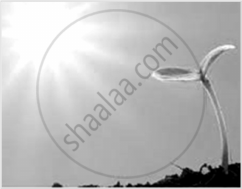
- Find the rate of growth of the plant with respect to the number of days exposed to the sunlight.
- Does the rate of growth of the plant increase or decrease in the first three days? What will be the height of the plant after 2 days?
If y = 3 cos(log x) + 4 sin(log x), show that `x^2 (d^2y)/(dx^2) + x dy/dx + y = 0`
Which equation is satisfied by \[y=\mathrm{A}\sin x+\mathrm{B}\cos x\]?
If \[y=\sin^{-1}x\], what is \[\frac{dy}{dx}\]?
After differentiating \[\sqrt{1-x^2}\cdot\frac{dy}{dx}=1\], which equation results?
