Advertisements
Advertisements
प्रश्न
Hand of a clock at 3.20 shows ______________ angle
Advertisements
उत्तर
Hand of a clock at 3.20 shows acute angle
APPEARS IN
संबंधित प्रश्न
Add: 29° 16′ 23″ and 8° 27′ 12″
In the figure, given below name the two obtuse angles

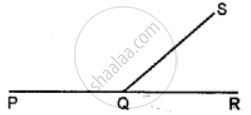
In the given figure; PQR is a straight line. If: ∠SQR = 75°; find ∠PQS.
Find the value of ‘x’ for the following figure:

Find the supplement of 0.7 times of 150°
The measure of the angle is given below. Write the type of angle.
0°
The measure of the angle is given below. Write the type of angle.
215°
The measure of the angle is given below. Write the type of angle.
90°
Look at the figure below and write the type of the angle.

Look at the figure below and write the type of the angle.
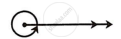
Use any number of the given dots to make different angles.
An Acute Angle

Use any number of the given dots to make different angles.
An Obtuse Angle

Pick out the Right angle from the given figures.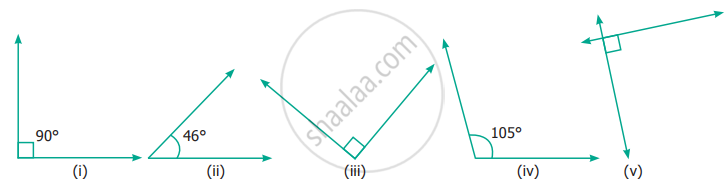
Pick out the Obtuse angle from the given figures.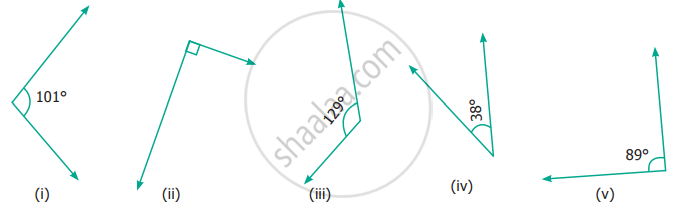
Name the angle in the figure given below in all the possible ways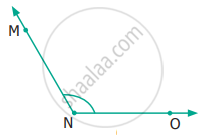
Draw and label of the angle
∠ABC = 180°
Identify the type of angle shown by the hands of the given clock.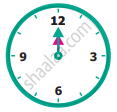
Identify the type of angle shown by the hands of the given clock.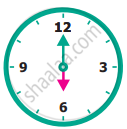
Measure the angle of the given figure using protractor and identify the type of angle as acute, obtuse, right or straight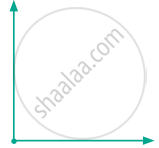
The angles below 90° and above 0° are called as _____________
The obtuse angle in ∆ABC is ______________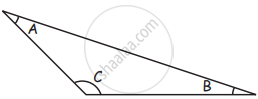
The angle formed by the nail cutter is _______________
Name the angles formed when the vessels are lifted by tongs in kitchen is _____________
Draw anything of your choice around the angle shown. Also, write what kind of angle it is. The first one is done.

How many right angles are contained within a straight angle?
