Advertisements
Advertisements
प्रश्न
Fill in the blank with modal auxiliary.
People who live in glass houses______ not throw stones.
Advertisements
उत्तर
People who live in glass houses should not throw stones.
APPEARS IN
संबंधित प्रश्न
Fill in the blank below using ‘had to’/ ‘have to’/ ‘has to’.
Romit ___________finish his homework before he could come out to play.
Form groups and hold debates on the following topic. Make bulleted lists of points in favour (pros) and those against (cons) the given statement. Let the whole class vote on who won the debate.
A man should use animals for his own needs.
From other sources find synonyms of the following words used in the story.
rich (city)
Make meaningful sentences from the following table.
| • She was tired | and | • she finished her homework. |
| • She wanted to buy a car | • she had no money. | |
| • He was angry | • he did not fight. | |
| • He did not know the answer | • he did not copy his friend’s answer. | |
| • They did not have money | • they lived happily. | |
| • He did not read the book | • he knew the story. |
Now try joining the sentences in the two columns using and.
Use the following word to construct a meaningful sentence on your own.
praise - __________________
Change the following into Passive voice.
Nobody should violate the rules.
Write the gerund/infinitive form of the verb in the blank.
Being an astronaut will enable you __________ (achieve) great success in life.
Make sentences in the present perfect continuous tense using the verbs.
How long __________?
Write the noun form of the following word.
zealous ______.
Identify the phrase in the following sentence and classify them as Adjective, Adverb, or Noun phrase.
Kohli hopes to win the trophy.
Read the following sentences carefully and underline the preposition.
Saravanan climbed onto the horse.
Rewrite the story in the past tense.

The boy chases a cat. The cat climbs up the tree and purrs from the branch of the tree. The cat jumps to another tree. The boy who is chasing the cat notices a snake under the tree. He leaves his attempt to catch the cat and he runs home screaming for help.
Fill in the blank with appropriate airline vocabulary given in the options.
It might be a ______ride because we are flying through a storm.
______ please open the window?
Use the clues to complete the compound word.
| basket + ______ | = ______ |  |
Write the correct preposition.

The doll is ____ the box.
Fill in the Blank.
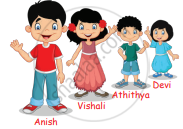
Athithya is standing ______ Devi.
Fill in the blank with simple future tense of the verb.
Many people ______ (serve) you.
Fill in the blank.
She returned after______ hour.
Change the sentence into present continuous tense.
She plays the piano.
Now, use the verb given in bracket in the following sentence in their correct form.
She always ______ (make) excuses for coming late.
Write the expanded forms of the following abbreviations we commonly come across in our daily life.
| 1. | IELTS | |
| 2. | GST | |
| 3. | TNPSC | |
| 4. | STD | |
| 5. | ISD | |
| 6. | MBA | |
| 7. | MHRD | |
| 8. | GPS | |
| 9. | NSS | |
| 10 | PTA | |
| 11. | NGO | |
| 12. | ICU | |
| 13. | IIM | |
| 14. | MRI | |
| 15. | ECG | |
| 16. | NCC | |
| 17. | LED | |
| 18. | CPU | |
| 19 | CBSE | |
| 20 | GDP | |
| 21 | LCD | |
| 22 | NRI | |
| 23 | IIT | |
| 24 | ITI | |
| 25 | USB |
Fill in the blank with the correct form of the verb given in the bracket.
We ______ a wonderful film at the cinema last night. (see)
Change the following sentence into Active Voice.
Sundari has been taken to hospital by her husband.
Find out the synonym of the underlined word in each of the following sentence.
A silver tumbler of buttermilk seasoned with asafetida.
Complete the following sentence using appropriate determiner.
How ______pages did you read?
Underline the verb and choose the correct option from the options.
My father knows as much as my teacher.
Read the examples and fill in the blanks in the same pattern.
Examples: sweet - sweeter - sweetest
bright - ______ - ______
In the following sentence, replace the incorrect underlined word to make the sentence meaningful and grammatically correct.
He ran around problems while trying to fix the computer.
Write compound word using the picture.
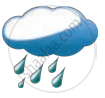 |
+ | 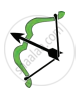 |
| ____________ | ||
