Advertisements
Advertisements
प्रश्न
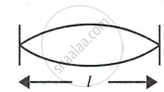
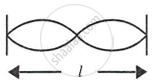
Fig. shows three ways in which a string of length l in an instrument can vibrate.
 |
 |
 |
| (i) | (ii) | (iii) |
- Which of the diagram shows the principle note?
- Which vibration has the frequency four times that of the first?
- Which vibration is of the longest wavelength?
- What is the ratio of the frequency of the vibration in (i) and (ii)?
थोडक्यात उत्तर
Advertisements
उत्तर
- (i) represents the principal note.
- (iii) has the frequency four (4) times of the first.
- In Figure (i), vibration is of the longest wavelength.
- Ratio of frequency between (i) and (ii) 1 : 2
shaalaa.com
या प्रश्नात किंवा उत्तरात काही त्रुटी आहे का?
संबंधित प्रश्न
Guess which sound has a higher pitch: guitar or car horn?
What is loudness of sound? What factors does it depend on?
Which one of the following does not consist of transverse waves?
The speed of light in air is :
What is the audible range of frequency for human?
A medium is necessary for ______ of sound.
Select the correct option:
In case of longitudinal waves, the particles of the medium vibrate:
How is sound produced?
Distinguish between light and sound waves. What are the consequences of the large difference in the speed of sound and that of light? Briefly explain them.
What is a longitudinal wave?
