Advertisements
Advertisements
प्रश्न
Explain the following:
Lead carbonate does not react with dilute HCl.
Advertisements
उत्तर
The salt produced is insoluble in the solution so the reaction does not proceed. Hence, we do not expect lead carbonate to react with hydrochloric acid.
APPEARS IN
संबंधित प्रश्न
| Column A | Column B | ||
| i | eosin | 1 | losing hydrogen |
| ii | oxidation | 2 | synthetic indicator |
| 3 | losing oxygen | ||
| 4 | natural indicator |
Write a word equation and then a balanced equation for the reaction taking place when:
Dilute sulphuric acid reacts with aluminium powder.
What ions are present in the solution of the following substance? (write the symbols only)
Magnesium hydroxide
Complete and balance the following chemical equation:
\[\ce{Ca(OH)2 + Cl2 ->}\]
Choose the correct alternative and rewrite the following sentence.
Phenolphthalein is ___________ type of indicator.
With the help of suitable examples explain the term neutralization and the formation of –
- acidic,
- basic and
- neutral salts
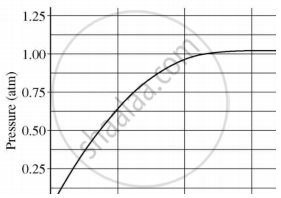
A student added 10 g of calcium carbonate in a rigid container, secured it tightly and started to heat it. After some time, an increase in pressure was observed, the pressure reading was then noted at intervals of 5 mins and plotted against time, in a graph as shown below. During which time interval did maximum decomposition take place?
In an attempt to demonstrate electrical conductivity through an electrolyte, the apparatus setup. Which among the following statement(s) is(are) correct?

- Bulb will not glow because electrolyte is not acidic
- Bulb will glow because NaOH is a strong base and furnishes ions for conduction.
- Bulb will not glow because circuit is incomplete
- Bulb will not glow because it depends upon the type of electrolytic solution
Vinegar is ______ in taste.
______ & ______ metals do not react with HCl or HNO3.
