मराठी
0
सी. बी. एस. ई.
वाणिज्य (इंग्रजी माध्यम) इयत्ता १२
प्रश्नपत्रिका
प्रश्नपत्रिका
३०००
पाठ्यपुस्तक उत्तरे
३६१२५
MCQ ऑनलाइन सराव परीक्षा
४२
महत्वाचे प्रश्न आणि उत्तरे
२३८७३
संकल्पना स्पष्टीकरण आणि व्हिडिओ
६९७
टाइम टेबल
२५
अभ्यासक्रम
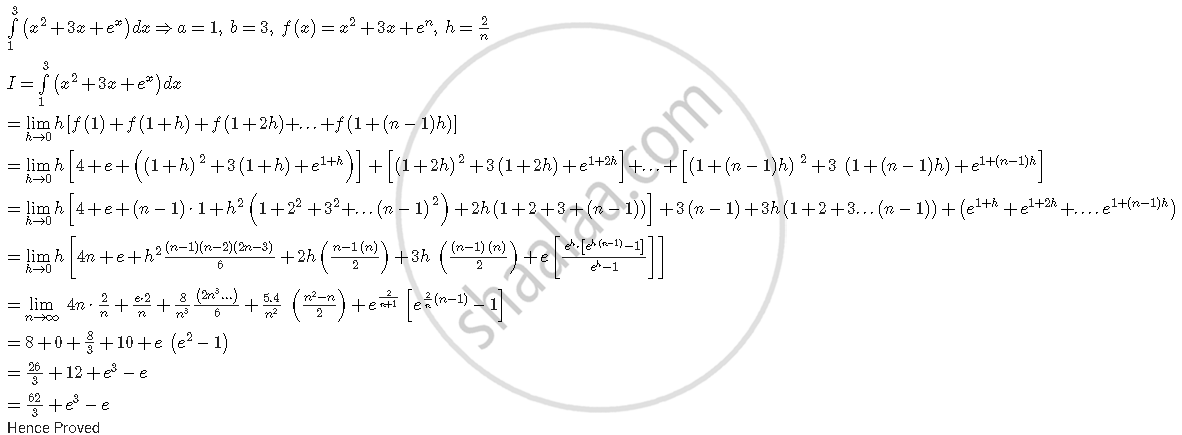
Evaluate : `Int_1^3 (X^2 + 3x + E^X) Dx` As the Limit of the Sum.
Advertisements
Advertisements
प्रश्न
Evaluate : `int_1^3 (x^2 + 3x + e^x) dx` as the limit of the sum.
Advertisements
उत्तर
Show Solution
shaalaa.com
Definite Integral as the Limit of a Sum
त्रुटी नोंदवा
या प्रश्नात किंवा उत्तरात काही त्रुटी आहे का?
Q 24.2
Q 24.1
Q 25
2017-2018 (March) Delhi Set 1
APPEARS IN
2017-2018 (March) Delhi Set 1 (with solutions)
Q 24.2 | 6 marks
2017-2018 (March) Delhi Set 2 (with solutions)
Q 27.2 | 6 marks
2017-2018 (March) Delhi Set 3 (with solutions)
Q 28.2 | 6 marks
2017-2018 (March) All India Set 3 (with solutions)
Q 28.2 | 6 marks
Share
0
0
0
0
0
Notifications
Select a course
CANCEL
English
हिंदी
मराठी
user
Login
Create free account
email:
password:
Log in
Forgot password?
Course
वाणिज्य (इंग्रजी माध्यम) इयत्ता १२ सी. बी. एस. ई.
कला (इंग्रजी माध्यम) इयत्ता १२ सी. बी. एस. ई.
विज्ञान (इंग्रजी माध्यम) इयत्ता १२ सी. बी. एस. ई.
change
घर
इयत्ता १ - ४
इयत्ता ५ - ८
इयत्ता ९ - १०
इयत्ता ११ - १२
प्रवेश परीक्षा
मजकूर किंवा प्रतिमेनुसार शोधा
पाठ्यपुस्तक उत्तरे
अभ्यास साहित्य
सर्व जाहिराती काढून टाका
Change mode
Log out
Use app
×