Advertisements
Advertisements
प्रश्न
Complete the chain by observing the columns A, B and C. Write the number of the relevant characteristics and type of agriculture in column A:
| A) Image | B) Characteristics | C) Type of Agriculture |
| Characteristics no. .............. Type of Agriculture no. ............. 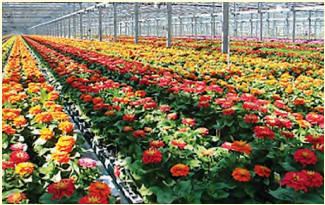 |
1) • Small land holding. • Maximum yield from small land. • Food crops are dominant. • Manual labour and use of animals. • China, India, Japan, Korea, Sri Lanka and East Asian countries. • Rice is the major crop. |
A) Shifting Agriculture |
| Characteristics no. .............. Type of Agriculture no. ............. 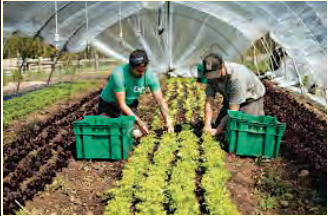 |
2) • Large size of farm. • Capital intensive, more use of modern machinery. • Monoculture • Use of machinery from sowing to harvesting. • Cultivation and commercial animal husbandry is done together • Per hectare low but per capita income is high, • Temperate grassland, Steppes, Praries, Downs, Pampas, Velds. • Wheat and maize are the major crops. |
B) Horticulture |
| Characteristics no. .............. Type of Agriculture no. ............. 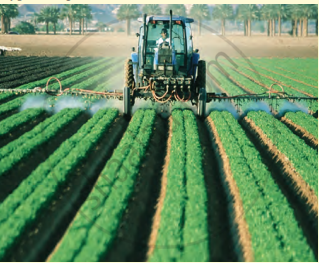 |
3) • Large farm size. • Capital intensive. • Monoculture. • Local labour is employed. • Crop is well managed for quality and processing. • Per hectare yield low but total production is high. • Once plantation is done, it gives production for 10 to 15 years. • Tea, coffee, rubber, cocoa etc., spice plantations in Kerala, cashewnut plantation in Konkan region. • Malaysia, India, Sri Lanka, Brazil, Indonesia, Caribbean Islands, Philippines, Thailand, Vietnam. |
C) Market Gardening |
| Characteristics no. .............. Type of Agriculture no. ............. 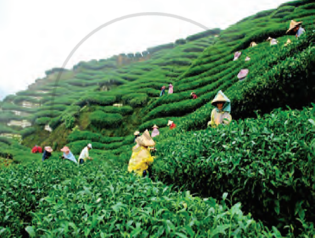 |
4) • Forest land is burnt and used for agriculture. • Very small farm size. • Production is very less. • Production can be taken for only 2 – 3 years. • Land left fallow and move ahead looking for another land. • Forest resources decline and soil erosion occurs. • Mainly practiced in forested tropical regions of Asia, South – East Asia, South and Central America and Africa. |
D) Intensive Subsistence Agriculture |
| Characteristics no. .............. Type of Agriculture no. ............. 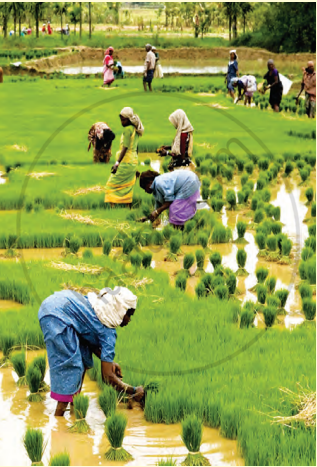 |
5) • Modern type of agriculture. • Fulfill the demands of urban people it is developed in fringe areas. • Maximum production from limited agriculture area. • Use of capital is high. • Along with use of manual labour, use of scientific technology, knowledge and capital. • Organic and chemical manures or fertilizers and irrigation. • Practised in areas lying at distance of an overnight journey by trucks. • Vegetables, fruits, milk, eggs, meat, fish etc. • Developed mainly in highly industrialised and densely populated urban areas. e.g., fruits, vegetables and flowers from Khedshivapur, Saswad are brought to Pune. |
E) Plantation Agriculture |
| Characteristics no. .............. Type of Agriculture no. ............. 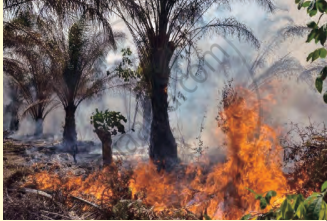 |
6) • Fruits, flowers, medicinal plants, ornamental plants etc. are produced for commercial use. • Use of manual labour and mechanization. • Practiced in tropical, Mediterranean and temperate regions where climate is supportive. |
F) Extensive Commercial Agriculture |
On the basis of the information given and pictures shown above, classify the factors affecting agriculture into physical and human factors.
सविस्तर उत्तर
Advertisements
उत्तर
| Image | Characteristics No. | Type of Agriculture |
|---|---|---|
| 1. Flower cultivation | 6 | B) Horticulture |
| 2. Vegetable cultivation near urban area | 5 | C) Market Gardening |
| 3. Large mechanised farm | 2 | F) Extensive Commercial Agriculture |
| 4. Tea plantation | 3 | E) Plantation Agriculture |
| 5. Rice cultivation | 1 | D) Intensive Subsistence Agriculture |
| 6. Burning and clearing forest land | 4 | A) Shifting Agriculture |
The factors affecting agriculture can be classified into physical factors and human factors.
| Physical Factors | Human Factors |
|---|---|
| Relief and slope of land | Size of land holding |
| Soil fertility | Availability of labour |
| Climate | Use of machinery |
| Rainfall | Capital |
| Temperature | Irrigation facilities |
| Availability of water | Use of fertilizers and insecticides |
| Natural vegetation | Scientific knowledge and technology |
| Length of growing season | Market demand |
| Availability of grasslands | Transport facilities |
| Natural resources | Government policies |
Physical factors decide the natural suitability of an area for agriculture, while human factors influence the method, scale, productivity and type of farming practised there.
shaalaa.com
या प्रश्नात किंवा उत्तरात काही त्रुटी आहे का?
