Advertisements
Advertisements
प्रश्न
Match the following:
| Column - I | Column - II | ||
| 1 | Retina | a | Path way of light |
| 2 | Pupil | b | Far point comes closer |
| 3 | Ciliary muscles | c | near point moves away |
| 4 | Myopia | d | Screen of the eye |
| 5 | Hypermetropia | e | Power of accommodation |
Advertisements
उत्तर
| Column - I | Column - II | ||
| 1 | Retina | d | Screen of the eye |
| 2 | Pupil | a | Pathway of light |
| 3 | Ciliary muscles | e | Power of accommodation |
| 4 | Myopia | b | Far point comes closer |
| 5 | Hypermetropia | c | Near point moves away |
APPEARS IN
संबंधित प्रश्न
Find the power of a concave lens of focal length 2m.
What is the power of a convex lens lens whose focal length is 80 cm?
The power of a lens is +2.0D. Its focal length should be :
State the condition for the following a ray passes undeviated through the lens .
How is the power of a lens related to its focal length?
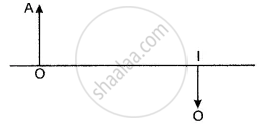
The following diagram shows the object O and the image I formed by a lens. Copy the diagram and on it mark the positions of the lens LL’ and focus (F). Name the lens.
If there is a convex lens of focal length 75 cm and a concave lens of focal length 40 cm, then calculate their combined power and combined focal length.
An object is placed in front of a converging lens. Obtain the conditions under which the magnification produced by the lens is
- negative and
- positive.
The power of convex lens of focal length 20 cm is ______.
The focal length of a double convex lens is equal to the radius of curvature of either surface. What is the refractive index of its material?
