Advertisements
Advertisements
प्रश्न
Choose the odd one out in the following set and write the category for the remaining terms:
पर्याय
Ammonia
Urea
Excess sodium chloride
Uric acid
Advertisements
उत्तर
Excess sodium chloride
Explanation:
Urea, uric acid, and ammonia are nitrogenous wastes of our body.
APPEARS IN
संबंधित प्रश्न
Where is the dirty blood in our body filtered?
Name a waste gas released by the plants only during the night time.
The organs which extract the nitrogenous wastes from the blood are ______.
Define excretion.
Name the various organs of the human excretory system.
Answer the following in short.
What is excretion?
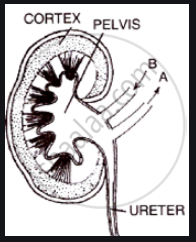
Given below is a highly simplified diagram of the human kidney cut open longitudinally. Answer the question that follow:
Write two differences in composition of the blood flowing through the blood vessels, 'A' and 'B'.
Name the Following
The structural and functional units of kidney
Complete the following sentence with appropriate words:
The outer surface of the kidney is ______ while the inner surface is ______.
The main nitrogenous waste formed in the human body:
