Advertisements
Advertisements
प्रश्न
Can we hear (a) infrasonic waves (b) ultrasonic waves ?
Advertisements
उत्तर
No, we cannot hear infrasonic waves and ultrasonic waves because the frequencies of both these waves fall beyond the human audible range of frequencies.
APPEARS IN
संबंधित प्रश्न
What is the audible range of the average human ear?
What is the range of frequencies associated with infrasound?
A person has a hearing range from 20 Hz to 20 kHz. What are the typical wavelengths of sound waves in air corresponding to these two frequencies? Take the speed of sound in air as 344 m s−1.
Name the organs of hearing in our body.
What is the frequency range of hearing in humans ?
Which of the following sound frequencies cannot be heard by a human ear ?
(i) 10 Hz
(ii) 100 Hz
(iii) 10,000 Hz
(iv) 15 Hz
(v) 40,000 Hz
What is ultrasound ? What is the difference between ordinary sound and ultrasound ?
What are infrasonic waves ? Name two animals which produce infrasonic waves.
Three different vibrating objects produce three-types of sounds X, Y and Z. Sounds X and Y cannot be heard by a man having normal range of hearing but sound Z can be heard easily. The sound X is used in hospitals to break kidney stones of a patient into fine grains which then get flushed out with urine. The sound Y is similar to that which is produced during an earthquake before the main shock wave is generated.
(a) What type of sounds are (i) X (ii) Y, and (iii) Z ?
(b) Name one device which can produce sound like X.
(c) Name one device in a science laboratory which can produce sound like Y.
(d) Name one device in our homes which can produce sound like Z.
(e) What is the frequency range of sounds like Z ?
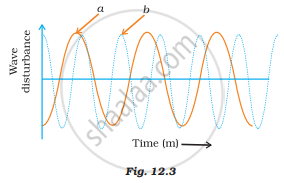
Which of the above two graphs (a) and (b) (Fig.12.3) representing the human voice is likely to be the male voice? Give a reason for your answer.