Advertisements
Advertisements
प्रश्न
A quadrilateral has all its four angles of the same measure. What is the measure of each?
Advertisements
उत्तर
\[\text{ Let x be the measure of each angle } . \]
\[ \text{ Since, the sum of all the angles of a quadrilateral is } 360°, \text{ we have } : \]
\[x° + x° + x° + x° = 360°\]
\[ \Rightarrow 4x° = 360° \]
\[ \Rightarrow x°= 90° \]
\[ \therefore \text{ The measure of each angle is } 90° .\]
संबंधित प्रश्न
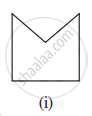
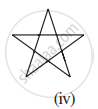
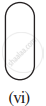
Given here are some figures:
 |
 |
 |
 |
 |
 |
 |
 |
Classify each of them on the basis of the following:
- Simple curve
- Simple closed curve
- Polygon
- Convex polygon
- Concave polygon
In a quadrilateral, define of the following Vertices .
Complete of the following, so as to make a true statement:
A quadrilateral has ..... vertices, no three of which are .....
Find the angles of a pentagon which are in the ratio 4: 4: 6: 7: 6.
The angles of a hexagon are (2x + 5)°, (3x - 5)°, (x + 40)°, (2x + 20)°, (2x + 25)° and (2x + 35)°. Find the value of x.
One angle of a pentagon is 160° and the rest are all equal angles. Find the measure of the equal angles.
ABCDE is a pentagon in which AB is parallel to DC and ∠A : ∠E : ∠D = 1 : 2 : 3. Find angle A.
If APB and CQD are two parallel lines, then the bisectors of the angles APQ, BPQ, CQP and PQD form ______.
A pair of opposite sides of a trapezium are ______.
Can we have two obtuse angles whose sum is a complete angle? Why or why not?
