Advertisements
Advertisements
प्रश्न
A particle that is constrained to move along the x-axis, is subjected to a force in the same direction which varies with the distance x of the particle from the origin as F(x) = -kx + ax3. Here, k and a are positive constants. For x ≥ 0, the functional form of the potential energy U(x) of the particle is ______
पर्याय



Advertisements
उत्तर
A particle that is constrained to move along the x-axis, is subjected to a force in the same direction which varies with the distance x of the particle from the origin as F(x) = -kx + ax3. Here, k and a are positive constants. For x ≥ 0, the functional form of the potential energy U(x) of the particle is 
APPEARS IN
संबंधित प्रश्न
Define the following:
Law of conservation of energy
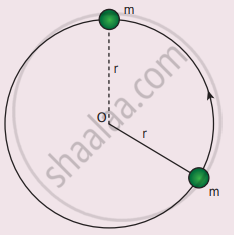
A bob of mass m is attached to one end of the rod of negligible mass and length r, the other end of which is pivoted freely at a fixed center O as shown in the figure. What initial speed must be given to the object to reach the top of the circle? (Hint: Use law of conservation of energy). Is this speed less or greater than the speed obtained in section 4.2.9?
Which of the following statements is true for commercial sources of energy?
Which of the following sector was the largest consumer of commercial energy in 1953-54?
Which of the following has the largest source of power in India?
From which of the following sources of generation do we get the largest amount of power?
What are the basic sources of generating power?
Which of the following reforms has been initiated recently to meet the energy crisis in India?
What is the full form of APDRP?
The ______ is usually instituted via law and is typically applied to necessary goods like food, rent, and energy sources in order to ensure that everyone has access to them.
