Advertisements
Advertisements
प्रश्न
_______ is the distance between the nucleus of the atom and its outermost shell.
पर्याय
Atomic radius
Atomic diameter
atomic mass
atomic size
Advertisements
उत्तर
Atomic radius is the distance between the nucleus of the atom and its outermost shell.
Explanation:
The atomic radius is defined as the distance between the center of the nucleus and the outermost shell containing electrons in an atom. It is the standard measure used to describe the size of an atom.
APPEARS IN
संबंधित प्रश्न
Arrange the following as per the instruction given in the bracket:
Mg, Cl, Na, S, Si (decreasing order of atomic size).
Answer the following in respect of element `31/15 P`
Give its electronic configuration
Give the trends in atomic size on moving across the period left to right.
Why is the size of neon greater than fluorine?
Which is greater in size an atom or a cation?
Write the name and symbol of the element from the description.
The noble gas with the smallest atomic radius.
What happens to the atomic size of elements on moving from left to right in a period?
On moving from left to right in a periodic table, the size of the atom ______.
The size of an atom is indicated by its ______.
Atomic radius is expressed in the unit ______.
While going from top to bottom in a group the atomic radius ______.
Write scientific reason.
In same period, boron and oxygen elements have different atomic size.
Which of the following is the correct order of size?
Which of the following gives the correct increasing order of the atomic radii of O, F and N?
Which of the following are the characteristics of isotopes of an element?
- Isotopes of an element have same atomic masses
- Isotopes of an element have same atomic number
- Isotopes of an element show same physical properties
- Isotopes of an element show same chemical properties
Which one of the following depict the correct representation of atomic radius(r) of an atom?
|
(i) |
(ii) |
|
(iii) |
(iv) |

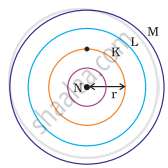
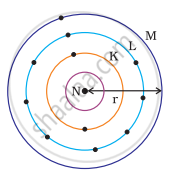
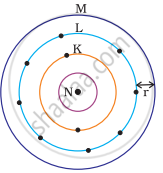
Arrange the following elements in increasing order of their atomic radii.
- Li, Be, F, N
- Cl, At, Br I
Arrange the following as per the instruction given in the bracket:
Carbon, Fluorine, Beryllium (decreasing order of atomic size).
Arrange the following as per instruction given in the bracket.
Mg, Cl, Na, S, Si (decreasing order of atomic size)
