Topics
Introduction to Indian Society
- Study of Indian Society: Sociological Connections with History and Anthropology
- Study of Indian Society
- Religious Beliefs and Practices in Ancient India
- Religion in Ancient Indian Civilizations
- Jainism and Buddhism in Ancient India
- Religious Beliefs and Practices in Medieval India
- Status of Women in Indian Society
- Nature of Education in Ancient and Medieval India
- Social Life in Ancient and Medieval India
- Urbanisation in Ancient India
- Concept of Sociological Imagination
- Colonial Period in India
- Effects of Colonialisation in India
- Factors Affecting Post-Independence India
- Overview of Introduction to Indian Society
Segments of Indian Society
- Introduction to Segments of Indian Society
- The Tribal Community in India
- Tribal Development in India
- Exploitation and Problems of the Indian Tribal Community
- The Rural Community in India
- Rural Development in India (Sociological Perspective)
- The Urban Community in India
- Urban Development in India
- Overview of Segments of Indian Society
Diversity and Unity in Indian Society
- Introduction of Diversity and Unity in Indian Society
- Diversity in Indian Society
- Unity in Diversity
- Challenges to National Unity
- Factors that Are Responsible for Economic Inequality in Society
- Overview of Diversity and Unity in Indian Society
Processes of Social Change in India
- Industrialisation
- Urbanisation in India
- Modernisation
- Digitalisation
- Factors Responsible for Social Change
- Overview of Processes of Social Change in India
Social Movements in India
- Meaning and Nature of Social Movement
- Types of Social Movements
- Causes of Social Movements
- Social Movements and Social Change
- Womens’ Movement in India
- Workers’ Movements
- Farmer's Movements
- Environmental Movement in India
- Overview of Social Movements in India
Social Problems in India
- Social Problem
- Ageing
- The Problems of Ageing
- Measures to Tackle the Problems of Ageing
- Concept of Unemployment
- Causes of Unemployment
- General Measures to Reduce Unemployment
- Farmers’ Suicide
- Causes of Farmers’ Suicide
- Consequences of Farmers’ Suicides
- Measures to Tackle the Problem of Farmer Suicides
- Domestic Violence
- Causes of Domestic Violence
- Consequences of Domestic Violence
- Measures to Deal with Domestic Violence
- Addiction (Substance, Internet, Mobile)
- Types of Addiction
- Causes of Addiction
- Consequences of Addiction
- Measures to Tackle Addiction Problems
- Overview of Social Problems in India
Passages
- Passages
- Phases of Indian Society to be Studied
- Definition: Ancient India
- Definition: Medieval India
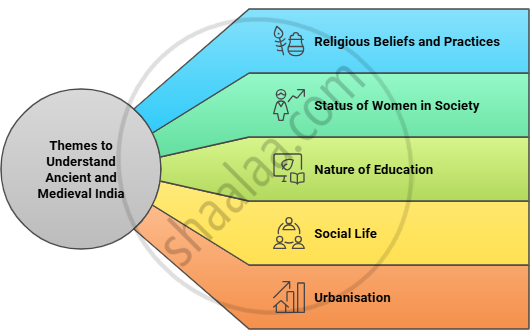
- Understanding Society in Ancient and Medieval India
- Definition: Colonial Period in India
- Definition: Post-Independence India
- Key Takeaways
Phases of Indian Society to be Studied
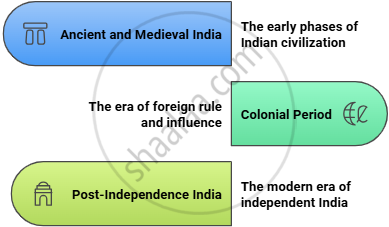
Definition : Ancient India
Ancient India refers to the time when early civilizations and societies started in India, with people living in villages and cities, forming unique customs, beliefs, and traditions.
Definition : Medieval India
Medieval India describes the period when kingdoms, empires, and new cultures developed in India, leading to changes in religion, society, and ways of living through rule by various dynasties.
Understanding Society in Ancient and Medieval India
Definition : Colonial Period in India
The colonial period in India is when foreign powers, mainly the British, controlled the country, bringing new laws, schools, and ways of life that affected Indian society deeply.
Definition : Post-Independence India
Post-Independence India is the phase after the country became self-governed, where the government works to create fair opportunities and progress for all people, guided by the Constitution’s values.
Key Takeaways
-
Indian society is divided for study into three major phases: Ancient & Medieval India, the Colonial Period, and Post-Independence India.
-
Ancient and medieval India developed unique customs, diverse religions, and castes (varnas), as well as important cultural and educational centers; women’s status and rights changed over time.
-
The Colonial Period saw the arrival of new rulers (mainly the British), the introduction of English education, social reforms (like the abolition of sati), the growth of cities, and the influence of Western lifestyles and ideas.
-
Post-Independence India is guided by the values of the Constitution (equality, freedom, unity), with continuing progress towards social justice, access to education, and urbanization, yet facing modern challenges
