Topics
Introduction to Indian Society
- Study of Indian Society: Sociological Connections with History and Anthropology
- Study of Indian Society
- Religious Beliefs and Practices in Ancient India
- Religion in Ancient Indian Civilizations
- Jainism and Buddhism in Ancient India
- Religious Beliefs and Practices in Medieval India
- Status of Women in Indian Society
- Nature of Education in Ancient and Medieval India
- Social Life in Ancient and Medieval India
- Urbanisation in Ancient India
- Concept of Sociological Imagination
- Colonial Period in India
- Effects of Colonialisation in India
- Factors Affecting Post-Independence India
- Overview of Introduction to Indian Society
Segments of Indian Society
- Introduction to Segments of Indian Society
- The Tribal Community in India
- Tribal Development in India
- Exploitation and Problems of the Indian Tribal Community
- The Rural Community in India
- Rural Development in India (Sociological Perspective)
- The Urban Community in India
- Urban Development in India
- Overview of Segments of Indian Society
Diversity and Unity in Indian Society
- Introduction of Diversity and Unity in Indian Society
- Diversity in Indian Society
- Unity in Diversity
- Challenges to National Unity
- Factors that Are Responsible for Economic Inequality in Society
- Overview of Diversity and Unity in Indian Society
Processes of Social Change in India
- Industrialisation
- Urbanisation in India
- Modernisation
- Digitalisation
- Factors Responsible for Social Change
- Overview of Processes of Social Change in India
Social Movements in India
- Meaning and Nature of Social Movement
- Types of Social Movements
- Causes of Social Movements
- Social Movements and Social Change
- Womens’ Movement in India
- Workers’ Movements
- Farmer's Movements
- Environmental Movement in India
- Overview of Social Movements in India
Social Problems in India
- Social Problem
- Ageing
- The Problems of Ageing
- Measures to Tackle the Problems of Ageing
- Concept of Unemployment
- Causes of Unemployment
- General Measures to Reduce Unemployment
- Farmers’ Suicide
- Causes of Farmers’ Suicide
- Consequences of Farmers’ Suicides
- Measures to Tackle the Problem of Farmer Suicides
- Domestic Violence
- Causes of Domestic Violence
- Consequences of Domestic Violence
- Measures to Deal with Domestic Violence
- Addiction (Substance, Internet, Mobile)
- Types of Addiction
- Causes of Addiction
- Consequences of Addiction
- Measures to Tackle Addiction Problems
- Overview of Social Problems in India
Passages
- Passages
- Overview of Social Life in the Ancient Period
- Social Life in the Harappan Period
- Social Life in the Vedic Period
- The Four Margas (Paths of Liberation) in Hinduism
- Social Life in the Sangham Period
- Definition: The Age of the Guptas
- Overview of the Gupta Empire
- Social Life in the Age of the Guptas
- Cultural Developments in the Age of the Guptas
- Great vs. Little Traditions
- Examples of Great and Little Traditions
- Social Life in Medieval India
- Examples of Cultural Developments in Medieval India
- Key Takeaways
Overview of Social Life in Ancient India
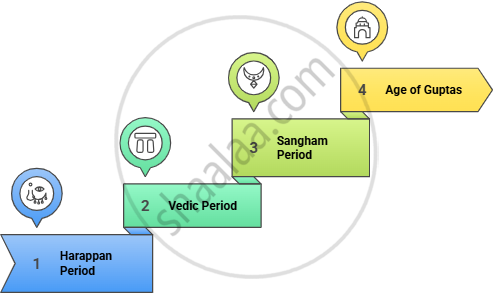
Social Life in the Harappan Period
Key Features
-
Well-Planned Cities: Grid-pattern roads, drainage systems, and granaries for food storage.
-
Community Life: The Great Bath of Mohenjo-Daro symbolizes unity and collective rituals.
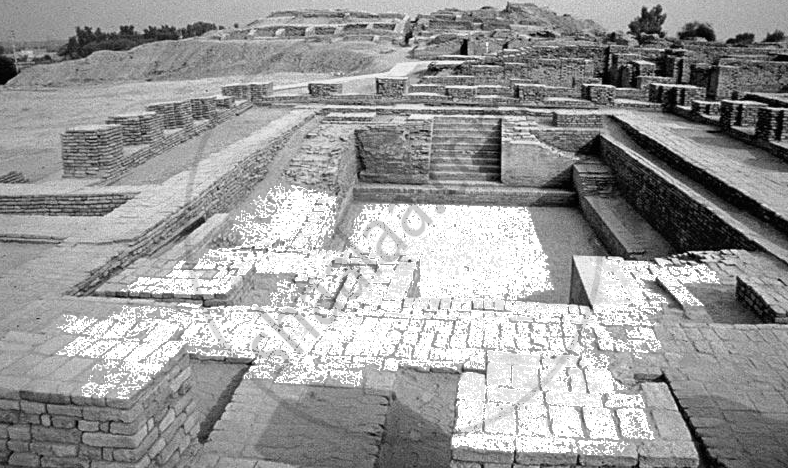
The Great Bath
-
Occupations: Farmers, traders, artisans, priests, weavers, and administrators worked together in an organized economy.
| Group | Role in Society |
|---|---|
| Farmers | Agriculture, grain storage |
| Artisans | Pottery, textile, metalwork |
| Traders | Inland and overseas commerce |
| Priests | Spiritual and civic advisory role |
| Labourers | Construction, public works |
- Modern Connection: The shared civic planning of Harappan cities is mirrored in modern Indian cities’ town planning and local markets.
Social Life in the Vedic Period
- The Varna System was an occupational division
| Varna | Role in Society | Typical Occupations | Special Features |
|---|---|---|---|
| Brahmins | Priests, teachers, scholars | Rituals, teaching, advising | Highest purity, “twice-born,” access to spiritual education |
| Kshatriyas | Warriors, rulers, administrators | Military, governance | Responsible for protection and law, also “twice-born” |
| Vaishyas | Farmers, traders, merchants | Agriculture, business, crafts | Economic backbone, also “twice-born” |
| Shudras | Laborers, artisans, service providers | Manual work, support roles | Provided services to other varnas, excluded from spiritual rites |
Notes:
-
“Twice-born” refers to a spiritual initiation ceremony (upanayana) open to the first three varnas.
-
Initially, the varna system was based on occupation and ability. Over time, it became hereditary and rigid.
-
Role of Purity: Higher varnas were considered “pure” and lower varnas “polluted”—this influenced rituals and social interactions.
The first three varnas underwent upanayana (initiation) and followed the Ashram Vyavastha (four life stages).
| Ashrama | Life Stage | Purpose |
|---|---|---|
| Brahmacharya | Student | Education and discipline |
| Grihastha | Householder | Family and social duties |
| Vanaprastha | Hermit | Withdrawal from world |
| Sannyasa | Renunciate | Attainment of moksha |
The Four Margas (Paths of Liberation) in Hinduism
In Hindu philosophy, marga (meaning "path" or "way") refers to the spiritual route that helps a person attain moksha - liberation from the cycle of birth and death (samsara). There are traditionally four main margas (paths), each suited to different human temperaments and life approaches:
| Marga (Path) | Meaning/Focus | Key Practices | Goal / Outcome | Best Suited For |
|---|---|---|---|---|
| Jnana Marga | Path of Knowledge and Wisdom | Study of scriptures (Upanishads, Vedanta), reflection, self-inquiry, meditation on Atman and Brahman | Realization that the individual self and universal Self are one (non-duality) | Philosophical thinkers and intellectual seekers |
| Bhakti Marga | Path of Love and Devotion | Worship, prayer, singing hymns (bhajans), temple rituals, surrender to God | Union with God through love and surrender; emotional purification | Emotional or devotional individuals who value personal connection with the Divine |
| Karma Marga | Path of Action and Selfless Work | Performing one’s duty (dharma) without attachment to results | Purification of mind through selfless service; liberation from ego | Active individuals who express faith through service and duty |
| Raja Marga | Path of Meditation and Discipline | Practice of yoga (concentration, breath control, ethical living, meditation) | Control over mind and body; realization of inner peace and unity with the Supreme | Meditative, disciplined, and introspective individuals |
-
All four margas aim at spiritual liberation (moksha) but differ in practice.
-
The Bhagavad Gita emphasizes a balance among these paths, depending on temperament and ability.
-
These paths are often called yogas (e.g., Jnana Yoga, Bhakti Yoga, Karma Yoga, and Raja Yoga).
-
Modern spiritual movements often integrate all four — knowledge, devotion, action, and meditation — into one holistic practice.
Social Life in the Sangham Period
-
Tribal Diversity: Sangham texts describe coexisting tribes, including Brahmins, Bards (poet-musicians), Vedars (hunters), and Marrakudi warriors.
-
Occupational Classes: Fishermen, salt manufacturers, agriculturalists, and weavers formed a balanced economy.
-
Cultural Exchange: Poets and priests preserved traditions — early examples of India’s pluralism.
Definition : The Age of the Guptas
The Age of the Guptas was called the Golden Age of India because it was a period (around 320–550 CE) of great peace, prosperity, and outstanding progress in art, literature, science, mathematics, and culture, making it one of the most glorious times in ancient Indian history.
Overview of the Gupta Empire
| Period | Timeframe | Key Rulers/Events | Description |
|---|---|---|---|
| Beginning | c. 320 CE |
|
The empire was founded and expanded in northern India. |
| Peak | c. 335–467 CE |
|
Period of greatest unity, prosperity, and flourishing trade; called “The Golden Age of India.” |
| Decline | After 467 CE |
|
|
Social Life in the Age of the Guptas
| Aspect | Description |
|---|---|
| Society and Class |
|
| Position of Women | Women participated in education and cultural life, though patriarchal norms increased over time. |
| Education |
|
| Religion |
|
Additional Points
-
Many legal and social texts (like Nitishastras and Dharmashastras) were written during the Gupta era’s second urbanisation.
-
These texts defined socio-political laws and punishments, which varied according to the jati (caste) of the accused.
-
The caste hierarchy became deeper and more rigid.
-
Shudras were mostly assigned roles as service providers: artisans, farm laborers, and servants for the upper (dvija) castes.
Cultural Developments in the Age of the Guptas
There were great advances in art, architecture, and literature—temples and sculptures flourished, and drama and poetry reached classical perfection.
| Scholar | Field | Contribution |
|---|---|---|
| Aryabhatta | Mathematics & Astronomy |
|
| Varahamihira | Astronomy & Astrology |
|
| Dhanvantri | Medicine |
|
Great vs. Little Traditions
- Indian society is known for its rich diversity in culture, arts, and everyday life.
- To explain this diversity, anthropologists Milton Singer and Robert Redfield introduced the concepts of "Great Traditions" and "Little Traditions."
- These concepts describe the relationship and interaction between the scholarly, pan-Indian practices and the local, folk traditions that together create India's unique cultural fabric.
- Both interacted continuously, creating India’s plural cultural fabric.
| Category | Description |
|---|---|
| Great Traditions | Scholarly, elite, pan-Indian culture |
| Little Traditions | Local, folk, popular culture |
Examples of Great and Little Traditions
| Category | Examples |
|---|---|
| Great Traditions |
|
| Little Traditions |
|
Social Life in Medieval India
- The Medieval Period in India saw many conquests, with early Muslim invaders coming to exploit its resources.
- During the Delhi Sultanate, Indian and Islamic cultures merged, visible in Indo-Islamic architecture, technology, and the Hindi-Urdu language.
- Society was divided into four classes: nobles, priests, townspeople, and peasants, with a rigid caste system.
- Emperor Akbar brought strong political stability and expanded the empire peacefully.
- Though some rulers were tyrants, the period also saw flourishing arts, architecture, and trade and the creation of the new religion Din-Ilahi based on ethics.
- Arts and sciences, including music, painting, medicine, astronomy, and literature, benefited from patronage, especially from Muslim rulers, influencing and blending cultural tastes in Medieval India.
- This period transformed Indian society despite its challenges.
Examples of Cultural Developments in Medieval India
| Field | Development |
|---|---|
| Architecture |
|
| Literature |
|
| Music |
|
| Painting |
|
| Dance & Drama |
|
| Religious Movements |
|
| Language |
|
| Trade/Crafts |
Flourishing textiles, metalwork, sculpture under patronage of Sultans and Mughals |
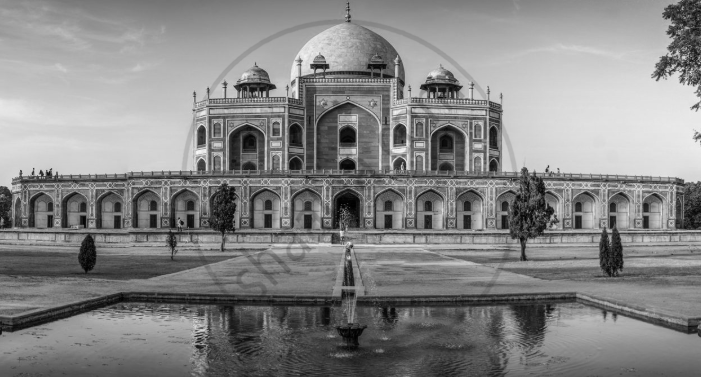
Humayun's Tomb in Delhi
Key Takeaways
-
Harappan Period: Urban, well-planned cities, collective life (Great Bath), and occupational diversity.
-
Vedic Period: Varna started flexible and became a rigid caste system with a deep hierarchy.
-
The Age of the Guptas: The “Golden Age” was marked by advances in art, science, and education (Aryabhatta, Varahamihira, and Dhanvantri); flourishing literature; and religious tolerance.
-
Post-Gupta Texts: Dharmashastras deepened caste hierarchy; patriarchal control strengthened.
-
Great vs. Little Traditions: Elite classical culture (music, Sanskrit philosophy) blended with folk traditions (Lavani, folklore).
-
Medieval Period: Indo-Islamic synthesis under the Delhi Sultanate and Mughals; growth in architecture, music, literature, and composite languages (Hindi-Urdu); Bhakti and Sufi movements promoted unity.
