Advertisements
Chapters
![Rupa Pandit solutions for कंप्युटर एपलीकेशंस [अंग्रेजी] कक्षा १० आईसीएसई chapter 2 - Class as the Basis of all Computation - Shaalaa.com](/images/computer-applications-english-class-10-icse_6:a86debec6313407fa84cd182cd5e7e57.jpg "Rupa Pandit solutions for कंप्युटर एपलीकेशंस [अंग्रेजी] कक्षा १० आईसीएसई chapter 2 - Class as the Basis of all Computation")
Advertisements
Solutions for Chapter 2: Class as the Basis of all Computation
Below listed, you can find solutions for Chapter 2 of CISCE Rupa Pandit for कंप्युटर एपलीकेशंस [अंग्रेजी] कक्षा १० आईसीएसई.
Rupa Pandit solutions for कंप्युटर एपलीकेशंस [अंग्रेजी] कक्षा १० आईसीएसई 2 Class as the Basis of all Computation Exercises [Pages 64 - 67]
Choose the correct option.
Putting all relevant data and methods in one boundary is called:
Abstraction
Encapsulation
Polymorphism
Inheritance
It can be called an object factory:
Method
Constructor
Data
Class
Two objects of the same class:
must have same set of member data
must have different set of member data
may have same set of member data
may have different set of member data
Java has ______ primitive data types.
seven
eight
one
two
Identify the correct statement.
double dr = new double;double dr = new double;double dr[] = new dr [5];double dr [] = new double [5];
Identify the incorrect statement.
long g = 65.8;int t = 72;byte b = 3;double h = 92;
Which of the following is implicit typecasting?
int p = (int) 49.8 + 26;long m = (int) 49.8*2;double d = 49.8 + 56;double b = 38/10;
Keyword that helps in allocating memory to an objects is ______.
private
new
class
public
Identify the true statement.
In an array, all elements have same data type.
In a class, all members have same data type.
In an array, all elements have different data type.
In a class, all members have same value.
Identify the false statement.
he compiler cannot identify a composite data type.
Primitive data types do not need separate memory allocation.
Size of primitive data type is fixed.
Arrays are primitives.
Name the feature of java depicted in the above picture.
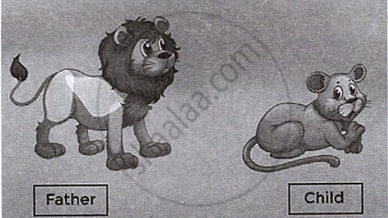
Encapsulation
Inheritance
Abstraction
Abstraction
A mechanism where one class acquires the properties of another class:
Polymorphism
Inheritance
Encapsulation
Abstraction
Method which is a part of a class rather than an instance of the class is termed as ______.
Static method
Non static method
Wrapper class
String method
State True or False.
Variables attached to an object define their state.
State True or False.
Member methods or functions that are attached to an object define their state.
State True or False.
Composite type of data is readily available for programmer's use.
State True or False.
‘int’ is a type of primitive data.
State True or False.
Arrays are primitive type of data.
Identify, given that.
This datatype can store values.
Identify, given that.
The datatype that is identified by the compiler.
Identify, given that.
These members of an object define their behaviour.
Identify, given that.
This can be called an object factory.
Identify, given that.
It is the concept of hiding the background details of a process.
Given below is a real-life case.
Class name: Airport
Name two objects of this class.
Given below is a real-life case.
Class name: School
Name two methods of this class.
Given below is a real-life case.
Class name: Hospital
Name two member data of this class.
Given below is a real-life case.
Class name: City
Name two objects of this class. Also name two data and two methods of this class.
Given below is a real-life case.
Class name: Monument
Name two objects of this class. Also name two data and two methods of this class.
Given below is a partial program code. Identify any error, if present. Also find the following in it:
[Class name, Object name, Array, member data, data type]
Customer ct = new Customer ();
ct.fnInput();
ct.fnOutput();Given below is a partial program code. Identify any error, if present. Also find the following in it:
[Class name, Object name, Array, member data, data type]
int p = 4.5;
Given below is a partial program code. Identify any error, if present. Also find the following in it:
[Class name, Object name, Array, member data, data type]
boolean bp = 'True';
Given below is a partial program code. Identify any error, if present. Also find the following in it:
[Class name, Object name, Array, member data, data type]
class Banker
{
   short c_id;
   double balance;
   long phone_num;
}Given below is a partial program code. Identify any error, if present. Also find the following in it:
[Class name, Object name, Array, member data, data type]
int RM [] = new RM[12];
Given below is a program. Identify the following:
class Student
{
    String Name;int Age ; double Marks;
    void fnInput ()
    {
       Scanner sc = new Scanner(System.in);
       System.out.println("Enter Name:");
       Name = sc.nextLine ();
       System.out.println("Enter Age:");
       Age = sc.nextInt ();
       System.out.println("Enter Marks:");
       Marks = sc.nextDouble ();
    }
    void fnDisplay()
    {
       System.out.println("Name is:"+Name);
       System.out.println("Age is:"+Age);
       System.out.println("Marks is:"+Marks );
       if (Marks >=80)
       System.out.println(“Grade is A");
       else if (Marks >=60)
          System.out.println("Grade is B");
       else if (Marks >=40)
          System.out.println("Grade is C");
       else
          System.out.println(“Grade is F");
    }
    void main()
    {
       Student obSt1 = new Student ();
       obSt1.fnInput ();
       obSt1.fnDisplay ();
       Student obSt2 = new Student ();
       obSt2.fnInput ();
       obSt2.fnDisplay ();
    }
}Name the following:
What is an instance of the class called?
Name the following:
The method which has same name as that of the class name.
Solutions for 2: Class as the Basis of all Computation
Rupa Pandit solutions for कंप्युटर एपलीकेशंस [अंग्रेजी] कक्षा १० आईसीएसई chapter 2 - Class as the Basis of all Computation
Shaalaa.com has the CISCE Mathematics कंप्युटर एपलीकेशंस [अंग्रेजी] कक्षा १० आईसीएसई CISCE solutions in a manner that help students grasp basic concepts better and faster. The detailed, step-by-step solutions will help you understand the concepts better and clarify any confusion. Rupa Pandit solutions for Mathematics कंप्युटर एपलीकेशंस [अंग्रेजी] कक्षा १० आईसीएसई CISCE 2 (Class as the Basis of all Computation) include all questions with answers and detailed explanations. This will clear students' doubts about questions and improve their application skills while preparing for board exams.
Further, we at Shaalaa.com provide such solutions so students can prepare for written exams. Rupa Pandit textbook solutions can be a core help for self-study and provide excellent self-help guidance for students.
Concepts covered in कंप्युटर एपलीकेशंस [अंग्रेजी] कक्षा १० आईसीएसई chapter 2 Class as the Basis of all Computation are .
Using Rupa Pandit कंप्युटर एपलीकेशंस [अंग्रेजी] कक्षा १० आईसीएसई solutions Class as the Basis of all Computation exercise by students is an easy way to prepare for the exams, as they involve solutions arranged chapter-wise and also page-wise. The questions involved in Rupa Pandit Solutions are essential questions that can be asked in the final exam. Maximum CISCE कंप्युटर एपलीकेशंस [अंग्रेजी] कक्षा १० आईसीएसई students prefer Rupa Pandit Textbook Solutions to score more in exams.
Get the free view of Chapter 2, Class as the Basis of all Computation कंप्युटर एपलीकेशंस [अंग्रेजी] कक्षा १० आईसीएसई additional questions for Mathematics कंप्युटर एपलीकेशंस [अंग्रेजी] कक्षा १० आईसीएसई CISCE, and you can use Shaalaa.com to keep it handy for your exam preparation.
