Advertisements
Online Mock Tests
Chapters
1: Power-sharing
2: Federalism
Unit II
3: Gender, Religion and Caste
Unit III
4: Political Parties
Unit IV
▶ 5: Outcomes of Democracy
![NCERT solutions for सोशल साइंस डेमोक्रेटिक पॉलिटिक्स २ [अंग्रेजी] कक्षा १० chapter 5 - Outcomes of Democracy - Shaalaa.com](/images/social-science-democratic-politics-2-english-class-10_6:a07500aaf6d7438ba0e0990bd779983e.jpg "NCERT solutions for सोशल साइंस डेमोक्रेटिक पॉलिटिक्स २ [अंग्रेजी] कक्षा १० chapter 5 - Outcomes of Democracy")
Advertisements
Solutions for Chapter 5: Outcomes of Democracy
Below listed, you can find solutions for Chapter 5 of CBSE NCERT for सोशल साइंस डेमोक्रेटिक पॉलिटिक्स २ [अंग्रेजी] कक्षा १०.
NCERT solutions for सोशल साइंस डेमोक्रेटिक पॉलिटिक्स २ [अंग्रेजी] कक्षा १० 5 Outcomes of Democracy Intext Questions [Pages 64 - 72]
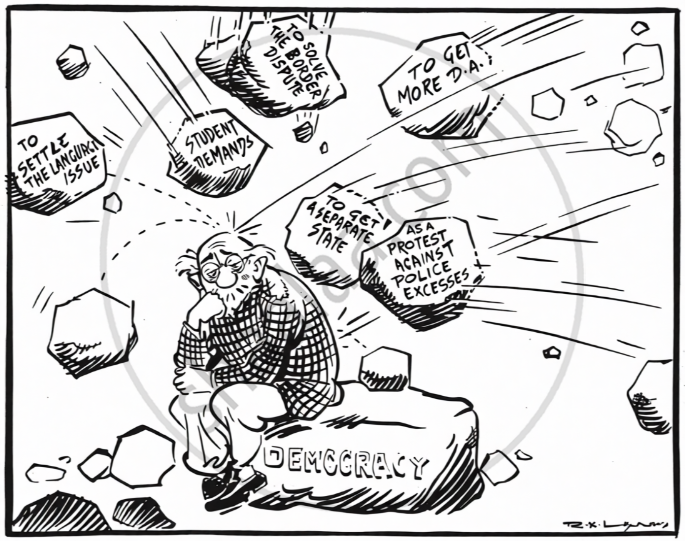
Is democracy all about coping with multiple pressures and accommodating diverse demands?
Can you think of what and how the government knows about you and your family (for example, ration cards and voter identity cards)?
What are the sources of information for you about the government?
So, the best outcome of democracy is that it is a democracy! That is what we have discovered after all this mental gymnastics?
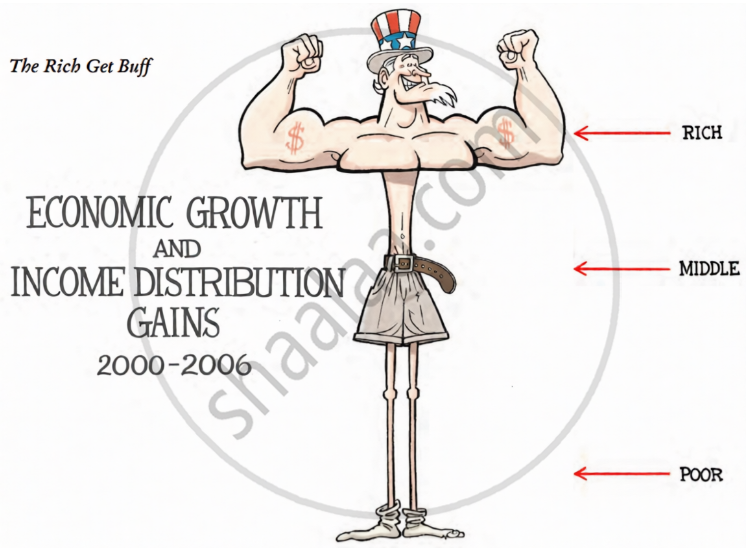
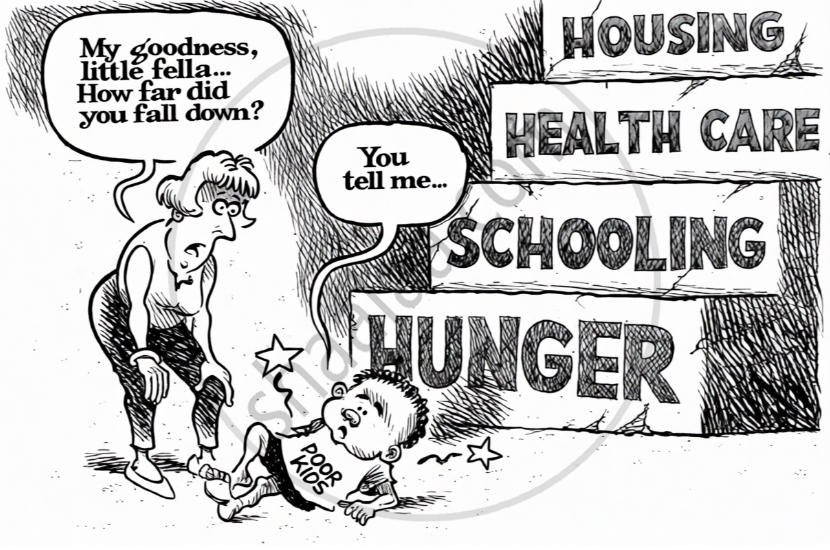
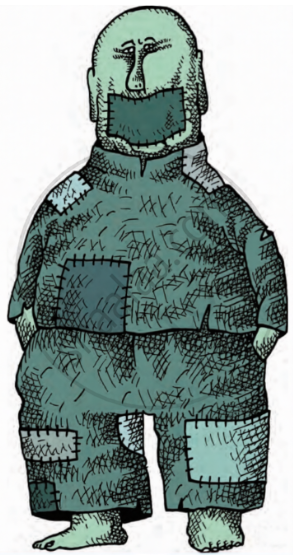
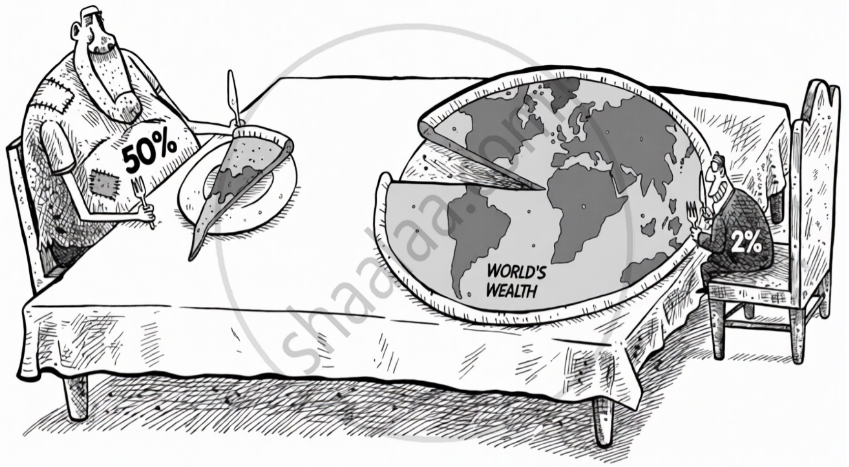
Cartoons tell us about the disparities between the rich and the poor. Should the gains of economic growth be evenly distributed? How can the poor get a voice for a better share in a nation? What can the poor countries do to receive a greater share in the world’s wealth?
What would be your verdict on democracy if you had to base it purely on economic performance of democratic regimes in terms of growth and equal distribution?
| Rates of economic growth for different countries, 1950 - 2000 | |
| Type of regimes and countries | Growth Rate |
| All democratic regimes | 3.95 |
| All dictatorial regimes | 4.42 |
| Poor countries under dictatorship | 4.34 |
| Poor countries under democracy | 4.28 |
Inequality of income in selected countries
| Name of the Countries | % share of national income | |
| Top 20% | Bottom 20% | |
| South Africa | 64.8 | 2.9 |
| Brazil | 63.0 | 2.6 |
| Russia | 53.7 | 4.4 |
| USA | 50.0 | 4.0 |
| United Kingdom | 45.0 | 6.0 |
| Denmark | 34.5 | 9.6 |
| Hungary | 34.4 | 10.0 |
Democracy is a rule of the majority. The poor are in majority. So democracy must be a rule of the poor. How can this not be the case?
All you are saying is that democracy ensures that people do not break each other’s head. This is not harmony. Should we be happy about it?
Let us revise
Enemies
Greeting

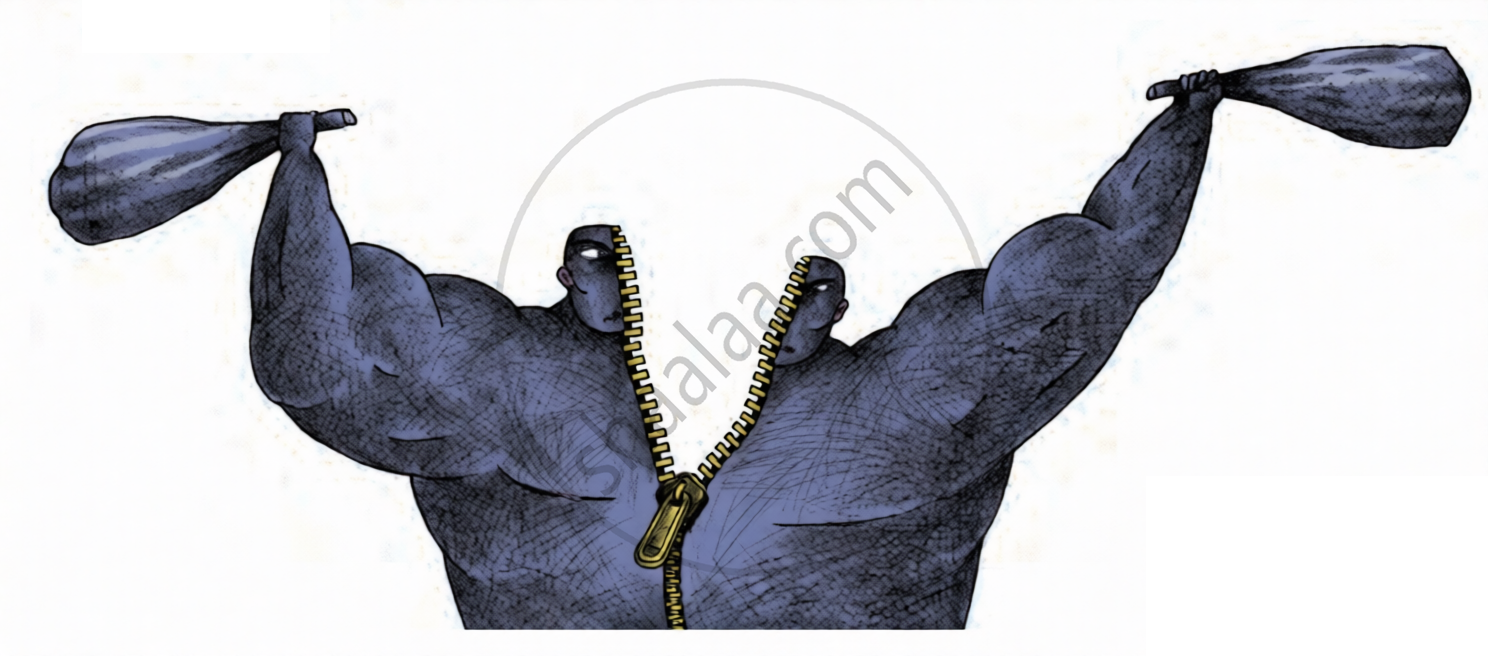
The two images depict two different kinds of effects democratic politics can have on social divisions. Take one example for each image and write a paragraph each on the outcome of democratic politics in both situations.
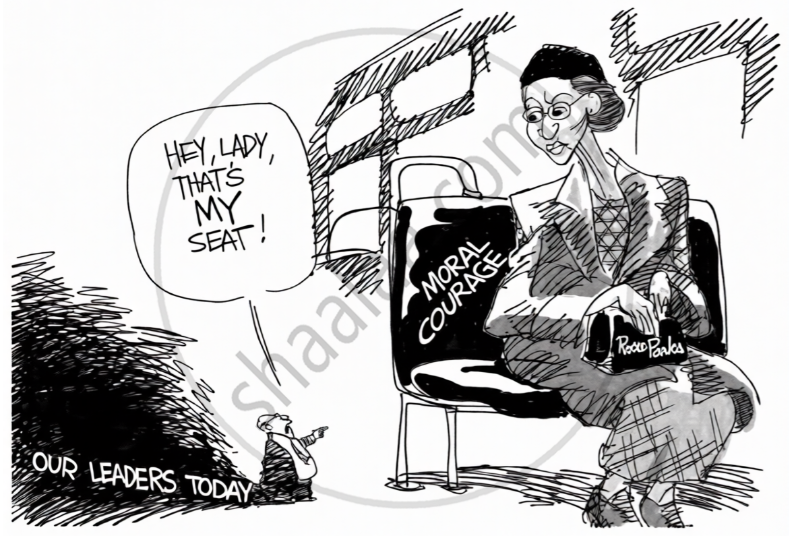
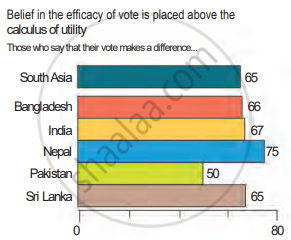
The above cartoon and graph illustrate a point made in this section (Dignity and freedom of the citizens). Underline the sentences from this section which connect to the cartoon or graph.
NCERT solutions for सोशल साइंस डेमोक्रेटिक पॉलिटिक्स २ [अंग्रेजी] कक्षा १० 5 Outcomes of Democracy Exercises [Pages 73 - 74]
How does democracy produce an accountable, responsive and legitimate government?
What are the conditions under which democracies accommodate social diversities?
Give arguments to support or oppose the following assertions:
- Industrialised countries can afford democracy but the poor need dictatorship to become rich.
- Democracy can’t reduce inequality of incomes between different citizens.
- Government in poor countries should spend less on poverty reduction, health, education and spend more on industries and infrastructure.
- In democracy all citizens have one vote, which means that there is absence of any domination and conflict.
Identify the challenges to democracy in the following descriptions. Also suggest policy/institutional mechanism to deepen democracy in the given situations:
- Following a High Court directive a temple in Orissa that had separate entry doors for dalits and non-dalits allowed entry for all from the same door.
- A large number of farmers are committing suicide in different states of India.
- Following allegation of killing of three civilians in Gandwara in a fake encounter by Jammu and Kashmir police, an enquiry has been ordered.
In the context of democracies, which of the following ideas is correct- democracies have successfully eliminated:
conflicts among people
economic inequalit ies among people
differences of opinion about how marginalised sections are to be treated
the idea of political inequality
In the context of assessing democracy, which among the following is the odd one out? Democracies need to ensure:
free and fair elections
dignity of the individual
majority rule
equal treatment before law
Studies on political and social inequalities in democracy show that ______.
democracy and development go together
inequalities exist in democracies
inequalities do not exist under dictatorship
dictatorship is better than democracy
Read the passage below:
| Nannu is a daily wage earner. He lives in Welcome Mazdoor Colony, a slum habitation in East Delhi. He lost his ration card and applied for a duplicate one in January 2004. He made several rounds to the local Food & Civil Supplies office for the next three months. But the clerks and officials would not even look at him, leave alone do his job or bother to tell him the status of his application. Ultimately, he filed an application under the Right to Information Act asking for the daily progress made on his application, names of the officials, who were supposed to act on his application and what action would be taken against these officials for their inaction. Within a week of filing application under the Right to Information Act, he was visited by an inspector from the Food Department, who informed him that the card had been made and he could collect it from the office. When Nannu went to collect his card next day, he was given a very warm treatment by the Food & Supply Officer (FSO), who is the head of a Circle. The FSO offered him tea and requested him to withdraw his application under the Right to Information, since his work had already been done. |
What does Nannu’s example show? What impact did Nannu’s action have on officials? Ask your parents their experiences when they approach government officials to attend to their problems.
Solutions for 5: Outcomes of Democracy
NCERT solutions for सोशल साइंस डेमोक्रेटिक पॉलिटिक्स २ [अंग्रेजी] कक्षा १० chapter 5 - Outcomes of Democracy
Shaalaa.com has the CBSE Mathematics सोशल साइंस डेमोक्रेटिक पॉलिटिक्स २ [अंग्रेजी] कक्षा १० CBSE solutions in a manner that help students grasp basic concepts better and faster. The detailed, step-by-step solutions will help you understand the concepts better and clarify any confusion. NCERT solutions for Mathematics सोशल साइंस डेमोक्रेटिक पॉलिटिक्स २ [अंग्रेजी] कक्षा १० CBSE 5 (Outcomes of Democracy) include all questions with answers and detailed explanations. This will clear students' doubts about questions and improve their application skills while preparing for board exams.
Further, we at Shaalaa.com provide such solutions so students can prepare for written exams. NCERT textbook solutions can be a core help for self-study and provide excellent self-help guidance for students.
Concepts covered in सोशल साइंस डेमोक्रेटिक पॉलिटिक्स २ [अंग्रेजी] कक्षा १० chapter 5 Outcomes of Democracy are Concep for Democracy Led to Development, Security and Dignity for the People, Sustains Democracy in India, Democracy Be Judged and Outcomes, Concept for Outcomes Reasonably Expect of Democracies, Democracy in India and Expectations, Overview of Outcomes of Democracy, Assessment of Democracy’s Outcomes, Accountable, Responsive and Legitimate Government, Reduction of Inequality and Poverty, Accommodation of Social Diversity, Dignity and Freedom of the Citizens, Economic Growth and Development, Concep for Democracy Led to Development, Security and Dignity for the People, Sustains Democracy in India, Democracy Be Judged and Outcomes, Concept for Outcomes Reasonably Expect of Democracies, Democracy in India and Expectations, Overview of Outcomes of Democracy, Assessment of Democracy’s Outcomes, Accountable, Responsive and Legitimate Government, Reduction of Inequality and Poverty, Accommodation of Social Diversity, Dignity and Freedom of the Citizens, Economic Growth and Development.
Using NCERT सोशल साइंस डेमोक्रेटिक पॉलिटिक्स २ [अंग्रेजी] कक्षा १० solutions Outcomes of Democracy exercise by students is an easy way to prepare for the exams, as they involve solutions arranged chapter-wise and also page-wise. The questions involved in NCERT Solutions are essential questions that can be asked in the final exam. Maximum CBSE सोशल साइंस डेमोक्रेटिक पॉलिटिक्स २ [अंग्रेजी] कक्षा १० students prefer NCERT Textbook Solutions to score more in exams.
Get the free view of Chapter 5, Outcomes of Democracy सोशल साइंस डेमोक्रेटिक पॉलिटिक्स २ [अंग्रेजी] कक्षा १० additional questions for Mathematics सोशल साइंस डेमोक्रेटिक पॉलिटिक्स २ [अंग्रेजी] कक्षा १० CBSE, and you can use Shaalaa.com to keep it handy for your exam preparation.
