Please select a subject first
Advertisements
Advertisements
| The reason the programme has been so successful is because it's impossible to go anywhere near the South Pole and not be affected by it. It's easy to be blase about polar ice caps melting while sitting in the comfort zone of our respective latitude and longitude, but when you can visibly see glaciers retreating and ice shelves collapsing, you begin to realise that the threat of global warming is very real. |
What according to the passage confirms that global warming is real?
Concept: undefined >> undefined
| Rajendra was a landlord. He had made a lot of money by cheating and ill-treating his labourers who worked in the fields. One day, a young man named Mani came to Rajendra, asking for work. Rajendra was pleasantly surprised. No one had ever wanted to work for him because of his reputation, and here was someone walking right into his house! Mani's next few words surprised him even more. Mani said, “I will work for you for free. Only give me a place to sleep, two sets of clothes and two square meals a day”. Rajendra was beside himself with joy when he heard this and was about to agree, when Mani added, “I have only one condition: I will tell you the truth always, but one day in the year. I will lie”. Rajendra, who lied happily every day of the year, agreed to this odd condition. So Mani began working for him. He was a wonderful worker hard-working and trustworthy. He was very honest and soon became Rajendra's right-hand man. Because of Mani's hard work, Rajendra had an excellent harvest. He and his wife, Manda, decided to have a big feast to celebrate. They invited all their relatives and friends, from the village and outside as well. Everyone was looking forward to the delicious feast being planned. On the morning of the feast, Rajendra decided he would also give away some gifts to his relatives, just to show off. So he set off for the market in his cart. As soon as he was out of sight, Mani went running to Manda. He wept loudly and beat his chest. Then he fell on the floor, sobbing and announced, “The master is dead! The cart overturned on the road. Our master has been flattened like a chapatti!” As soon as Rajendra's wife and relatives heard this, they started waiting. Mani rushed out, saying he would bring back the body, while everyone started preparing for the last rites. Mani now went running to his master and said, “Master! Your wife is dead, A cobra bit her and she fell to the ground, as blue as the spring sky". Rajendra was stunned. What! His beloved Manda. his partner in all his schemes, was dead! He hurried home shouting her name. Manda too was weeping loudly, sitting in the courtyard. When she saw her husband run in, she stopped mid-wail, and Rajendra too stood open-mouthed. Then they fell into each other's arms, unable to believe their eyes. As one, they turned to Mani. “What is the meaning of this, Mani?” his master angrily demanded. Mani smiled. “Remember my condition, that I would lie once in the year. Well, I chose today. You see What lies can do? Now think what happens to the people whom you lie to every day of the year!” Saying this, he walked out, leaving behind a stunned and ashamed landlord. |
Which of the following CAN be said about Manda?
- She trusted Mani more than Rajendra.
- She had a good relationship with her husband's relatives.
- She was dishonest.
Concept: undefined >> undefined
Advertisements
| Rajendra was a landlord. He had made a lot of money by cheating and ill-treating his labourers who worked in the fields. One day, a young man named Mani came to Rajendra, asking for work. Rajendra was pleasantly surprised. No one had ever wanted to work for him because of his reputation, and here was someone walking right into his house! Mani's next few words surprised him even more. Mani said, “I will work for you for free. Only give me a place to sleep, two sets of clothes and two square meals a day”. Rajendra was beside himself with joy when he heard this and was about to agree, when Mani added, “I have only one condition: I will tell you the truth always, but one day in the year. I will lie”. Rajendra, who lied happily every day of the year, agreed to this odd condition. So Mani began working for him. He was a wonderful worker hard-working and trustworthy. He was very honest and soon became Rajendra's right-hand man. Because of Mani's hard work, Rajendra had an excellent harvest. He and his wife, Manda, decided to have a big feast to celebrate. They invited all their relatives and friends, from the village and outside as well. Everyone was looking forward to the delicious feast being planned. On the morning of the feast, Rajendra decided he would also give away some gifts to his relatives, just to show off. So he set off for the market in his cart. As soon as he was out of sight, Mani went running to Manda. He wept loudly and beat his chest. Then he fell on the floor, sobbing and announced, “The master is dead! The cart overturned on the road. Our master has been flattened like a chapatti!” As soon as Rajendra's wife and relatives heard this, they started waiting. Mani rushed out, saying he would bring back the body, while everyone started preparing for the last rites. Mani now went running to his master and said, “Master! Your wife is dead, A cobra bit her and she fell to the ground, as blue as the spring sky". Rajendra was stunned. What! His beloved Manda. his partner in all his schemes, was dead! He hurried home shouting her name. Manda too was weeping loudly, sitting in the courtyard. When she saw her husband run in, she stopped mid-wail, and Rajendra too stood open-mouthed. Then they fell into each other's arms, unable to believe their eyes. As one, they turned to Mani. “What is the meaning of this, Mani?” his master angrily demanded. Mani smiled. “Remember my condition, that I would lie once in the year. Well, I chose today. You see What lies can do? Now think what happens to the people whom you lie to every day of the year!” Saying this, he walked out, leaving behind a stunned and ashamed landlord. |
Why did Rajendra accept Mani's condition?
Concept: undefined >> undefined
| Donated Organs and their Transportation | |
| (1) | Once an organ donor's family gives its consent and the organs are matched to a recipient, medical professionals are faced with the onerous challenge of transporting organs while ensuring that the harvested organ reaches its destination in the shortest possible time. This is done in order to preserve the harvested organs which involves the police especially the traffic police department. |
| (2) | The traditional method of transporting organs by road is referred to as a "green corridor". The first green corridor in India was created by Chennai Traffic Police in September 2008, when they accomplished their task of enabling an ambulance to reach its destination within 11 minutes during peak hour traffic. That organ saved a nine-year-old girl whose life depended on the transplant. Similarly, such green corridors have been created by traffic police of various cities such as Pune, Mumbai, Delhi NCR etc. |
| (3) | Experts point out the lack of a robust system to· transport organs to super-speciality hospitals in least possible time. National Organ and Tissue Transplant Organisation (NOTTO), the country's apex organ donation agency, is now framing a proposal to airlift cadaver organs and will send a report to the Union Health Ministry. "Cadaver organs have a short life and so transplant should be done within a few golden hours." Director (NOTTO) expressed, "Therefore, we are preparing a proposal for airlifting organs at any given moment." |
| (4) | Most states do not have enough well-trained experts to retrieve or perform transplant procedures. Also, there is an acute shortage of advanced healthcare facilities to carry out a transplant. So, it is referred to other big centres in metropolitan cities. Organs retrieved from Aurangabad, Indore, Surat and Pune are sent to Mumbai as these cities do not have super-speciality healthcare centres, informed officials. |
| (5) | "In India, about fifty thousand to one lakh patients are suffering from acute heart failure and need heart transplant at any point of time. In a private set-up, a heart transplant costs ₹ 15- 20 lakhs, which is followed up by postoperative medication of about ₹ 30,000 per month lifelong." Moreover, the risk factor is great hindrance. |
What does the author mean by 'a few golden hours'?
Concept: undefined >> undefined
| The reason the programme has been so successful is because it's impossible to go anywhere near the South Pole and not be affected by it. It's easy to be blase about polar ice caps melting while sitting in the comfort zone of our respective latitude and longitude, but when you can visibly see glaciers retreating and ice shelves collapsing, you begin to realise that the threat of global warming is very real. |
Which of the option is not correct in context to the passage?
Concept: undefined >> undefined
| (1) | Most of us know that smoking causes cancer, lung disease, heart disease, can shorten life by 10 years or more and can cost a smoker thousands of rupees a year. So, why are people still smoking? The answer, in a word, is addiction. |
| (2) | Smoking is a hard habit to break because tobacco contains the very addictive chemical nicotine. The body and mind quickly get used to the nicotine in cigarettes. Soon, a person needs to have it just to feel normal. |
| (3) | People start smoking for different reasons. Some think it looks cool. Others start because their family members or friends smoke. Almost all adult tobacco users started before they were 18 years old. Most, never expected to become addicted. |
| (4) | Many of the chemicals in cigarettes, like nicotine and cyanide, are poisons that can kill in high doses. The body is smart. It goes on the defence when it's being poisoned. First time, smokers often feel pain or burning in their throat and lungs, and some even cough vigorously the first few times they try tobacco. Over time, smoking leads to health problems such as heart disease, stroke, lung damage and many types of cancer - including lung, throat, stomach, and bladder cancer. |
| (5) | A survey was conducted to collect views of the people whether smoking should be allowed or not in public places. The results of the responses received have been depicted in the form of a pie chart here.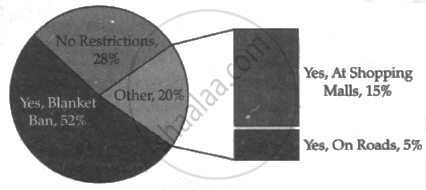 |
What is the basic reason for continuing smoking even after knowing its harmful effects?
Concept: undefined >> undefined
| Mihir and Mahadev lived in the same village. While Mahadev owned the largest shop in the village, Mihir was a poor farmer. Both had large families, with many sons, daughters-in-law and grandchildren. One day, Mihir, tired of not being able to make ends meet, decided to leave the village and move to the city where they were sure to make enough to feed everyone. They said their goodbyes, packed their few belongings and set off. When night fell, they stopped under a large tree. There was a stream running nearby, where they could refresh themselves. Mihir told his sons to clear the area below the tree. He told his wife to fetch water. He instructed his daughters-in-law to make up the fire and started cutting wood from the tree himself. Now, in that branches of the tree sat a thief. He watched as Mihir's family worked together. He also noticed they had nothing to cook. Mihir's wife too thought the same, for she said to her husband, "Everything is ready. But what shall we eat?" Mihir raised his hands to heaven and said, "Don't worry. He is watching all this from above. He will help us." The thief was worried. He had seen that the family was large and worked well together. Surely they did not know he was hiding in the branches. He decided to make a quick getaway. He climbed down swiftly when they were not looking and ran for his life. But, he left behind his bundle of stolen jewels and money, which dropped down into Mihir's lap. He opened it and jumped with joy when he saw the contents. The family promptly gathered its belongings and returned to the village. There was great excitement when they told everyone how they got rich. Mahadev thought this was a nice quick way to earn some money! He commanded his family to pack some clothes and they set off as if on a journey. They stopped under the same tree and Mahadev started commanding everyone as Mihir had done. But no one in his family was willing to obey orders. They were used to having servants wait on them – so the one who went to the river to fetch water had a nice bath. The one who went to gather wood for the fire went off to sleep beneath the tree. And Mahadev only ordered everyone about, not conversation that they had rehearsed carefully. Mahadev's wife said, "Everything is ready. But what shall we eat?" Mahadev raised his hands upwards and said, "Don't worry. He is watching all this from above. He will help us". At this, the thief jumped down from the tree, knife in hand. Seeing him, everyone started running helter-skelter to save themselves. The thief stole everything. Mahadev and his family had to return to the village empty-handed, having lost all the jewellery and gold they had taken with them. |
Why did Mihir and his family decide to camp under the 'thiefs tree'?
Concept: undefined >> undefined
| (1) | Most of us know that smoking causes cancer, lung disease, heart disease, can shorten life by 10 years or more and can cost a smoker thousands of rupees a year. So, why are people still smoking? The answer, in a word, is addiction. |
| (2) | Smoking is a hard habit to break because tobacco contains the very addictive chemical nicotine. The body and mind quickly get used to the nicotine in cigarettes. Soon, a person needs to have it just to feel normal. |
| (3) | People start smoking for different reasons. Some think it looks cool. Others start because their family members or friends smoke. Almost all adult tobacco users started before they were 18 years old. Most, never expected to become addicted. |
| (4) | Many of the chemicals in cigarettes, like nicotine and cyanide, are poisons that can kill in high doses. The body is smart. It goes on the defence when it's being poisoned. First time, smokers often feel pain or burning in their throat and lungs, and some even cough vigorously the first few times they try tobacco. Over time, smoking leads to health problems such as heart disease, stroke, lung damage and many types of cancer - including lung, throat, stomach, and bladder cancer. |
| (5) | A survey was conducted to collect views of the people whether smoking should be allowed or not in public places. The results of the responses received have been depicted in the form of a pie chart here. |
Which of these types of cancers is likely to be caused by smoking?
Concept: undefined >> undefined
| Antarctica, because of her simple ecosystem and lack of biodiversity, is the perfect place to study how little changes in the environment can have big repercussions. Take the microscopic phytoplankton — those grasses of the sea that nourish and sustain the entire Southern Ocean's food chain. These single-celled plants use the sun's energy to assimilate carbon and synthesise organic compounds in that wondrous and most important of processes called photosynthesis. Scientists warn that a further depletion in the ozone layer will affect the activities of phytoplankton, which in turn will affect the lives of all the marine animals and birds of the region, and the global carbon cycle. In the parable of the phytoplankton, there is a great metaphor for existence: take care of the small things and the big things will fall into place. |
Which of the following is true about Antarctica?
Concept: undefined >> undefined
| Mihir and Mahadev lived in the same village. While Mahadev owned the largest shop in the village, Mihir was a poor farmer. Both had large families, with many sons, daughters-in-law and grandchildren. One day, Mihir, tired of not being able to make ends meet, decided to leave the village and move to the city where they were sure to make enough to feed everyone. They said their goodbyes, packed their few belongings and set off. When night fell, they stopped under a large tree. There was a stream running nearby, where they could refresh themselves. Mihir told his sons to clear the area below the tree. He told his wife to fetch water. He instructed his daughters-in-law to make up the fire and started cutting wood from the tree himself. Now, in that branches of the tree sat a thief. He watched as Mihir's family worked together. He also noticed they had nothing to cook. Mihir's wife too thought the same, for she said to her husband, "Everything is ready. But what shall we eat?" Mihir raised his hands to heaven and said, "Don't worry. He is watching all this from above. He will help us." The thief was worried. He had seen that the family was large and worked well together. Surely they did not know he was hiding in the branches. He decided to make a quick getaway. He climbed down swiftly when they were not looking and ran for his life. But, he left behind his bundle of stolen jewels and money, which dropped down into Mihir's lap. He opened it and jumped with joy when he saw the contents. The family promptly gathered its belongings and returned to the village. There was great excitement when they told everyone how they got rich. Mahadev thought this was a nice quick way to earn some money! He commanded his family to pack some clothes and they set off as if on a journey. They stopped under the same tree and Mahadev started commanding everyone as Mihir had done. But no one in his family was willing to obey orders. They were used to having servants wait on them – so the one who went to the river to fetch water had a nice bath. The one who went to gather wood for the fire went off to sleep beneath the tree. And Mahadev only ordered everyone about, not conversation that they had rehearsed carefully. Mahadev's wife said, "Everything is ready. But what shall we eat?" Mahadev raised his hands upwards and said, "Don't worry. He is watching all this from above. He will help us". At this, the thief jumped down from the tree, knife in hand. Seeing him, everyone started running helter-skelter to save themselves. The thief stole everything. Mahadev and his family had to return to the village empty-handed, having lost all the jewellery and gold they had taken with them. |
Which of the following BEST DESCRIBES Mahadev?
Concept: undefined >> undefined
| (1) | Most of us know that smoking causes cancer, lung disease, heart disease, can shorten life by 10 years or more and can cost a smoker thousands of rupees a year. So, why are people still smoking? The answer, in a word, is addiction. |
| (2) | Smoking is a hard habit to break because tobacco contains the very addictive chemical nicotine. The body and mind quickly get used to the nicotine in cigarettes. Soon, a person needs to have it just to feel normal. |
| (3) | People start smoking for different reasons. Some think it looks cool. Others start because their family members or friends smoke. Almost all adult tobacco users started before they were 18 years old. Most, never expected to become addicted. |
| (4) | Many of the chemicals in cigarettes, like nicotine and cyanide, are poisons that can kill in high doses. The body is smart. It goes on the defence when it's being poisoned. First time, smokers often feel pain or burning in their throat and lungs, and some even cough vigorously the first few times they try tobacco. Over time, smoking leads to health problems such as heart disease, stroke, lung damage and many types of cancer - including lung, throat, stomach, and bladder cancer. |
| (5) | A survey was conducted to collect views of the people whether smoking should be allowed or not in public places. The results of the responses received have been depicted in the form of a pie chart here. |
From the given pictorial representation, choose the option that correctly states the percentage of persons who are of the view that smoking should not be allowed on roads.
Concept: undefined >> undefined
| Mihir and Mahadev lived in the same village. While Mahadev owned the largest shop in the village, Mihir was a poor farmer. Both had large families, with many sons, daughters-in-law and grandchildren. One day, Mihir, tired of not being able to make ends meet, decided to leave the village and move to the city where they were sure to make enough to feed everyone. They said their goodbyes, packed their few belongings and set off. When night fell, they stopped under a large tree. There was a stream running nearby, where they could refresh themselves. Mihir told his sons to clear the area below the tree. He told his wife to fetch water. He instructed his daughters-in-law to make up the fire and started cutting wood from the tree himself. Now, in that branches of the tree sat a thief. He watched as Mihir's family worked together. He also noticed they had nothing to cook. Mihir's wife too thought the same, for she said to her husband, "Everything is ready. But what shall we eat?" Mihir raised his hands to heaven and said, "Don't worry. He is watching all this from above. He will help us." The thief was worried. He had seen that the family was large and worked well together. Surely they did not know he was hiding in the branches. He decided to make a quick getaway. He climbed down swiftly when they were not looking and ran for his life. But, he left behind his bundle of stolen jewels and money, which dropped down into Mihir's lap. He opened it and jumped with joy when he saw the contents. The family promptly gathered its belongings and returned to the village. There was great excitement when they told everyone how they got rich. Mahadev thought this was a nice quick way to earn some money! He commanded his family to pack some clothes and they set off as if on a journey. They stopped under the same tree and Mahadev started commanding everyone as Mihir had done. But no one in his family was willing to obey orders. They were used to having servants wait on them – so the one who went to the river to fetch water had a nice bath. The one who went to gather wood for the fire went off to sleep beneath the tree. And Mahadev only ordered everyone about, not conversation that they had rehearsed carefully. Mahadev's wife said, "Everything is ready. But what shall we eat?" Mahadev raised his hands upwards and said, "Don't worry. He is watching all this from above. He will help us". At this, the thief jumped down from the tree, knife in hand. Seeing him, everyone started running helter-skelter to save themselves. The thief stole everything. Mahadev and his family had to return to the village empty-handed, having lost all the jewellery and gold they had taken with them. |
Why did Mihir's family return to the village?
Concept: undefined >> undefined
| Antarctica, because of her simple ecosystem and lack of biodiversity, is the perfect place to study how little changes in the environment can have big repercussions. Take the microscopic phytoplankton — those grasses of the sea that nourish and sustain the entire Southern Ocean's food chain. These single-celled plants use the sun's energy to assimilate carbon and synthesise organic compounds in that wondrous and most important of processes called photosynthesis. Scientists warn that a further depletion in the ozone layer will affect the activities of phytoplankton, which in turn will affect the lives of all the marine animals and birds of the region, and the global carbon cycle. In the parable of the phytoplankton, there is a great metaphor for existence: take care of the small things and the big things will fall into place. |
What purpose does microscopic phytoplankton serve?
Concept: undefined >> undefined
| Mihir and Mahadev lived in the same village. While Mahadev owned the largest shop in the village, Mihir was a poor farmer. Both had large families, with many sons, daughters-in-law and grandchildren. One day, Mihir, tired of not being able to make ends meet, decided to leave the village and move to the city where they were sure to make enough to feed everyone. They said their goodbyes, packed their few belongings and set off. When night fell, they stopped under a large tree. There was a stream running nearby, where they could refresh themselves. Mihir told his sons to clear the area below the tree. He told his wife to fetch water. He instructed his daughters-in-law to make up the fire and started cutting wood from the tree himself. Now, in that branches of the tree sat a thief. He watched as Mihir's family worked together. He also noticed they had nothing to cook. Mihir's wife too thought the same, for she said to her husband, "Everything is ready. But what shall we eat?" Mihir raised his hands to heaven and said, "Don't worry. He is watching all this from above. He will help us." The thief was worried. He had seen that the family was large and worked well together. Surely they did not know he was hiding in the branches. He decided to make a quick getaway. He climbed down swiftly when they were not looking and ran for his life. But, he left behind his bundle of stolen jewels and money, which dropped down into Mihir's lap. He opened it and jumped with joy when he saw the contents. The family promptly gathered its belongings and returned to the village. There was great excitement when they told everyone how they got rich. Mahadev thought this was a nice quick way to earn some money! He commanded his family to pack some clothes and they set off as if on a journey. They stopped under the same tree and Mahadev started commanding everyone as Mihir had done. But no one in his family was willing to obey orders. They were used to having servants wait on them – so the one who went to the river to fetch water had a nice bath. The one who went to gather wood for the fire went off to sleep beneath the tree. And Mahadev only ordered everyone about, not conversation that they had rehearsed carefully. Mahadev's wife said, "Everything is ready. But what shall we eat?" Mahadev raised his hands upwards and said, "Don't worry. He is watching all this from above. He will help us". At this, the thief jumped down from the tree, knife in hand. Seeing him, everyone started running helter-skelter to save themselves. The thief stole everything. Mahadev and his family had to return to the village empty-handed, having lost all the jewellery and gold they had taken with them. |
Why did the thief return to the tree?
Concept: undefined >> undefined
| Mihir and Mahadev lived in the same village. While Mahadev owned the largest shop in the village, Mihir was a poor farmer. Both had large families, with many sons, daughters-in-law and grandchildren. One day, Mihir, tired of not being able to make ends meet, decided to leave the village and move to the city where they were sure to make enough to feed everyone. They said their goodbyes, packed their few belongings and set off. When night fell, they stopped under a large tree. There was a stream running nearby, where they could refresh themselves. Mihir told his sons to clear the area below the tree. He told his wife to fetch water. He instructed his daughters-in-law to make up the fire and started cutting wood from the tree himself. Now, in that branches of the tree sat a thief. He watched as Mihir's family worked together. He also noticed they had nothing to cook. Mihir's wife too thought the same, for she said to her husband, "Everything is ready. But what shall we eat?" Mihir raised his hands to heaven and said, "Don't worry. He is watching all this from above. He will help us." The thief was worried. He had seen that the family was large and worked well together. Surely they did not know he was hiding in the branches. He decided to make a quick getaway. He climbed down swiftly when they were not looking and ran for his life. But, he left behind his bundle of stolen jewels and money, which dropped down into Mihir's lap. He opened it and jumped with joy when he saw the contents. The family promptly gathered its belongings and returned to the village. There was great excitement when they told everyone how they got rich. Mahadev thought this was a nice quick way to earn some money! He commanded his family to pack some clothes and they set off as if on a journey. They stopped under the same tree and Mahadev started commanding everyone as Mihir had done. But no one in his family was willing to obey orders. They were used to having servants wait on them – so the one who went to the river to fetch water had a nice bath. The one who went to gather wood for the fire went off to sleep beneath the tree. And Mahadev only ordered everyone about, not conversation that they had rehearsed carefully. Mahadev's wife said, "Everything is ready. But what shall we eat?" Mahadev raised his hands upwards and said, "Don't worry. He is watching all this from above. He will help us". At this, the thief jumped down from the tree, knife in hand. Seeing him, everyone started running helter-skelter to save themselves. The thief stole everything. Mahadev and his family had to return to the village empty-handed, having lost all the jewellery and gold they had taken with them. |
Why was the thief not afraid of Mahadev's family?
Concept: undefined >> undefined
| Antarctica, because of her simple ecosystem and lack of biodiversity, is the perfect place to study how little changes in the environment can have big repercussions. Take the microscopic phytoplankton — those grasses of the sea that nourish and sustain the entire Southern Ocean's food chain. These single-celled plants use the sun's energy to assimilate carbon and synthesise organic compounds in that wondrous and most important of processes called photosynthesis. Scientists warn that a further depletion in the ozone layer will affect the activities of phytoplankton, which in turn will affect the lives of all the marine animals and birds of the region, and the global carbon cycle. In the parable of the phytoplankton, there is a great metaphor for existence: take care of the small things and the big things will fall into place. |
Photosynthesis is a process in which:
Concept: undefined >> undefined
| (1) | Most of us know that smoking causes cancer, lung disease, heart disease, can shorten life by 10 years or more and can cost a smoker thousands of rupees a year. So, why are people still smoking? The answer, in a word, is addiction. |
| (2) | Smoking is a hard habit to break because tobacco contains the very addictive chemical nicotine. The body and mind quickly get used to the nicotine in cigarettes. Soon, a person needs to have it just to feel normal. |
| (3) | People start smoking for different reasons. Some think it looks cool. Others start because their family members or friends smoke. Almost all adult tobacco users started before they were 18 years old. Most, never expected to become addicted. |
| (4) | Many of the chemicals in cigarettes, like nicotine and cyanide, are poisons that can kill in high doses. The body is smart. It goes on the defence when it's being poisoned. First time, smokers often feel pain or burning in their throat and lungs, and some even cough vigorously the first few times they try tobacco. Over time, smoking leads to health problems such as heart disease, stroke, lung damage and many types of cancer - including lung, throat, stomach, and bladder cancer. |
| (5) | A survey was conducted to collect views of the people whether smoking should be allowed or not in public places. The results of the responses received have been depicted in the form of a pie chart here. |
From the given pictorial representation, choose the option that correctly states the percentage of persons who say that smoking should have a blanket ban as compared to those supporting no restrictions on smoking.
Concept: undefined >> undefined
| (1) | Most of us know that smoking causes cancer, lung disease, heart disease, can shorten life by 10 years or more and can cost a smoker thousands of rupees a year. So, why are people still smoking? The answer, in a word, is addiction. |
| (2) | Smoking is a hard habit to break because tobacco contains the very addictive chemical nicotine. The body and mind quickly get used to the nicotine in cigarettes. Soon, a person needs to have it just to feel normal. |
| (3) | People start smoking for different reasons. Some think it looks cool. Others start because their family members or friends smoke. Almost all adult tobacco users started before they were 18 years old. Most, never expected to become addicted. |
| (4) | Many of the chemicals in cigarettes, like nicotine and cyanide, are poisons that can kill in high doses. The body is smart. It goes on the defence when it's being poisoned. First time, smokers often feel pain or burning in their throat and lungs, and some even cough vigorously the first few times they try tobacco. Over time, smoking leads to health problems such as heart disease, stroke, lung damage and many types of cancer - including lung, throat, stomach, and bladder cancer. |
| (5) | A survey was conducted to collect views of the people whether smoking should be allowed or not in public places. The results of the responses received have been depicted in the form of a pie chart here. |
What is the meaning in which 'cool' has been used in Para 3 of the passage?
Concept: undefined >> undefined
| The lawyer was also officially known as the legal adviser, but everybody referred to him as the opposite. An extremely talented actress, who was also extremely temperamental, once blew over on the sets. While everyone stood stunned, the lawyer quietly switched on the recording equipment. When the actress paused for breath, the lawyer said to her, ''one minute, please", and played back the recording. There was nothing incriminating or unmentionably foul about the actress's tirade against the producer. But when she heard her voice again through the sound equipment, she was struck dumb. A girl from the countryside, she hadn't gone through all the stages of worldly experience that generally precede a position of importance and sophistication that she had found herself catapulted into. She never quite recovered from the terror she felt that day. That was the end of a brief and brilliant acting career — the legal adviser, who was also a member of the Story Department, had unwittingly brought about that sad end. |
In the line: 'While everyone stood stunned, the lawyer quietly .....' what is the meaning of 'stunned'?
Concept: undefined >> undefined
| (1) | Every morning Ravi gives his brain an extra boost. We're not talking about drinking strong cups of coffee or playing one of those mind-training video games advertised all over Facebook. "I jump onto my stationary bike and cycle for 45 minutes to work," says Ravi. "When I go to my desk, my brain is at peak activity for a few hours." After his mental focus comes to a halt later in the day, he starts it with another short spell of cycling to be able to run errands. |
| (2) | Ride, work, ride, repeat. It's a scientifically proven system that describes some unexpected benefits of cycling. In a recent study in the Journal of Clinical and Diagnostic Research, scientists found that people scored higher on tests of memory, reasoning, and planning after 30 minutes of spinning on a stationary bike than they did before they rode the bike. They also completed the tests faster after pedalling. |
| (3) | Exercise is like fertilizer for your brain. All those hours, spent on exercising your muscles, create rich capillary beds not only in leg and hip muscles, but also in your brain. More blood vessels in your brain and muscles mean more oxygen and nutrients to help them work. When you pedal, you also force more nerve cells to fire. The result : you double or triple the production of these cells - literally building your brain. You also release neurotransmitters (the messengers between your brain cells) so all those cells, new and old, can communicate with each other for better, faster functioning. That's a pretty profound benefit to cyclists. |
| (4) | This kind of growth is especially important with each passing birthday, because as we age, our brains shrink and those connections weaken. Exercise restores and protects the brain cells. Neuroscientists say, 'Adults who exercise display sharper memory skills, higher concentration levels, more fluid thinking, and greater problem-solving ability than those who are sedentary." |
| (5) | Cycling also elevates your mood, relieves anxiety, increases stress resistance, and even banishes the blues. "Exercise works in the same way as psychotherapy and antidepressants in the treatment of depression, maybe better," says Dr. Manjari. A recent study analyzing 26 years of research finds that even some exercise - as little as 20 to 30 minutes a day - can prevent depression over the long term. |
| (6) | Remember : although it's healthy, exercise itself is a stress, especially when you're just getting started or getting back into riding. When you first begin to exert yourself, your body releases a particular hormone to raise your heart rate, blood pressure, and blood glucose levels, says Meher Ahluwalia, PhD, a professor of integrative physiology. As you get fitter, it takes a longer, harder ride to trigger that same response. |
What are the unexpected benefits of cycling?
Concept: undefined >> undefined
