Advertisements
Advertisements
Account for the following :
H2S has lower boiling point than H2O.
Concept: undefined >> undefined
Account for the following :
H2S has lower boiling point than H2O.
Concept: undefined >> undefined
Advertisements
Account for the following :
Iron on reaction with HCl forms FeCl2 nd not FeCl3.
Concept: undefined >> undefined
Examine the given defective crystal:
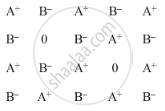
Answer the following questions :
(i) What type of stoichiometric defect is shown by the crystal?
(ii) How is the density of the crystal affected by this defect?
(iii) What type of ionic substances show such defect?
Concept: undefined >> undefined
Give one example each of sol and gel.
Concept: undefined >> undefined
Arrange the following increasing order of their boiling point:
CH3CH2OH, CH3CHO, CH3–O–CH3
Concept: undefined >> undefined
What type of defect is shown by NaCl in
stoichiometric defects, and
Concept: undefined >> undefined
Out of NaCl and AgCl, which one shows Frenkel defect and why?
Concept: undefined >> undefined
Arrange the following in increasing order of boiling points:
(CH3)3 N, C2 H5 OH, C2 H5 NH2
Concept: undefined >> undefined
Write the monomers of the following polymer :
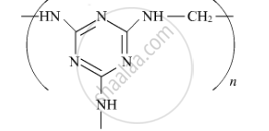
Concept: undefined >> undefined
Differentiate between the following :
Peptide linkage and Glycosidic linkage
Concept: undefined >> undefined
Answer the following question.
What type of stoichiometric defect is shown by ZnS and why?
Concept: undefined >> undefined
Write equations of the following reactions:
Acetylation of aniline
Concept: undefined >> undefined
Ionic solids containing large differences in sizes of ions show ____________.
Concept: undefined >> undefined
Defect shown by non-ionic solids is ____________.
Concept: undefined >> undefined
Defects in solids can be studied using
Concept: undefined >> undefined
Point defect is also known as ____________.
Concept: undefined >> undefined
Dislocation defect is also known as ____________.
Concept: undefined >> undefined
Frenkel defects are not found in alkali metal halides because ____________.
Concept: undefined >> undefined
