Definitions [9]
A common factor of two or more numbers is a number that divides each of the given numbers exactly, without leaving any remainder.
A factor of a number is any number that divides the given number completely without leaving a remainder.
or
When two numbers are multiplied, the result is called their product, and the numbers that are multiplied are called factors of the product.

Numbers having more than two factors are called composite numbers. 4, 6, 8, 9, 10, and so on are examples of composite numbers.
If the difference between two coprime numbers is 2, the numbers are said to be twin prime numbers. For example: (3, 5)
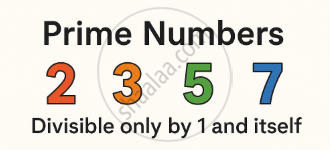
A prime number is a natural number greater than 1 that has exactly two factors: 1 and the number itself.
2, 3, 5, 7, 11, and so on are examples of prime numbers.
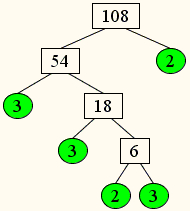
Prime factors of a number are the prime numbers that divide it exactly.
The HCF (Highest Common Factor) of two or more numbers is the highest number among all the common factors of the given numbers.
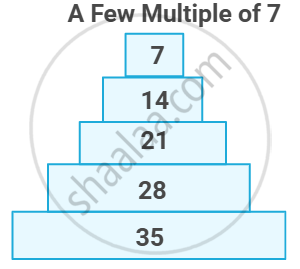
A number is called a multiple of another if it is exactly divisible by that number, i.e., the division leaves no remainder.
The least common multiple of two or more numbers is the smallest number among all common multiples of the given numbers.
