(English Medium)
Academic Year: 2025-2026
Date & Time: 16th March 2026, 11:00 am
Duration: 2h
Advertisements
- Answers to this Paper must be written on the answer sheet provided separately.
- You will not be allowed to write during the first 15 minutes.
- This time is to be spent in reading the question paper.
- The time given at the head of this Paper is the time allowed for writing the answers.
- Attempt all questions from Part I (Compulsory).
- A total of five questions are to be attempted from Part II, two out of three questions from Section A and three out of five questions from Section B.
- The intended marks for questions or parts of questions are given in brackets [].
Choose the correct option to replace the underlined word:
The collection of State Revenue falls under the Consultative Jurisdiction of the High Court.
Advisory
Revisory
Original
Appellate
Chapter:
Which session of the Parliament is most associated with this picture?
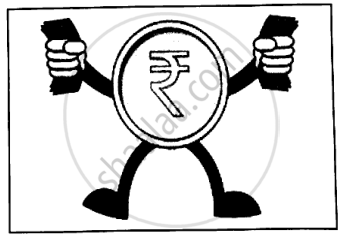
Budget Session
Summer Session
Winter Session
Monsoon Session
Chapter:
Given below are the details of a few Indian Citizens.
| Person | Age (In years) | Description |
| W | 30 | Is an army officer |
| X | 25 | Is a Union Leader |
| Y | 34 | Is a school Principal |
| Z | 69 | Is a retired Professor |
Select the one who is eligible to be a Vice President.
X
W
Y
Z
Chapter:
The rule mentioned in the headline below can be proclaimed in a state on the recommendation of ______.
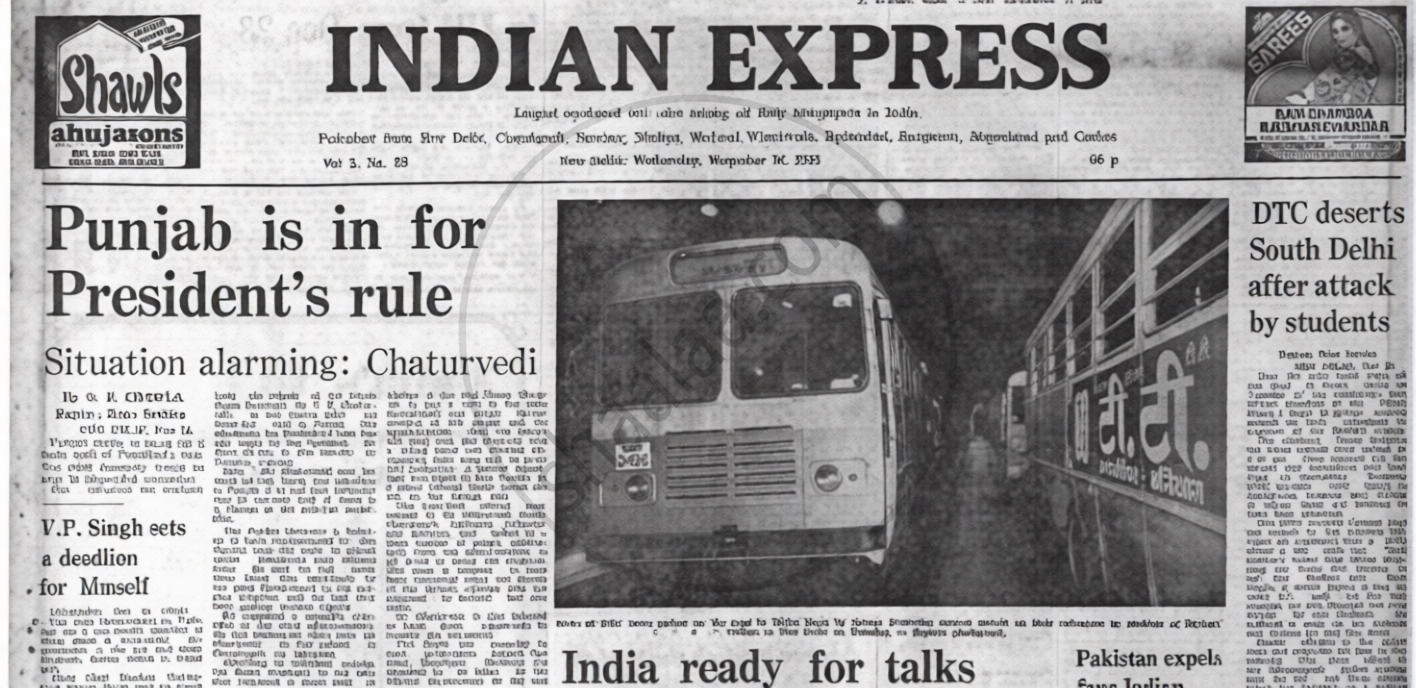
The President
The Vice President
The Governor
The Chief Justice of India
Chapter:
Mr. Anand has been illegally detained by the police, and his family has not been able to meet him. The family members have approached the High Court for help. Which writ will the court issue in this case?
Habeas Corpus
Quo Warranto
Mandamus
Certiorari
Chapter:
Identify the correct statements about the Lok Sabha.
P. Has no nominated members.
Q. Term can be extended during emergency.
R. Has two members nominated by the President.
S. Can be dissolved by the Speaker.
P and Q
R and S
Q and R
P and S
Chapter:
Assertion (A): Hitler attacked Poland to capture the Danzig Port.
Reason (R): Poland was accused of committing atrocities against the Germans.
(A) is true and (R) is false.
(A) is false and (R) is true.
Both (A) and (R) are true and (R) is the correct explanation of (A).
Both (A) and (R) are true but (R) is not the correct explanation of (A).
Chapter:
Identify the option which shows the correct chronology of the following events:
- The Lucknow Pact
- The Surat Split
- The establishment of the Muslim League
1-2-3
1-3-2
3-2-1
2-1-3
Chapter:
Identify the odd one out of the following signatories of the Triple Entente.
France
Russia
Japan
England
Chapter:
In the town of Sundar Nagar, the local government decided to cut down a large number of trees to build a shopping mall. The children were upset because the trees provided a place to play. A group of school students, decided to take action based on the lesson they had studied about the Early Nationalists. Which of the following actions are they NOT likely to adopt?
Hold placards with the message ‘Save Our Trees’.
Write letters to the local newspapers expressing their concerns.
Plant saplings to show their commitment to the environment.
Forcibly prevent workers sent by the Government.
Chapter:
Under which policy of expansion was the place marked in the map annexed by the British?
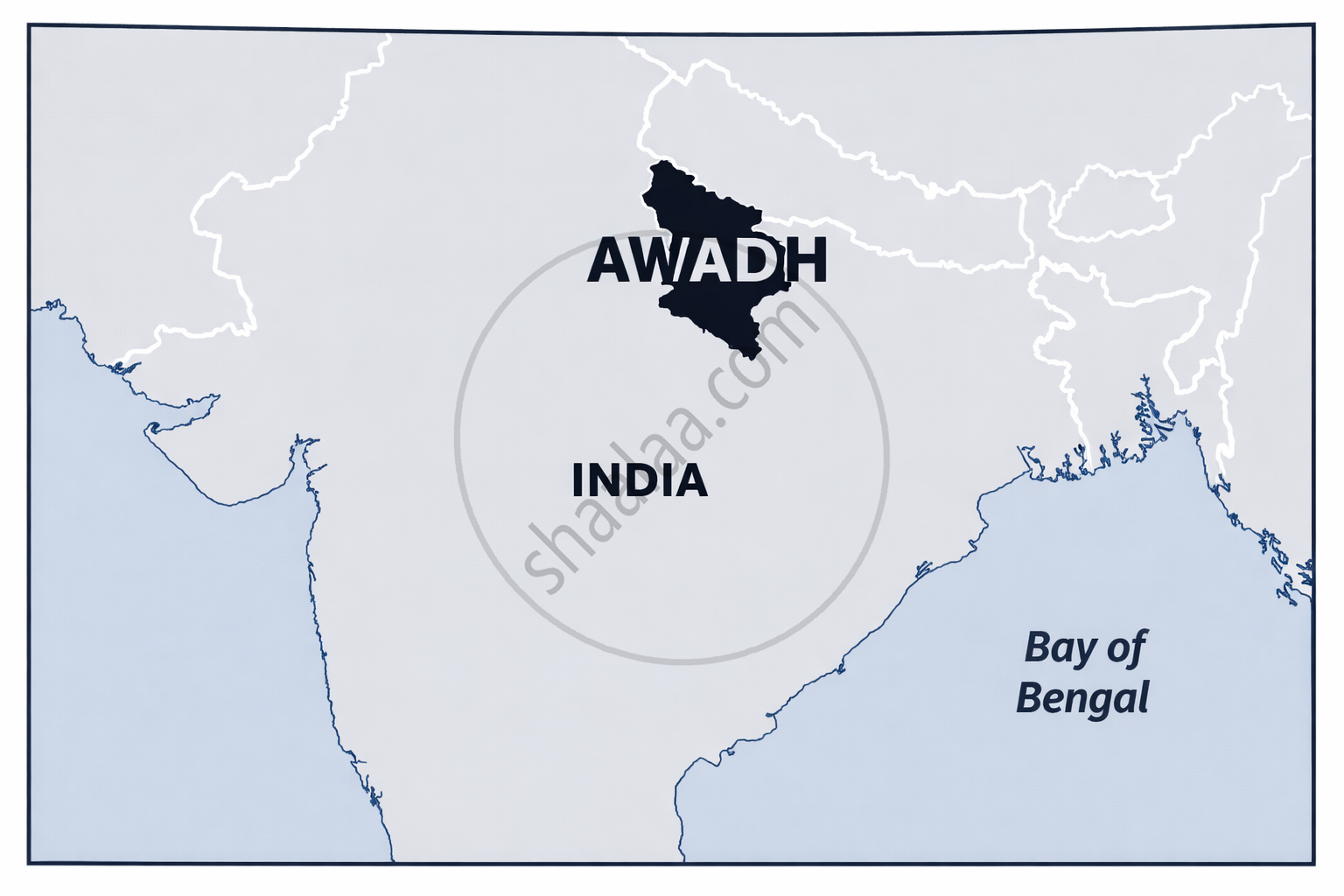
The Doctrine of Lapse
The Subsidiary Alliance
Pretext of misgovernance
Outright wars
Chapter:
Identify the correct pair of words from the given options:
Doctrine of Lapse - Lord Canning
Subsidiary Alliance - Lord Wellesley
Arms Act - Lord Curzon
Vernacular Press Act - Lord Dalhousie
Chapter:
Which of the following is NOT a consequence of the Second World War?
Cold War
Defeat of the Axis Powers
Formation of the United Nations
Formation of the League of Nations
Chapter:
He was an Early Nationalist leader who presided over the second session of the Indian National Congress.
Dadabhai Naoroji
Gopal Krishna Gokhale
Bipin Chandra Pal
Lokmanya Tilak
Chapter:
Which organ of the United Nations Organisation gives this special power to its permanent members?
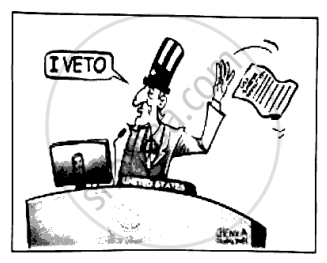
The General Assembly
The International Court of Justice
The Security Council
The Trusteeship Council
Chapter:
The International Court of Justice has ______ judges.
15
10
9
5
Chapter:
Mention any two reasons for the indirect election of the President.
Chapter:
Imagine you were part of the Indian National Army. Mention any two objectives of the army.
Chapter:
Look at the picture given and answer the question that follow.
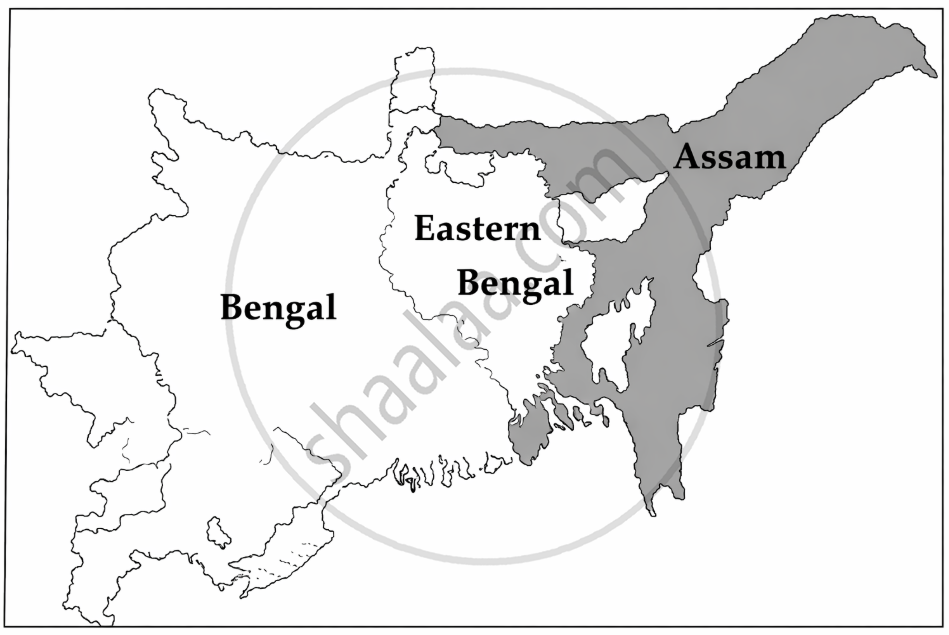
In which year did this Partition happen? Who was responsible for this Partition?
Chapter:
Advertisements
Answer the following question in one or two words/sentences:
Mention two objectives of the Muslim League?
Chapter:
UNESCO provides protection for great cultural institutions. Mention any two ways in which it works towards the preservation of cultural heritage.
Chapter:
Mention any two causes for the Second World War.
Chapter:
President Ramnath Kovind promulgates an Ordinance which will legally allow the farmers to sell their produce without restrictions across the country.
− The Times of India, 5 June 2020
When can the President introduce an Ordinance? When does an Ordinance become inoperative?
Chapter:
The Union Parliament comprises the President and the two houses. With reference to this, answer the following question:
Mention any three powers which are common to both the houses of the Parliament.
Chapter:
The Union Parliament comprises the President and the two houses. With reference to this, answer the following question:
Who elects the members of the Rajya Sabha?
Chapter:
The Union Parliament comprises the President and the two houses. With reference to this, answer the following question:
Mention any two exclusive powers to analyse the advantages of the Rajya Sabha.
Chapter:
The Union Parliament comprises the President and the two houses. With reference to this, answer the following question:
The Parliament controls the functioning of the Executive. Mention any four ways in which it exercises control.
Chapter:
The Prime Minister is the executive head of the country. With reference to the Prime Minister and his Cabinet, answer the following question:
On whose advice are the Cabinet Ministers appointed?
Chapter:
The Prime Minister is the executive head of the country. With reference to the Prime Minister and his Cabinet, answer the following question:
Name the other two categories of the Council of Ministers.
Chapter:
The Prime Minister is the executive head of the country. With reference to the Prime Minister and his Cabinet, answer the following question:
What is meant by the term collective responsibility of the Council of Ministers?
Chapter:
The Prime Minister is the executive head of the country. With reference to the Prime Minister and his Cabinet, answer the following question:
The Prime Minister is central to the life of the Cabinet. Justify this statement by mentioning any four powers of the Prime Minister with reference to the Cabinet.
Chapter:
The single integrated system of judiciary has the Supreme Court at the apex. Wire ference to the Supreme Court, answer the following question:
What is the term of the Supreme Court Judge?
Chapter:
The Supreme Court is the head of the entire system of judiciary. In this context, answer the following question:
Mention any two qualifications required by a person to be the judge of the Supreme Court.
Chapter: [4] The Supreme Court
The single integrated system of judiciary has the Supreme Court at the apex. With reference to the Supreme Court, answer the following question:
Mention any three ways in which the Constitution ensures the independence of the Judiciary.
Chapter:
The single integrated system of judiciary has the Supreme Court at the apex. With reference to the Supreme Court, explain the following term:
Advisory Jurisdiction
Chapter:
The single integrated system of judiciary has the Supreme Court at the apex. With reference to the Supreme Court, explain the following term:
Judicial Review
Chapter:
Advertisements
The 1857 Revolt is also referred to as the Sepoy Mutiny by the British. With reference to the role played by the soldiers, answer the following question:
What was the General Service Enlistment Act?
Chapter:
The 1857 Revolt is also referred to as the Sepoy Mutiny by the British. With reference to the role played by the soldiers, answer the following question:
Why were soldiers unhappy with it?
Chapter:
The 1857 Revolt is also referred to as the Sepoy Mutiny by the British. With reference to the role played by the soldiers, answer the following question:
How did the introduction of the new Enfield Rifle become an immediate cause of the revolt?
Chapter:
The 1857 Revolt is also referred to as the Sepoy Mutiny by the British. With reference to the role played by the soldiers, answer the following question:
The British reformed the army after the revolt ended. Mention any four changes made in the army.
Chapter:
Mahatma Gandhi with his principle of Non-violence, changed the direction of the freedom movement. With reference to the Gandhian Movements, answer the following:
Who launched the Khilafat Movement in India?
Chapter:
Mahatma Gandhi with his principle of Non-violence, changed the direction of the freedom movement. With reference to the Gandhian Movements, answer the following:
Mention two other causes of the Non-Cooperation Movement.
Chapter:
Mahatma Gandhi with his principle of Non-violence, changed the direction of the freedom movement. With reference to the Gandhian Movements, answer the following:
Mention any three points to analyse the impact of the Non-Cooperation Movement.
Chapter:
Mahatma Gandhi with his principle of Non-violence, changed the direction of the freedom movement. With reference to the Gandhian Movements, answer the following:
Mention any four clauses of the Gandhi-Irwin Pact.
Chapter:
Read the passage given below and answer the questions that follow:
|
India’s last Viceroy released a plan on the country’s independence from the British on June 3, 1947. The plan came to be celebrated as the ‘last plan for independence’. He was appointed Viceroy to India to speed up the process of transfer of power-by the then British Prime Minister Clement Atlee. |
- Identify the Viceroy. Mention any two terms of his plan with reference to the Princely States. [3]
- Mention any three reasons given by the Congress to justify the acceptance of the plan. [3]
- Mention any four provisions of the Indian Independence Act of 1947. [4]
Chapter:
Look at the picture given and answer the following questions:
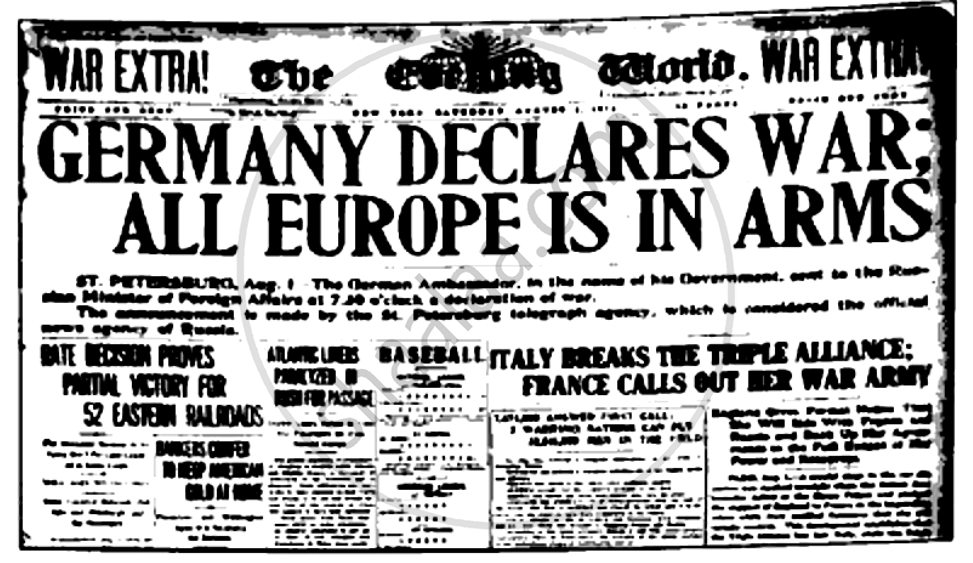
Explain the immediate cause of the war associated with this headline.
Chapter:
According to the Treaty of Versailles, the following are mentioned:
The war reparations to be paid by Germany.
Chapter:
According to the Treaty of Versailles, mention the following:
Two ways in which France benefited from the Treaty.
Chapter:
Name the two dictators who rose in Europe after this war.
Chapter:
Mention any two common causes for the rise of dictatorship.
Chapter:
The United Nations Organisation and the Non-Aligned Movement emerged after the Second World War. With reference to these, answer the following question:
Mention any three objectives of the United Nations Organisation.
Chapter:
The United Nations Organisation and the Non-Aligned Movement emerged after the Second World War. With reference to these, answer the following question:
The General Assembly is the deliberative organ of the United Nations. Mention any three functions of the General Assembly to analyse this statement.
Chapter:
The United Nations Organisation and the Non-Aligned Movement emerged after the Second World War. With reference to these, answer the following question:
With reference to the Non-Aligned Movement, mention any two architects.
Chapter:
The United Nations Organisation and the Non-Aligned Movement emerged after the Second World War. With reference to these, answer the following question:
With reference to the Non-Aligned Movement, mention any two objectives.
Chapter:
Other Solutions
Submit Question Paper
Help us maintain new question papers on Shaalaa.com, so we can continue to help studentsonly jpg, png and pdf files
CISCE previous year question papers ICSE Class 10 History and Civics with solutions 2025 - 2026
Previous year Question paper for CISCE ICSE Class 10 -2026 is solved by experts. Solved question papers gives you the chance to check yourself after your mock test.
By referring the question paper Solutions for History and Civics, you can scale your preparation level and work on your weak areas. It will also help the candidates in developing the time-management skills. Practice makes perfect, and there is no better way to practice than to attempt previous year question paper solutions of CISCE ICSE Class 10 .
How CISCE ICSE Class 10 Question Paper solutions Help Students ?
• Question paper solutions for History and Civics will helps students to prepare for exam.
• Question paper with answer will boost students confidence in exam time and also give you an idea About the important questions and topics to be prepared for the board exam.
• For finding solution of question papers no need to refer so multiple sources like textbook or guides.
