Advertisements
Advertisements
प्रश्न
With the help of suitable diagrams, explain mitosis in detail.
आकृति
स्पष्ट कीजिए
Advertisements
उत्तर
Mitosis is a type of cell division in which one parent cell divides to form two genetically identical daughter cells having the same number of chromosomes as the parent cell.
Mitosis is completed in two steps:
- Karyokinesis – Division of nucleus
- Cytokinesis – Division of cytoplasm
I. Karyokinesis is further divided into four steps:
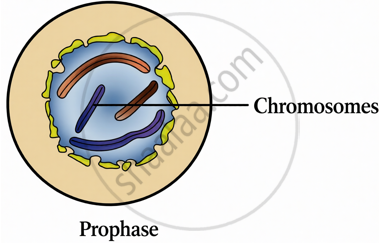
(i) Prophase:
- It is the first stage of mitosis.
- Chromosomal material starts condensing.
- Each chromosome consists of two chromatids attached at the centromere.
- The mitotic spindle begins to form from the centrioles.
- The nuclear membrane and nucleolus disappear by the end of this stage.
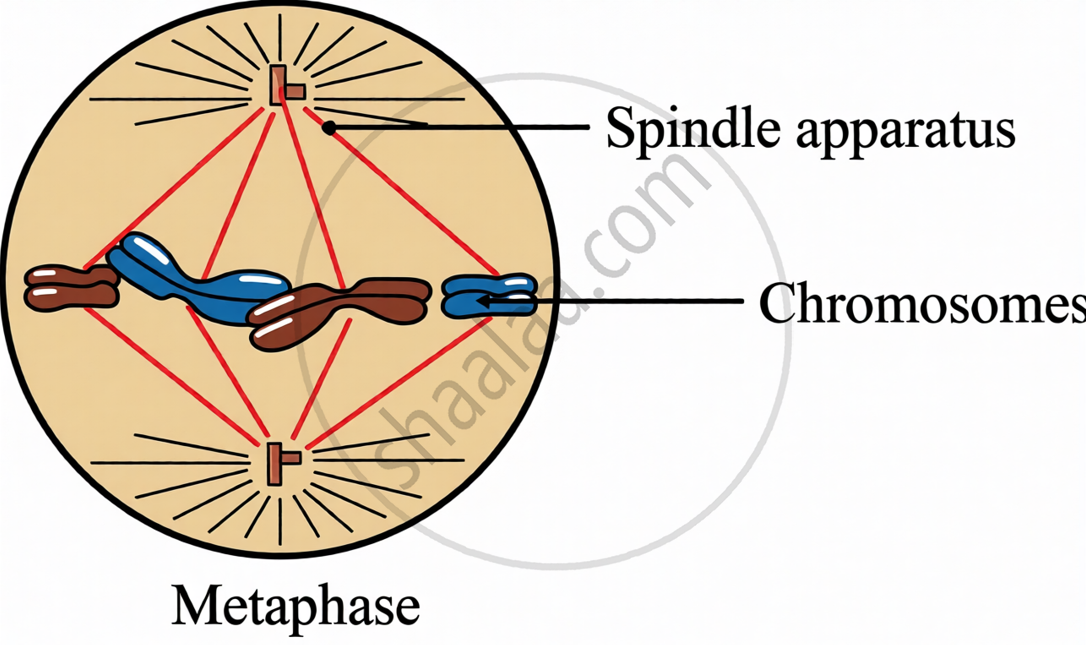
(ii) Metaphase:
- It is the second stage of mitosis.
- Chromosomes become fully condensed.
- Spindle fibres attach to the kinetochores of chromosomes.
- Chromosomes arrange themselves along the metaphase plate at the centre of the cell.
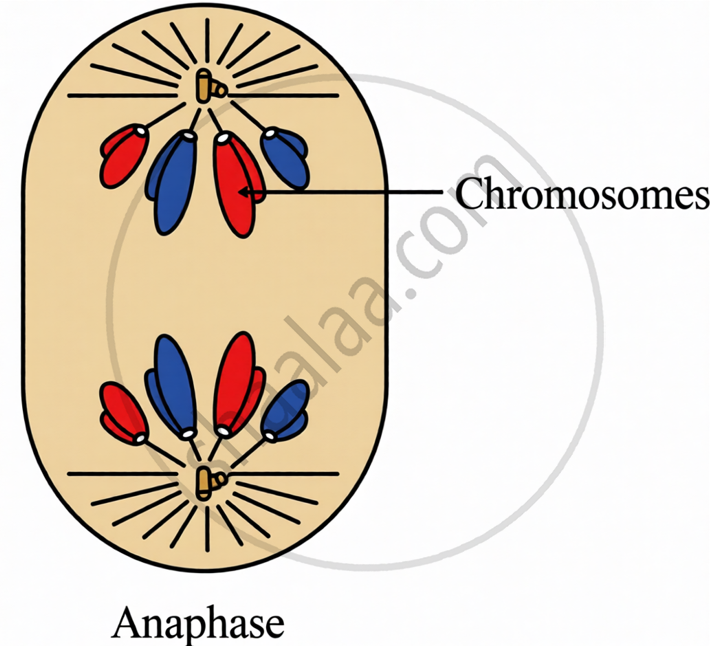
(iii) Anaphase:
- Centromeres split and sister chromatids separate.
- Spindle fibres contract and pull chromatids towards opposite poles.
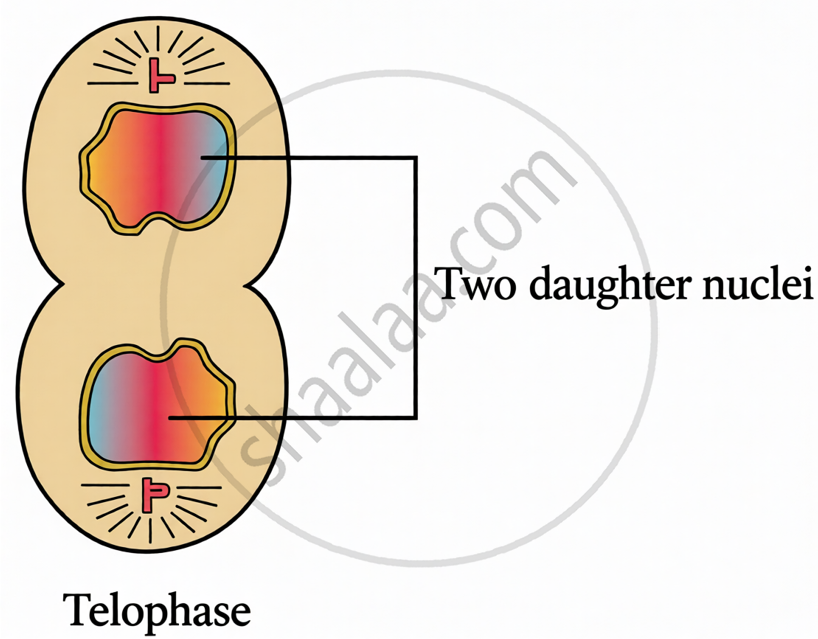
(iv) Telophase:
- Chromosomes reach opposite poles.
- Spindle fibres disappear.
- Nuclear membrane and nucleolus reappear.
- Golgi complex, endoplasmic reticulum, and other cell organelles re-form.
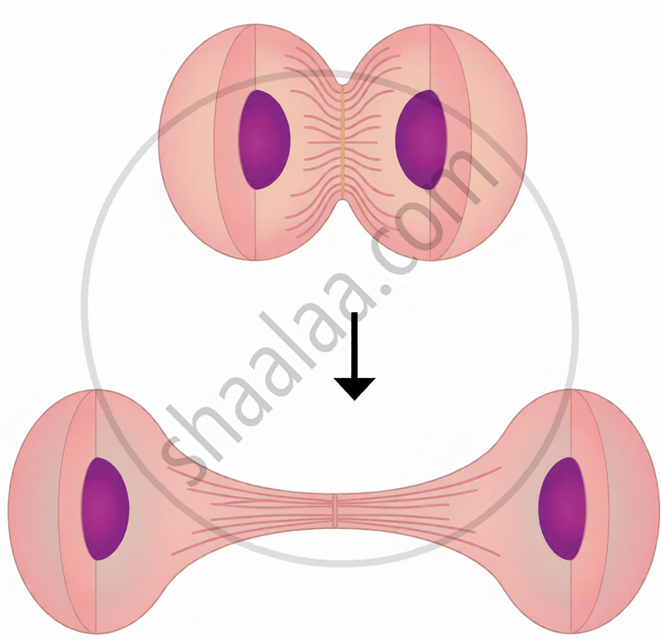
II. Cytokinesis:
- Cytoplasm divides to form two daughter cells.
- In animal cells, a cleavage furrow (notch) forms at the equatorial plane and deepens gradually.
- In plant cells, a cell plate forms at the centre of the cell instead of a notch.
shaalaa.com
क्या इस प्रश्न या उत्तर में कोई त्रुटि है?
