Advertisements
Advertisements
प्रश्न
Which of the following represents the solubility of sugar in water at 20°C ?
विकल्प
21 g
204 g
37 g
164 g
Advertisements
उत्तर
204 g
Solubility of a substance in water is defined as the maximum amount of solute that can be dissolved in 100 g of water at a given temperature. The solubility of sugar in water at 20⁰C is 204 g.
APPEARS IN
संबंधित प्रश्न
Fill in the blank
Liquids have a definite ______
All kinds of matter
Define matter. Give four examples of matter.
When a crystal of potassium permanganate is placed at the bottom of water in a beaker, the water in the whole beaker turns purple on its own, even without stirring. This is an example of :
Bromine and air take about 15 minutes to diffuse completely but bromine diffuses into a vacuum very rapidly. Why is this so?
Name one element, one compound and one mixture.
What are pure substances ? Give two examples of pure substances.
Which of the following are ‘pure substances’ ?
Ice, Milk, Iron, Hydrochloric acid, Calcium oxide, Mercury, Brick, Wood, Air
Explain why, hydrogen and oxygen are considered elements whereas water is not considered an element.
In the following set of substances, one item does not belong to the set. Select this item and explain why it does not belong to the set :
Hydrogen, Oxygen, Steam, Chlorine
Which of the following is a sol ?
Shaving cream, Milk, Fog, Soap solution, Hairspray
Define solute.
Which of the following can be called a suspension ?
Name the process which can be used to recover salt from an aqueous salt solution.
How will you separate a mixture of iron filings, chalk powder and common salt ?
Justify your answer.
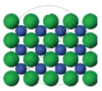
| Figure 1 | Figure 2 | Figure 3 |
 |
 |
 |
The arrangement of particles in three different phases of matter is shown above.
- Which state is represented by Fig. 1?
- In which state will the inter-particle attraction be maximum?
- Which one of them cannot be contained in an open vessel?
- Which one can take the shape of its container?
Write a scientific reason.
Lemon sherbat has a sweet, sour and salty taste and it can be poured in a glass.
Define the term matter.
