Advertisements
Advertisements
प्रश्न
What was the state of the author’s friend at the last?
Advertisements
उत्तर
The author’s friend was completely tired because of his struggle with the bicycle. He was soiled with oil and dirt. He found fixing the parts of the bicycle extremely tough and somehow got those parts in place. He called it quits finally claiming that this is enough.
संबंधित प्रश्न
You can find more information about Robert Frost at the following websites.
http://www.poets.org/poets/poets.cfm?prmID=1961.
Hear the poet (who died almost forty years ago!) reading the poem at
http://www.poets.org/poems/poems.cfm ?prmID= 1645
To view a beautiful New England scene with each poem on this web site: "Illustrated
Poetry of Robert Frost":
http://www.geocities.com/Athens/Olympus/1487/index.html
In groups of six, work on one of the mysteries given below by surfing the net and through other sources. Create a power point presentation/a photo essay.
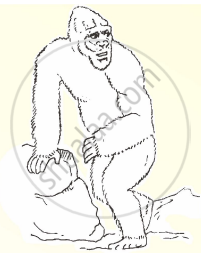
- Yeti, the abominable snowman
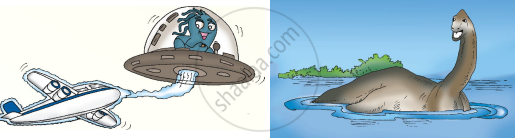
- Loch Ness Monster
- UFOs (Unidentified Flying Objects)
- Lost city of Atlantis
- Crop circles
- Nazca lines
Six humans trapped by happenstance
In black and bitter cold.
Each one possessed a stick of wood,
Or so the story's told.
Their dying fire in need of logs;
The first man held his back.
For on the faces around the fire,
He noticed one was black.
Read the lines given above and answer the question that follow:
What do the logs denote?
The next man looking 'cross the way
Saw one not of his church
And Couldn't bring himself to give
The fire his stick of birch.
The third one sat in tattered clothes.
He gave his coat a hitch.
Why should his log be put to use
To warm the idle rich?
The rich man just sat back and thought
of the wealth he had in store
And how to keep what he had earned
From the lazy shiftless poor.
Read the lines given above and answer the question that follow.
Explain with reference to context
The waves beside them danced, but they
Out-did the sparkling leaves in glee;
A poet could not be but gay,
In such a jocund company!
I gazed-and gazed-but little thought
What wealth the show to me had brought:
Read the lines given above and answer the question that follow.
Which wealth is referred to by the poet?
She again rubbed a match on the wall, and the light shone round her; in the brightness stood her old grandmother, clear and shining, yet mild and loving in her appearance. “Grandmother,” cried the little one, “O take me with you; I know you will go away when the match burns out; you will vanish like the warm stove, the roast goose, and the large, glorious Christmas-tree.” And she made haste to light the whole bundle of matches, for she wished to keep her grandmother there. And the matches glowed with a light that was brighter than the noon-day, and her grandmother had never appeared so large or so beautiful. She took the little girl in her arms, and they both flew upwards in brightness and joy far above the earth, where there was neither cold nor hunger nor pain, for they were with God.
In the dawn of morning there lay the poor little one, with pale cheeks and smiling mouth, leaning against the wall; she had been frozen to death on the last evening of the year; and the New-year’s sun rose and shone upon a little corpse! The child still sat, in the stiffness of death, holding the matches in her hand, one bundle of which was burnt. “She tried to warm herself,” said some. No one imagined what beautiful things she had seen, nor into what glory she had entered with her grandmother, on New-year’s day.
Read the extract given below and answer the question that follow.
Why did the girl make haste to light the whole bundle of matches?
I was in for a surprise. When the time came for the broad-jump trials, I was startled to see a tall boy hitting the pit at almost 26 feet on his practice leaps! He turned out to be a German named Luz Long. 1 was told that Hitler hoped to win the jump with him. I guessed that if Long won, it would add some new support to the Nazis’ “master race” (Aryan superiority) theory. After all, I am a Negro. Angr about Hitler’s ways, 1 determined to go out there and really show Der Fuhrer and his master race who was superior and who wasn’t. An angry athlete is an athlete who will make mistakes, as any coach will tell you. I was no exception. On the first of my three qualifying jumps, I leaped from several inches beyond the takeoff board for a foul. On the second jump, I fouled even worse. “Did I come 3,000 miles for this?” I thought bitterly. “To foul out of the trials and make a fool of myself ?” Walking a few yards from the pit, 1 kicked disgustedly at the dirt.
Read the extract given below and answer the question that follow.
I was in for a surprise. When the time came for the long jump trials, I was startled to see a tall boy hitting the pit at almost 26 feet on his practice leaps. What do these words mean?
“Do the scientists really know? Will it happen today, will it ?”
“Look, look; see for yourself !”The children pressed to each other like so many roses, so many weeds, intermixed, peering out for a look at the hidden sun. It rained. It had been raining for seven years; thousands upon thousands of days compounded and filled from one end to the other with rain, with the drum and gush of water, with the sweet crystal fall of showers and the concussion of storms so heavy they were tidal waves come over the islands. A thousand forests had been crushed under the rain and grown up a thousand times to be crushed again. And this was the way life was forever on the planet Venus, and this was the schoolroom of the children of the rocket men and women who had come to a raining world to set up civilization and live out their lives.
Read the extract given below and answer the question that follow.
Describe the rain and its effect on life on Venus.
Answer the following question.
What is “the master call”? Why is it the most important signal for an elephant to learn?
Discuss the following topic in groups
What, if anything, might drive mankind to make their homes underground?
The author felt sorry for complaining about his boots. What made him feel so?
What do you know about worker ants?
Which was the toughest part of the bicycle that the author’s friend found the toughest to fix?
In the story, Patrick does difficult things he hates to do because the elf pretends he needs help. Have you ever done something difficult or frightening, by pretending about it in some way? Tell your classmates about it.
Look at these sentences.
1. “Too boring,” he said.
2. Cleaned his room, did his chores.
When we speak, we often leave out words that can easily be guessed. We do not do this when we write unless we are trying to write as we speak (as in the story).
So, if we were to write carefully, we would say:
- “Homework is too boring,” he said.
- He cleaned his room and did his chores.
Answer the following question.
How do mongooses kill snakes?
Answer the following question.
When Jumman’s aunt realised that she was not welcome in his house, what arrangement did she suggest?
What does the word ‘bake’ in the above passage mean?
What event were the children in Ray Bradbury’s story, ‘All Summer in a Day’ eagerly awaiting?
Who asks permission to speak at Caesar’s funeral?
