Advertisements
Advertisements
प्रश्न
What measures did Akbar adopt to reorganize and strengthen the army?
Advertisements
उत्तर
- Every official in the imperial service was given a rank or a mansab. The rank depended on the nature and importance of the job. The lowest rank was that of an officer in charge of ten horsemen, while the highest mansab was that of an officer maintaining 7,000 horsemen. The higher mansabs were reserved for the members of the royal family.
- The mansabdars were appointed, promoted, or dismissed by the emperor.
- They were given a salary in accordance with their rank. Later, they began to be paid in the form of jagirs. They were entitled to a fixed amount of revenue from the jagir as salary for themselves arid their troops.
- A mansab or rank was not hereditary. After the death of the mansabdar, the jagir reverted to the king, who granted it to someone else.
- The mansabdars did not have any authority or responsibility for administering the jagir.
- The system of branding horses and maintaining a descriptive roll of the soldiers was adopted by Akbar.
- Akbar also maintained a standing army. The cavalry was the most important branch of the Mughal army. The troops were mainly supplied by the mansabdars. The emperor also directly recruited and maintained a battalion of loyal and trusted soldiers. He maintained a corps of royal bodyguards and armed palace guards, a large number of war elephants, and well-organized artillery.
संबंधित प्रश्न
Important Words:
Diwan-i-Aam
Important Words:
Subas
Fill in the blank:
___________ was the guardian of Akbar.
What was the extent of Akbar’s kingdom? How was administration carried out during Akbar’s time? Explain with reference to the Central and Provincial administration.
Picture study: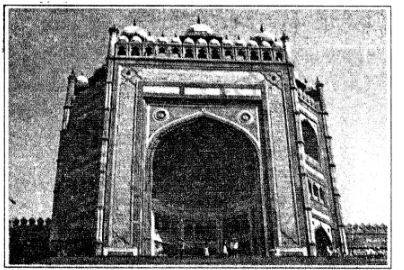
Where is it located?
Picture study:
Why and when was it built?
State whether the following is true or false:
Akbar assumed absolute power and authority at the age of 21.
Answer the following question in one or two words/ sentences:
Why did Akbar follow a policy of friendship with the Rajput?
What was the position of the emperor in the administrative set-up?
How did the revenue system benefit the state and the farmers?
