Advertisements
Advertisements
प्रश्न
What is meant by (i) elements (ii) compounds, and (iii) mixtures ?Write down the names of two elements, two compounds and two mixtures.
Advertisements
उत्तर
- Element: An element is a substance that cannot be split up into two or more simpler substances by chemical methods. It contains only one type of atoms. Examples of elements include:
- Non metals: Carbon and oxygen
- Metals: Aluminum, iron, copper, gold, mercury, and lead.
- Compound: A compound is a substance consisting of two or more elements combined chemically in a fixed proportion by mass.
Examples: Water, sodium chloride, calcium carbonate etc. - Mixture: – A mixture is a substance that is made up of two or more different kinds of particles or two or more pure substances mixed together by a physical process. Examples: Air, milk, wood, soil etc.
APPEARS IN
संबंधित प्रश्न
All kinds of matter
What is Brownian motion? Draw a diagram to show the movement of a particle (like a pollen grain during Brownian motion.
Name the property which allows metals to be hammered into thin sheets.
Which of the following are compounds ?
- CO
- No
- NO
- Co
On the basis of composition of matter, milk is considered to be :
What is the concentration of a solution which contains 16 g of urea in 120 g of solution ?
Classify the following into true solutions and colloidal solutions:
Ink, Salt solution, Starch solution, Blood, Sugar solution
21.5 g of sodium chloride dissolves in 60 g of water at 25°C. Calculate the solubility of sodium chloride in water at that temperature.
Which of the following are chemical changes and which physical ? Give reason.
- a glass bottle breaking
- coal burning in air
- making a cake
- wool being knitted into a sweater
What is a colloid ? Give two examples of colloids (or colloidal solutions)
Which one of the following is not a chemical change ?
Name the property of one of the constituents which can be used to separate a mixture of salt and iodine
What is the general name of the process by which tea-leaves are separated from prepared tea ?
Fill in the following blanks with suitable words :
Immiscible liquids are separated by using a .....................
Justify your answer.
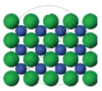
| Figure 1 | Figure 2 | Figure 3 |
 |
 |
 |
The arrangement of particles in three different phases of matter is shown above.
- Which state is represented by Fig. 1?
- In which state will the inter-particle attraction be maximum?
- Which one of them cannot be contained in an open vessel?
- Which one can take the shape of its container?
The particles in the matter are extremely small and can be seen even with a powerful microscope.
A teabag placed in a cup of hot water will diffuse into the water.
Higher the temperature, the higher the kinetic energy of particles.
Define the term matter.
Define the term matter.
