Advertisements
Advertisements
प्रश्न
What is water recycling? Explain the conventional wastewater recycling treatment methods.
Advertisements
उत्तर
Water recycling is reusing treated wastewater for beneficial purposes such as agricultural and landscape irrigation, industrial processes, flushing in toilets, and groundwater recharge. Conventional wastewater treatment consists of a combination of physical, chemical, and biological processes which remove solids, organic matter, and nutrients from wastewater.
The wastewater treatment involves the following stages:
- Primary treatment: Primary treatment involves the temporary holding of the wastewater in a tank. The heavy solids get settled at the bottom while oil, grease and lighter solids float over the surface. The settled and floating materials are removed. The remaining liquid may be sent for secondary treatment.
- Secondary treatment: Secondary treatment is used to remove the biodegradable dissolved organic matter. This is performed in the presence of oxygen by aerobic microorganisms (Biological oxidation). The microorganisms must be separated from treated wastewater by sedimentation. After separating the sediments of biological solids, the remaining liquid is discharged for tertiary treatment.
- Tertiary treatment: Tertiary or advanced treatment is the final step of sewage treatment. It involves the removal of inorganic constituents such as nitrogen, phosphorus, and microorganisms. The fine colloidal particles in the sewage water are precipitated by adding chemical coagulants like alum or ferric sulfate.

APPEARS IN
संबंधित प्रश्न
Why is ocean water not suitable for domestic use?
Fill water in an ice tray and keep it in the freezer.
After few hours, take it out. What happened to the water?
Is water cycle important for farming? _______
Colour the given picture and write the correct name in the given blanks.
(Precipitation, Evaporation, Condensation, Water storage)
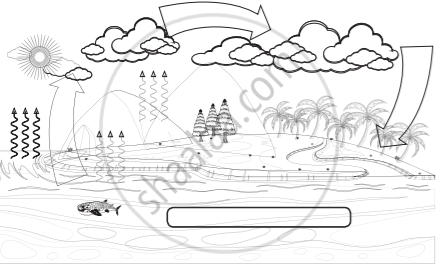
Evaporation is the _______ stage of the water cycle.
Water is present in huge quantities as vapour and clouds in the ________
Water cycle does not involve which of the following?
Explain the process of rooftop rain water harvesting with the help of a suitable diagram.
______ is the study of patterns, and processes in the natural world and their modifications by human activities.
Match the following:
| Water cycle | Application of fertilizers |
| Nitrogen cycle | Sunlight |
| Carbon cycle | Deforestation |
| Abiotic factor | Volcanic activities |
