Advertisements
Advertisements
प्रश्न
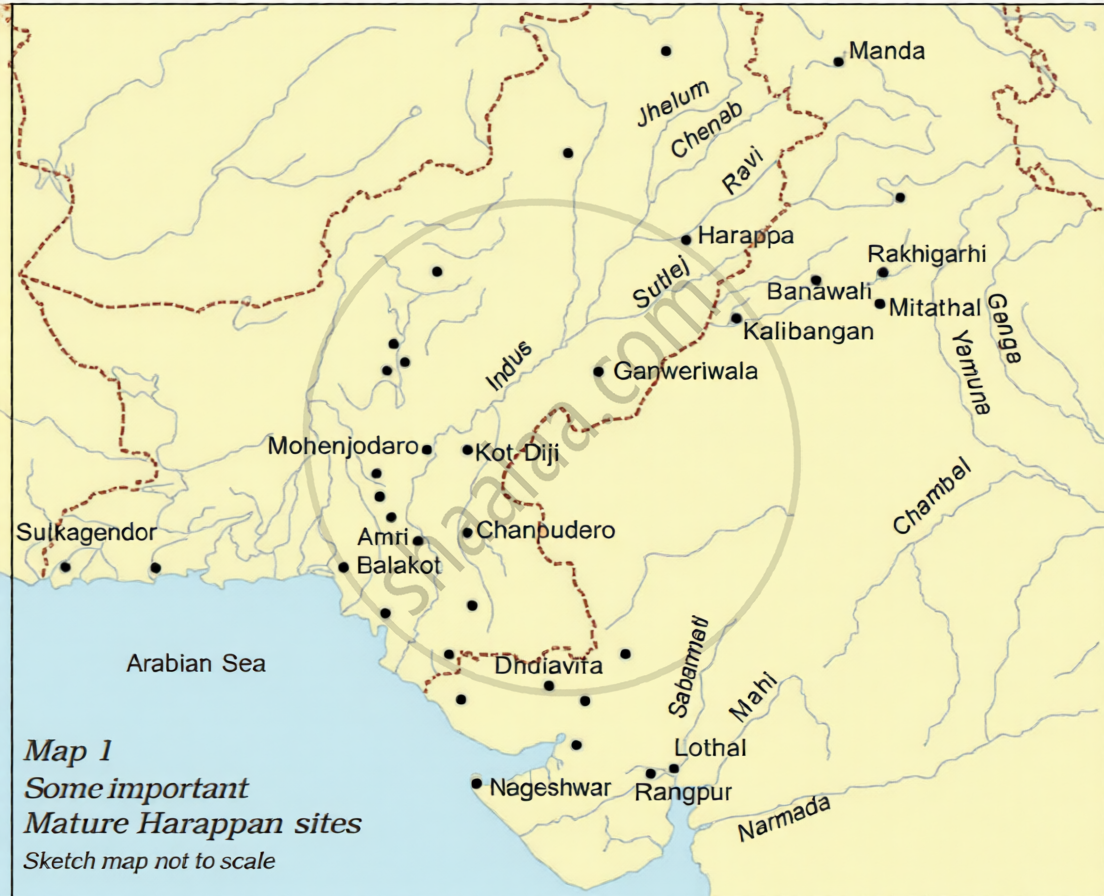
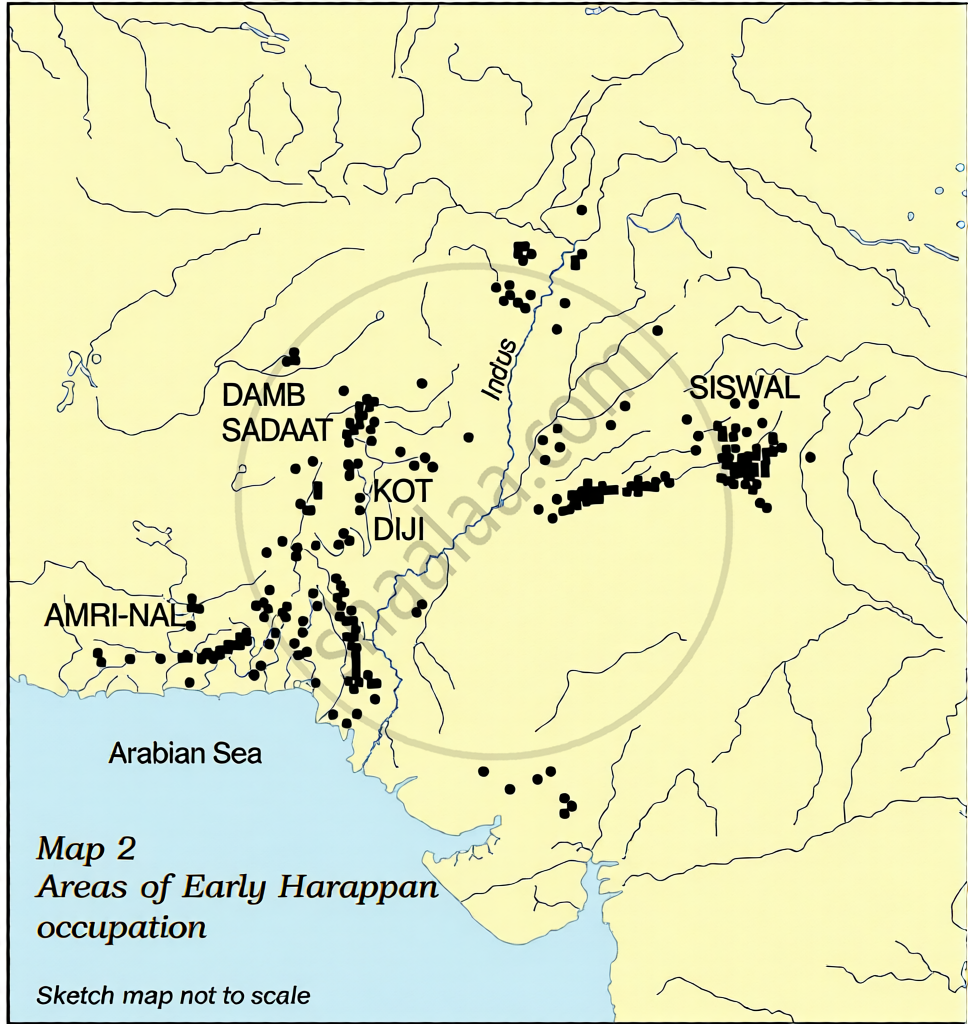
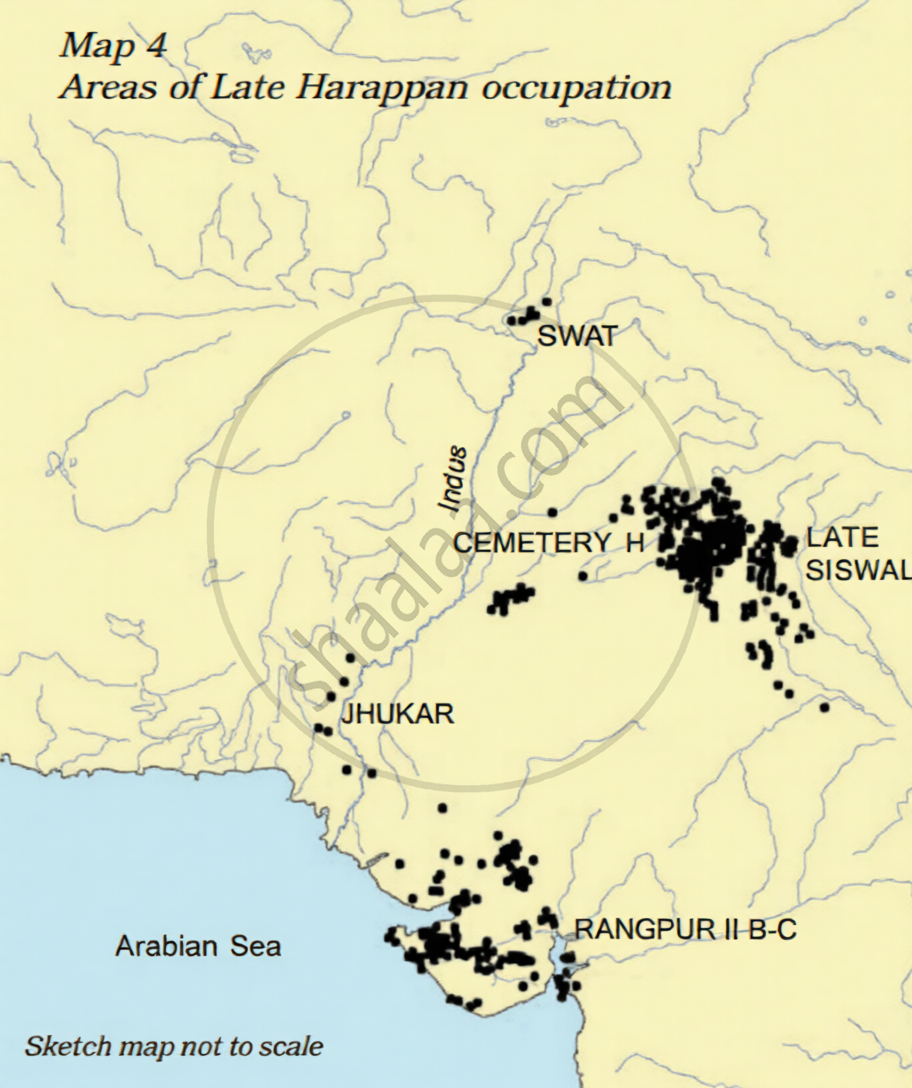
What are the similarities and differences between Early (Map 2), Mature (Map 1), and Late (Map 4) Harappan?
Advertisements
उत्तर
Comparing the Early (Map 2), Mature (Map 1), and Late (Map 4) Harappan phases reveals how the civilisation evolved from localised rural roots, expanded into a massive urban network, and eventually fragmented during its decline.
Similarities across all three maps are:
- The Indus Core: The core Indus River valley remained occupied across all three phases.
- Coastal Access: The Arabian Sea coastline (especially Gujarat) maintained a presence of settlements in all phases.
- River Reliance: Settlements consistently clustered around river systems for agriculture, domestic water use, and transport.
The key difference among all three maps is:
- Geographical Expansion:
- Map 2 (Early) is confined to tight regional pockets like Balochistan (Amri-Nal) and Punjab (Siswal).
- Map 1 (Mature) vastly expands north toward Manda and east toward the Ganga-Yamuna Doab.
- Map 4 (Late) shows an eastern and southern shift, abandoning core western sites like Mohenjodaro.
- Settlement Density & Type:
- Map 2 features small, densely packed agrarian villages.
- Map 1 showcases planned, widely spaced urban trading cities.
- Map 4 reveals fragmented, smaller, rural post-urban clusters.
- Cultural Zones:
- Map 2 is split into distinct local cultures (Damb Sadaat, Siswal).
- Map 1 blends into a single, standardised, uniform pan-Indus culture.
- Map 4 fragments again into regional sub-cultures (Jhukar, Cemetery H).
The transition across these maps traces the life cycle of the civilisation. The Early phase represents localised agricultural growth. The Mature phase marks the peak of centralised urban planning and trade expansion. The Late phase illustrates a structural collapse, where urban centres were abandoned in favour of decentralised, rural eastward migrations.
