Advertisements
Advertisements
प्रश्न
The mature sperms are stored in the ____________.
विकल्प
Seminiferous tubules
Vas deferens
Epididymis
Seminal vesicle
Advertisements
उत्तर
The mature sperms are stored in the Epididymis.
संबंधित प्रश्न
State the main function of the corpus luteum.
A single highly coiled tube where sperms are stored gets concentrated, and mature is known as ______
Give biological explanations for All the food chains begin with green plants.
Fill in the following blank with suitable word :
The menstrual cycle is controlled by.............
Sketch and label human female reproductive system.
Is the woman responsible for sex-determination of child? Justify your answer.
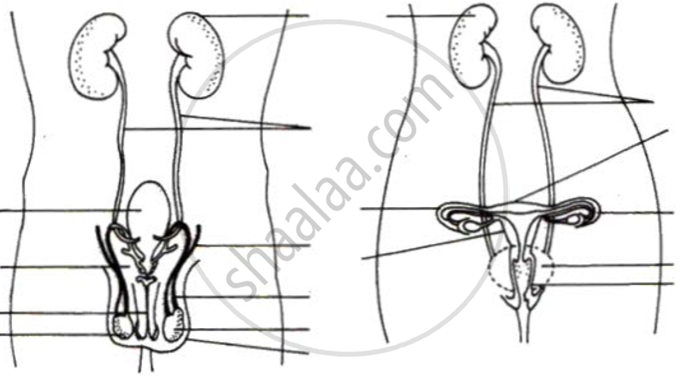
Label the folowing diagram
Choose the Odd One Out:
What is the composition of semen?
How does human sperm locomote?
Match Columns I and II and select the correct option.
| Columns I | Columns II | ||
| i. | Transfer of sperms in the female genital tract. | a. | Gestation |
| ii. | Delivery of baby | b. | Fertilization |
| iii. | Fusion of male and female gamete. | c. | Parturition |
| iv. | Formation of sperms and ovum | d. | Insemination |
| e. | Gametogenesis |
