Advertisements
Advertisements
प्रश्न
The following figure shows a metal rod PQ mounted on an insulated stand. The cap of an uncharged electroscope touches one end Q of the metal rod. A negatively charged ebonite rod is brought near the other end P of the metal rod.
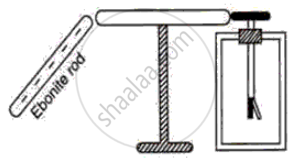
(a) What charge does the end P have?
(b) What charge does the end Q have?
(c) What charge does the cap of the electroscope have?
(d) What charge does the gold leaf have?
(e) Will the leaf diverge or collapse? Give reason.
(f) If the electroscope is now earthed, what charge does the metal rod have?
Advertisements
उत्तर
(a) P will have a positive charge
(b) Q will have no charge.
(c) The Cap of the electroscope will have no charge.
(d) The gold leaf will have a negative charge.
(e) The leaf will diverse because like charges repel each other
(f) If electroscope is earthed then the metal rod will have a positive charge.
APPEARS IN
संबंधित प्रश्न
What is the function of a key (or switch) in an electric circuit?
A cell is used to :
Explain the concept of electric potential difference in terms of work done in transferring the charge.
Explain why does a metal wire when connected to a cell offer resistance to the flow of current.
What do you understand by the term electric current?
Assuming that the charges of an electron is 1.6 × 10⁻¹⁹ coulombs, the number of electrons passing through a section of wire per sec, when the wire carries a current of one ampere is:
Write SI unit of
Electric current,
