Advertisements
Advertisements
प्रश्न
The 9th term of an A.P. is 449 and 449th term is 9. The term which is equal to zero is
विकल्प
501th
502th
508th
none of these
Advertisements
उत्तर
In the given problem, let us take the first term as a and the common difference as d.
Here, we are given that,
`a_9 = 449` ...............(1)
`a_449 = 9 ` .................(2)
We need to find n
Also, we know,
`a_n = a + ( n- 1) d`
For the 9th term (n = 9),
`a_9 = a + ( 9 -1) d`
449 = a + 8d (Using 1 )
a = 449 - 8 d .................(3)
Similarly, for the 449th term (n = 449),
`a_449 = a + ( 449 - 1 )d`
9 = a + 448d (Using 2 )
a = 9 - 448 d .............(4)
Subtracting (3) from (4), we get,
a -a = ( 9 - 448d) - ( 449 - 8d)
0 = 9 - 448d - 449 + 8d
0 = -440 - 440d
440d = - 440
d = - 1
Now, to find a, we substitute the value of d in (3),
a = 449 - 8 (-1)
a = 449 + 8
a = 457
So, for the given A.P d = - 1 and a = 457
So, let us take the term equal to zero as the nth term. So,
`a_n = 457 + ( n- 1) ( -1 ) `
0 = 457 - n + 1
n = 458
So, n = 458
संबंधित प्रश्न
Find the number of natural numbers between 101 and 999 which are divisible by both 2 and 5.
In a school, students thought of planting trees in and around the school to reduce air pollution. It was decided that the number of trees, that each section of each class will plant will be the same as the class, in which they are studying, e.g., a section of class I will plant 1 tree, a section of class II will plant 2 trees, and so on till class XII. There are three sections of each class. How many trees will be planted by the students?
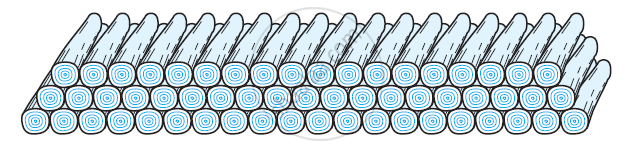
200 logs are stacked in the following manner: 20 logs in the bottom row, 19 in the next row, 18 in the row next to it and so on. In how many rows are the 200 logs placed, and how many logs are in the top row?
Find the sum of n terms of an A.P. whose nth terms is given by an = 5 − 6n.
Find the sum of all even integers between 101 and 999.
Find the sum 3 + 11 + 19 + ... + 803
Find the sum of the first 15 terms of the following sequences having nth term as yn = 9 – 5n.
The 4th term of an AP is zero. Prove that its 25th term is triple its 11th term.
How many two-digit numbers are divisible by 6?
In an A.P. 17th term is 7 more than its 10th term. Find the common difference.
Find whether 0 (zero) is a term of the A.P. 40, 37, 34, 31,... .
Let there be an A.P. with first term 'a', common difference 'd'. If an denotes in nth term and Sn the sum of first n terms, find.
Write the common difference of an A.P. whose nth term is an = 3n + 7.
Write the sum of first n even natural numbers.
The first and last terms of an A.P. are 1 and 11. If the sum of its terms is 36, then the number of terms will be
Find the sum of all members from 50 to 250 which divisible by 6 and find t13.
Find the sum:
1 + (–2) + (–5) + (–8) + ... + (–236)
The sum of the 4th and 8th term of an A.P. is 24 and the sum of the 6th and 10th term of the A.P. is 44. Find the A.P. Also, find the sum of first 25 terms of the A.P.
The sum of 41 terms of an A.P. with middle term 40 is ______.
