Advertisements
Advertisements
प्रश्न
Some changes are listed in the following table. For each change, write in the blank column, whether the change can be reversed or not.
| S. No. | Change | Can be reversed (Yes/No) |
| 1. | The sawing of a piece of wood | |
| 2. | The melting of ice candy | |
| 3. | Dissolving sugar in water | |
| 4. | The cooking of food | |
| 5. | The ripening of a mango | |
| 6. | Souring of milk |
Advertisements
उत्तर
| S. No. | Change | Can be reversed (Yes/No) |
| 1. | The sawing of a piece of wood | No |
| 2. | The melting of ice candy | Yes |
| 3. | Dissolving sugar in water | Yes |
| 4. | The cooking of food | No |
| 5. | The ripening of a mango | No |
| 6. | Souring of milk | No |
संबंधित प्रश्न
Fill in the blank
Burning of fuel is a _______ change.
True or false?
In a chemical change, rearrangement of molecules and atoms involves some energy changes.
Melting of solid (wax) is a physical change.
Chemical changes are accompanied by changes in energy.
Distinguish between the following.
Periodic change and non-periodic change
Fill in the blanks with the appropriate words of the statement given below:
Chemical changes may involve exchange of energy in the form of __________ and _________.
Observe the picture containing a kettle and note that it has salt water in it and answer the following questions:
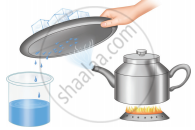
- What is name of the process that is done to the kettle?
- What will happen to the content of the kettle?
- What kind of change is occurring on the cold surface of the metal plate?
- What can you say about the quality of water that is obtained in the beaker?
The difference between initial state and the final state is called change.
What is the change?
Cut vegetables turn brown when exposed to air, this is due to ______.
