Advertisements
Advertisements
प्रश्न
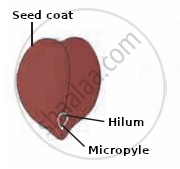
Observe the following figure and label the different parts.

Advertisements
उत्तर
APPEARS IN
संबंधित प्रश्न
Answer the following question.
Opuntia has spines but Carissa has thorns. What is the difference?
Answer the following question.
Teacher described Hibiscus as solitary Cyme. What it means?
Write a short note on fusiform root.
Write a short note on Region of cell maturation.
Write a short note on Cymose inflorescence.
Write a short note on vexillary aestivation.
Students were on an excursion to a botanical garden. They noted the following observation. Will you be able to help them in understanding those condition?
Many oblique roots were given out from the lower nodes, apparently for extra support.
Students were on the excursion to a botanical garden. They noted following observation. Will you be able to help them in understanding those condition?
Many plants in the marshy region had upwardly growing roots. They could be better seen during low tide.
Students were on an excursion to a botanical garden. They noted the following observation. Will you be able to help them in understanding those condition?
Teacher showed them Marigold flower and said it is not one flower. What the teacher meant?
Observe the following figure and label the different parts.

