Advertisements
Advertisements
प्रश्न
Give Reasons:
North Indian Rivers are perennial.
Advertisements
उत्तर १
North Indian Rivers have their origin from the snow-covered Himalayas. As these rivers have water throughout the year they are referred to as perennial rivers.
उत्तर २
Most of the North Indian Rivers are perennial. It means that they have water throughout the year. These rivers receive water from rain as well as from melted snow from the lofty mountains.
APPEARS IN
संबंधित प्रश्न
Choose the right answer from the alternative given below.
Which one of the following describes the drainage patterns resembling the branches of a tree?
Answer the following question briefly.
What is meant by a water divide? Give an example.
Give Reasons:
West flowing rivers do not form deltas.
Give a detailed account on the basin of the Ganga.
The Indus river flows into Pakistan through ______.
River Ganga is known as the river ______ in Bangladesh.
Name the largest river of the Indian Ocean.
Answer the following in paragraph:
What do you mean by drainage system? Write a note on it.
Write answer in one sentence-
Which is the west-flowing river in the central part of India?
Mark the following in the outline map of India. Write the names and given index.
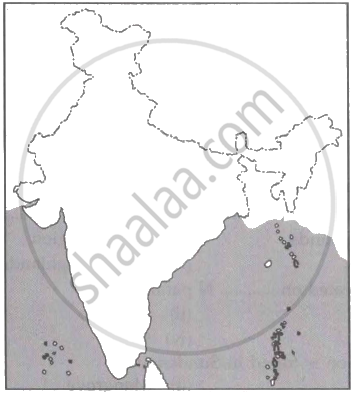
- Lakshadweep Islands
- Coromandel Coast
- Gulf of Khambhat
- Any Major Port
- Thar Desert
- Palk Strait
