Advertisements
Advertisements
प्रश्न
Narrate the clever strategy followed by Clem Jones to deceive Pongo.
Advertisements
उत्तर १
Title: Seventeen Oranges Author: Bills Naughton
Characters: The narrator, Clem Jones, Pongo, and the policeman.
Theme: “Too much of anything is good for nothing”
People who are experts in stealing are very careful in their attempts. They plan well and carry out it to be successful. Clem Jones was also a careful planner of theft. One day he was coming out of the docks with a box. Pongo, a policeman on duty asked him to open the box. He told Pongo that it contained a cat and he could not open it.
Clem told that the cat would run away. But as Pongo insisted, Clem opened the box and the cat jumped up and ran away. It was a ship’s cat. Clem ran after it shouting angrily. After two minutes, Clem came back with the same box.
He was holding the lid down tightly. Pongo laughed at him. But Clem looked at him very furiously. He looked angry all the way home. Then he smiled. He opened the box in the kitchen and took out a large Dutch cheese. This was Clem’s story. There are people who plan a theft carefully and successfully. Clem was one among them.
“The weak in courage is strong in cunningness”
उत्तर २
There are expect thieves who plan it carefully. Clem was a good planner of theft. One day, while Clem was coming out of the docks with a box, Pongo stopped him. Fie asked him to open the box. She told Pongo that the cat would run away. Pongo did not believe him. So he made Clem open the box.
Suddenly the cat jumped up and ran away. It was a ship’s cat. Clem ran after it shouting angrily. After two minutes, he came back with the same box. She held the lid down tightly. Pongo laughed at him but Clem looked at him angrily. He looked angry all the way home. Then he smiled. He opened the box and took out a large Dutch cheese.
“A clever fox can even deceive a dog”
APPEARS IN
संबंधित प्रश्न
Who were Sachin’s favourite players?
Here is an imaginary high school class depicted in a French post card (1901-1910).
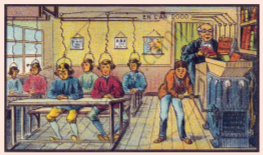
After looking at the post card, what do you think have come true in the present century?
Identify the character or speaker of the following line.
He was a round little man with a red face and a whole box of tools with dials and wires.
Margie had to study always at the same time every day because her mother said little girls ______.
Identify the dependent clauses or phrases in the following sentence and underline them.
Whether he attends the party or not, I have decided to go.
How can soil erosion be prevented?
What happens to the rain water?
Why do wild animals from the forest often enter the human living spaces?
Why were Ramanujan’s application for jobs rejected?
If you are given an opportunity to go on a one-way trip to Mars, will you accept it? Discuss.
