Advertisements
Advertisements
प्रश्न
Mention if the following statement is true (T) or false (F) Give reason.
Malleus incus and stapes are collectively called the ear ossicles.
विकल्प
True
False
Advertisements
उत्तर
True
संबंधित प्रश्न
Explain the following:
Mechanism through which a sound produces a nerve impulse in the inner ear.
The exact location of the Yellow spot
With reference to the human ear, answer the question that follow:
Name the part of the ear associated with
(1) static balance
(2) hearing
(3) dynamic balance.
How could you convince a small child that when you speak, it is not necessary for air to travel from you mouth to the ear of listener?
Choose the correct answer.
Canal joining middle ear to pharynx ___________
The figure below is the sectional view of a part of the skull showing a sense organ:
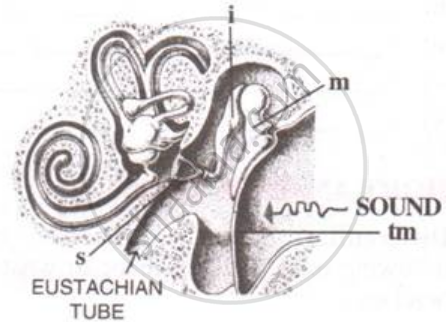
What are the parts labeled 'm', 'i' and 's'? What do these parts constitute collectively?
State the Location:
Semicircular canals
State the functions of the following:
Semi-circular canals
Complete the following sentence with appropriate Word
The sequence of ear ossicles of vertebrates starting from the tympanum is:
The part of the ear that collects the sound from the surroundings is ______.
