Advertisements
Advertisements
प्रश्न
Match the items of Column I with the items given in Column II.
| Column I | Column II | ||
| (a) | Yak wool | (i) | Sheared hair |
| (b) | Angora goats | (ii) | Silkworm |
| (c) | Mulberry leaves | (iii) | Tibet and Ladakh |
| (d) | Scouring | (iv) | Jammu and Kashmir |
Advertisements
उत्तर
| Column I | Column II | ||
| (a) | Yak wool | (iii) | Tibet and Ladakh |
| (b) | Angora goats | (iv) | Jammu and Kashmir |
| (c) | Mulberry leaves | (ii) | Silkworm |
| (d) | Scouring | (i) | Sheared hair |
APPEARS IN
संबंधित प्रश्न
Very Short Answer Type Question:
How are natural fibres better than synthetic fibres?
Short Answer Type Question:
What do you observe when you are visiting a nearby tailoring shop?
Short Answer Type Question:
When we bum nylon, why we do not get the smell of burning paper or burning hair?
What kind of fabric is suitable to dress-up and play in the summer?
______ and ______ fibres are obtained from animals.
Write a caption for the figures given in Figure.
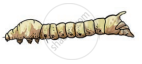
Some term related to fabric is jumbled up and given below. Write it in its correct form.
bisref
One way of making fabric from yarn is weaving, what is the other?
Boojho with perfect eyesight was finding it difficult to pass a thread through the eye of a needle. What can be the possible reason for this?
Match the articles given in column I with the articles of column II.
| COLUMN I | COLUMN II | ||
| (a) | Sweater | (i) | Cotton |
| (b) | Cotton bolls | (ii) | Wool |
| (c) | Dhoti | (iii) | Ginning |
| (d) | Gunny bags | (iv) | Jute |
