Advertisements
Advertisements
प्रश्न
Match the Columns:
| Column A | Column B |
| 1. Democratic republic | a. Pataliputra |
| 2. Kingdom | b. Champa |
| 3. Bimbisara | c. Rule of kings |
| 4. Ajatashatru | d. Macedonia |
| 5. Alexander | e. Rule by elected representatives |
Advertisements
उत्तर
| Column A | Column B |
| 1. Democratic republic | e. Rule by elected representatives |
| 2. Kingdom | c. Rule of kings |
| 3. Bimbisara | b. Champa |
| 4. Ajatashatru | a. Pataliputra |
| 5. Alexander | d. Macedonia |
संबंधित प्रश्न
Name the king who conquered Anga?
Name the Magadhan king who killed his father?
Name the territories conquered by Bimbisara and Ajatashatru.
Give reason why:
Deposits of iron in Magadha helped it become a powerful kingdom.
Why was Alexander unable to conquer Magadha?
This is a painting of two important kings who became friends after the war.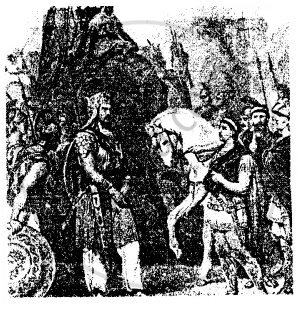
Can you identify the two rulers in this painting?
Choose the correct answer:
The first important king of Magadha was _________.
State whether the following is true or false.
The power of the small states in north-western India was shattered by Alexander’s invasion.
Name the Mauryan ruler who unified India politically.
Give an account of the causes and results of the battle between Alexander and Porus.
