Advertisements
Advertisements
प्रश्न
Match the column.
| Column A | Column B |
| 1. Moksha | a. Jain Religious Literature |
| 2. Svetambara | b. Mount Abu |
| 3. Dilwara Temple | c. Jain Sect |
| 4. Purvas and Angas | d. Buddhist religious literature |
| 5. Bodh Gaya | e. Sarnath |
| 6. Deer Park | f. Highest Goal of man's life |
| 7. Mahayana | g. Enlightenment |
| 8. Tripitakas and Jatakas | h. Three jewels of Jainism |
| 9. Triratna | i. Buddhist Sect. |
Advertisements
उत्तर
| Column A | Column B |
| 1. Moksha | f. Highest Goal of man's life |
| 2. Svetambara | c. Jain Sect |
| 3. Dilwara Temple | b. Mount Abu |
| 4. Purvas and Angas | a. Jain Religious Literature |
| 5. Bodh Gaya | g. Enlightenment |
| 6. Deer Park | e. Sarnath |
| 7. Mahayana | i. Buddhist Sect |
| 8. Tripitakas and Jatakas | d. Buddhist religious literature |
| 9. Triratna | h. Three jewels of Jainism |
संबंधित प्रश्न
State whether the following statement is True or False.
Mahavira was born at Pavapuri near Rajgir in Bihar.
State whether the following statement is True or False.
Jatakas are stories about Buddha’s previous births.
State whether the following statement is True or False.
‘Mahayana’ form of Buddhism started worshiping Buddha as a god.
Textbook Keyword: Jina
Textbook Keyword: Nirvana
Many ______ customs crept into Hindu society by the end of the Epic Age.
Why and how did Buddhism spread so rapidly in India and abroad?
This is an artwork showing a religious reformer who was born in Lumbini in the 6th century BCE.
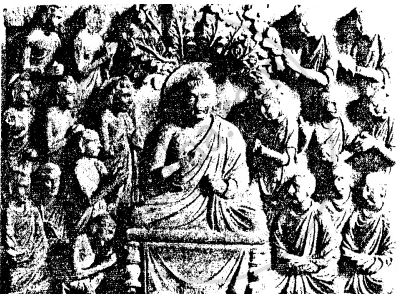
Identify the religious reformer.
This is an artwork showing a religious reformer who was born in Lumbini in the 6th century BCE.
Why did his teachings appeal to the people?
Name the wife and son of Gautam Buddha?
