Advertisements
Advertisements
प्रश्न
Match the following animals with their category of existence.
| Animals/Plants | Category of existence |
| Black buck | Extinct |
| Asiatic elephant | Rare |
| Andaman wild pig | Endangered |
| Himalayan brown bear | Vulnerable |
| Pink head duck | Endemic |
Advertisements
उत्तर
| Animals/Plants |
Category of existence |
| Black buck | Endangered |
| Asiatic elephant | Vulnerable |
| Andaman wild pig | Endemic |
| Himalayan brown bear | Rare |
| Pink head duck | Extinct |
APPEARS IN
संबंधित प्रश्न
Multiple choice questions.
Which of the following conservation strategies do not directly involve community participation?
Match the following.
| Reserved forests | other forests and wastelands belonging to both government and private individuals and communities |
| Protected forests | forests are regarded as most valuable as far as the conservation of forest and wildlife resources |
| Unclassed forests | forest lands are protected from any further depletion |
Where would you find the following in India:
Red panda
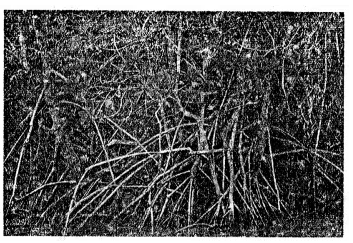
- Identify the type of forest shown in the photograph.
- Write two characteristics of this type of forest.
Write short notes on :
Mountain or Alpine forest
List some direct and indirect advantages from forests.
Define with example:
Sanctuary
Define with example:
National Park
Fill in the blank:
Mangrove forests are a very important part of the ________ ecosystem.
Fill in the blanks:
_________ is the national animal and __________ is the national bird of India.
Mark some important biosphere reserves, bird sanctuaries and national parks of India?
What is the Himalayan Yew?
Which one of the following is not responsible for the decline in India’s biodiversity?
We need to conserve our forests and wildlife ______.
One of the key wildlife species in the faunal web is ______.
The total number of tiger reserves in India are ______.
On the given Map of India, locate and label the following:
Pune Software Technology Park.

