Advertisements
Advertisements
प्रश्न
How will you separate a mixture containing sand and sugar ?
Advertisements
उत्तर
We will use filtration to separate a mixture of sand and sugar. Sugar dissolves in water but sand does not. These properties of sugar and sand allow them get separated by filtration.
In filtration, suspension can be filtered using a filter paper leaving sand as residue on the filter paper. Now, the filtrate contains sugar only. Sugar can further be recovered from the filtrate.
APPEARS IN
संबंधित प्रश्न
Intermolecular force of attraction is maximum in ............ less in .......... and the least in .............
A kind of matter which can sublime is
Name two processes which provide the best evidence for the motion of particles in matter.
Define matter. Give four examples of matter.
The three important metalloids are.............................. and ..........................
State whether the following statement is true or false :
Sponge is an example of solid sol.
Which of the following is a sol ?
Shaving cream, Milk, Fog, Soap solution, Hairspray
Fill in the following blank :
Milk is a .................... solution but vinegar is a .................... solution.
Fill in the following blank :
A colloid is a ..............mixture and its components can be separated by the technique known as ...............
21.5 g of sodium chloride dissolves in 60 g of water at 25°C. Calculate the solubility of sodium chloride in water at that temperature.
Name the property of one of the constituents which can be used to separate a mixture of salt and iodine
What is chromatography ? State its two applications.
Which among the following ______ will get attracted to by magnet?
Justify your answer.
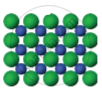
| Figure 1 | Figure 2 | Figure 3 |
 |
 |
 |
The arrangement of particles in three different phases of matter is shown above.
- Which state is represented by Fig. 1?
- In which state will the inter-particle attraction be maximum?
- Which one of them cannot be contained in an open vessel?
- Which one can take the shape of its container?
Complete the following table:
| S.No. | CELSIUS | KELVIN |
| 1. | 90°C | 363 K |
| 2. | ______ | 283 K |
| 3. | 63 °C | ______ |
| 4. | 250°C | ______ |
| 5. | ______ | 303 K |
The movement of particles in liquids is ______.
The fluidity of solids: ______.
Evaporation is always accompanied by ______ in temperature.
Define the term matter.
