Advertisements
Advertisements
प्रश्न
How did the people of India react of the appointment of Simon Commission.
Advertisements
उत्तर
The Simon Commission submitted its report on 27th May, 1930. The National leaders were not at all happy over the report. The Commission proposed only a limited transfer of power to the provinces and that too with so many restrictions. The major political parties totally rejected the
proposals made by the Commission. The nationalists wanted the immediate setting up of fully responsible Governments, both at the Centre and in the Provinces. This Commission’s report, in fact, became a turning point in India’s struggle for freedom. The Indians expressed their discontent by starting Civil Disobedience Movement, another weapon against the British imperialism, no less than the Non-Cooperation Movement. The Nehru Report was its reaction in which the Indians demanded Poorna Swaraj.
संबंधित प्रश्न
With reference to the National Movement from 1930 to 1947, answer the following :
State any three features of the Programmed of the Civil Disobedience Movement launched in 1930.
______ led the Dharasana Satyagraha.
In the Second Round Table Conference, ______ participated as a representative of Indian National Congress.
Explain the following statement with reason.
The Government declared Martial Law at Solapur.
Gather additional information along with photographs about the work of the following personality in the Civil Disobedience Movement and exhibit it in the class.
Sarojini Naidu:
When and by whom w as the Civil Disobedience Movement launched?
Mention any two events which led to the Civil Disobedience Movement of 1930.
Briefly state the outcome of the Civil Disobedience Movement.
State four recommendations of the Nehru Report.
Identify the picture as shown and answer the following: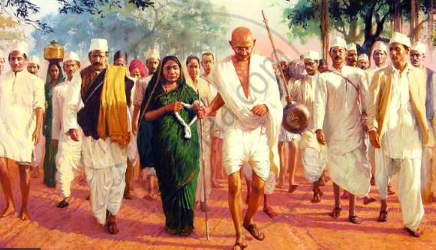
(i) With which movement it is associated?
(ii) When and where the movement took place?
